
kopi-C with Toku CEO: Who says the next enterprise giant can’t come from Singapore?
Stocks
Powered by

By Julian Wong • 11 Feb 2026
Why trust Beansprout? We’ve been awarded Best Investment Website at the SIAS Investors’ Choice Awards 2025
'%3e%3cpath%20fill-rule='evenodd'%20clip-rule='evenodd'%20d='M17.64%209.20455C17.64%208.56637%2017.5827%207.95273%2017.4764%207.36364H9V10.845H13.8436C13.635%2011.97%2013.0009%2012.9232%2012.0477%2013.5614V15.8195H14.9564C16.6582%2014.2527%2017.64%2011.9455%2017.64%209.20455V9.20455Z'%20fill='%234285F4'/%3e%3cpath%20fill-rule='evenodd'%20clip-rule='evenodd'%20d='M9%2018C11.43%2018%2013.4673%2017.1941%2014.9564%2015.8195L12.0477%2013.5614C11.2418%2014.1014%2010.2109%2014.4205%209%2014.4205C6.65591%2014.4205%204.67182%2012.8373%203.96409%2010.71H0.957275V13.0418C2.43818%2015.9832%205.48182%2018%209%2018V18Z'%20fill='%2334A853'/%3e%3cpath%20fill-rule='evenodd'%20clip-rule='evenodd'%20d='M3.96409%2010.71C3.78409%2010.17%203.68182%209.59318%203.68182%209C3.68182%208.40682%203.78409%207.83%203.96409%207.29V4.95818H0.957273C0.347727%206.17318%200%207.54773%200%209C0%2010.4523%200.347727%2011.8268%200.957273%2013.0418L3.96409%2010.71V10.71Z'%20fill='%23FBBC05'/%3e%3cpath%20fill-rule='evenodd'%20clip-rule='evenodd'%20d='M9%203.57955C10.3214%203.57955%2011.5077%204.03364%2012.4405%204.92545L15.0218%202.34409C13.4632%200.891818%2011.4259%200%209%200C5.48182%200%202.43818%202.01682%200.957275%204.95818L3.96409%207.29C4.67182%205.16273%206.65591%203.57955%209%203.57955V3.57955Z'%20fill='%23EA4335'/%3e%3c/g%3e%3cdefs%3e%3cclipPath%20id='clip0_0_2849'%3e%3crect%20width='18'%20height='18'%20fill='white'/%3e%3c/clipPath%3e%3c/defs%3e%3c/svg%3e)
Make Beansprout your preferred source on Google
Add us on Google to see more of our insights in your search results
Toku just became the first company to list on the SGX in 2026. Its CEO Thomas Laboulle shares why he believes the next enterprise software giant can come from Singapore, not Silicon Valley.
Imagine you're running a food delivery platform that operates across Southeast Asia.
Now imagine: a customer in Vietnam complains about a missing order.
It sounds simple enough—except Vietnamese regulations require that the conversation data stay within the country's borders.
The same platform's customers in Singapore, Indonesia, and Thailand don't just face different rules about where data is stored. Some jurisdictions require that all data processing happens locally. Others mandate that call recordings and media never leave the country's borders. Certain markets go further still, requiring the application servers themselves to be hosted in-country.
Meanwhile, the company's leadership wants a single dashboard showing every customer interaction across all 11 markets.
When Thomas Laboulle—CEO of Toku, a Singapore-incorporated AI-powered customer experience (CX) platform—talks about 'complexity', this is what he means. At their most 'complex', Toku has had to coordinate across more than 10,000 agents for a single project.
Laboulle explains, "For countries like Vietnam, Bangladesh, Pakistan, Cambodia, they will not have any of the hyperscalers present," referring to some of the global commercial cloud providers like AWS and Microsoft Azure.
"For a very long time, the only locations in APAC where you had the hyperscalers were Singapore, Hong Kong, and Australia. So how do you bridge that complexity if you cannot deploy everything on the same provider?"
Toku's answer was to design its platform for this fragmentation from day one. Where existing cloud computing infrastructure is available, they use it. Where it isn't, they plug into local data centres.
Customers see a single interface while Toku handles the regulatory patchwork underneath.
In the past 18 months, Toku has doubled its geographic footprint from 17 to 34 countries, including a Latin American deployment spanning 15 markets with a single customer—a contract won against both regional and North American competitors.
For them, this is what the future of customer experience looks like.
The connectivity emphasis
Laboulle spent his early career as an infantry officer in the Belgian military, following in the footsteps of his father and grandfather. His deployments included UN peacekeeping in Lebanon and NATO operations in Afghanistan, experiences he credits with teaching him to make decisions with incomplete information.
"In the military, you have a high level of ownership and autonomy across every rank and every function," he says. "That's something I really value in the company as well."
After leaving the military, Laboulle moved through management consulting and landed in Singapore in 2014. Two years later, he was recruited to restructure GlobalRoam, a Singaporean telecom operator. It was there that he spotted a gap in the market.
Observing that players in this space never handled the underlying phone and internet connections, he saw that customers were still left with the problem of having to coordinate across telecom providers.
And if they were operating across a dozen Asian countries, this simply wasn’t realistic.
Hence, when Laboulle founded Toku in 2018, he made what seemed like a counterintuitive decision: own the telecommunications layer.
"I was adamant about the fact that I needed the connectivity and the network layer to be part of the company's story from the start," he says.
This decision paid off. The same regulators who oversee connectivity—like Singapore's IMDA—are now the ones setting rules for cloud computing and AI. Having navigated their requirements for years means Toku already speaks their language.
"We are tailored for the complexity," he says. "Global incumbents, usually coming from the US or Europe, haven't been designed for that."
Going public to go bigger
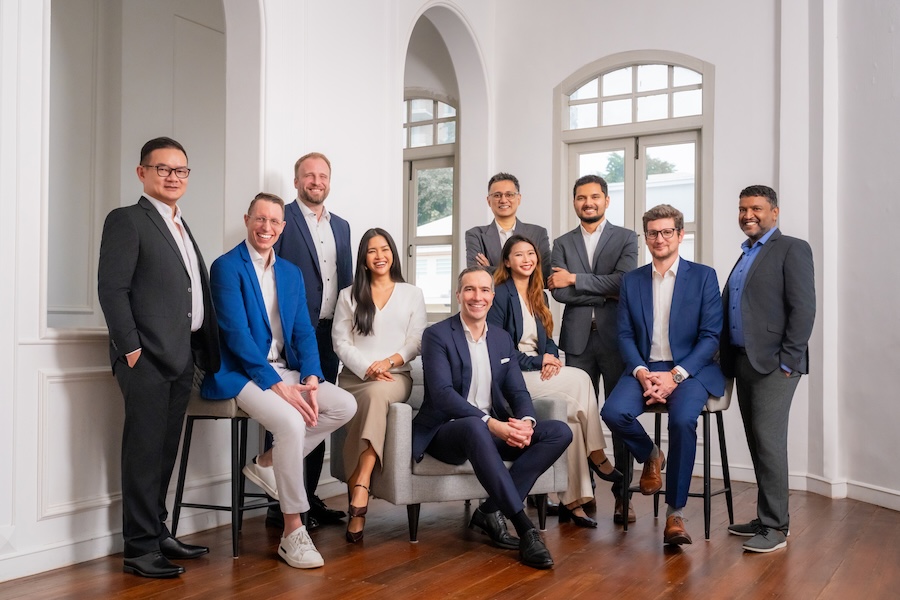
On January 22, 2026, Toku became the first company to list on the Singapore Exchange in 2026. Laboulle has emphasised that this is not about cashing out.
"It is not an exit. It's a stepping stone to accelerate our journey," he says. "Listing anywhere else, especially in places where the listing is easier to achieve, would not have sent the right message to our customers."
He points out that enterprise customers—the multinationals and government agencies that Toku serves—care deeply about governance and stability. A rigorous listing on a well-regulated exchange proves these qualities to procurement teams who might otherwise default to a familiar vendor.
"It's always easier for a procurement team to say they selected Genesys or NICE rather than Toku, and then have to explain to their management who Toku is," Laboulle points out.
But now, with capital raised, Toku is focused on two growth levers: acquisitions and channel partnerships.
On M&A, Laboulle says they have "a line of sight on a number of potential acquisitions," targeting profitable companies that can add technology or commercial presence.
And with partnerships, the priority is building a network of resellers who can sell and implement Toku's platform, allowing the company to scale beyond its own headcount.
While Laboulle is ambitious about the destination, Toku is also what he calls a team of "pragmatic dreamers". This means being disciplined about how they get there.
Every M&A opportunity, for instance, will go through a build-buy-or-partner assessment. Acquisition targets must be profitable and accretive.
At the same time, he remains candid about needing to evolve: "What I admire most in other entrepreneurs who have been able to build something big and global from scratch is how they stay relevant within their own organisation."
After all, he observes, there are also plenty of founders who have struggled to grow alongside the companies they've built.
"I need to remain very aware of my own capabilities and limitations," he acknowledges.
Playing the long game
When asked what success looks like, Laboulle is clear.
"We are not looking to be a blip on the radar. I'm looking to build something that lasts," he says.
"When people hear about Toku, they should automatically think of customer experience—the same way that if you say CRM, people think Salesforce, or ERP, they think SAP."
While this could sound like it's just about name brand recognition, Laboulle frames it as something larger: "We want to prove that you can have global technology players emerge from Singapore. Enterprise software should not be limited to American vendors."
The near-term goal is regional leadership within two years. From there, Laboulle sees Toku growing into an emerging global player before eventually competing for global leadership.
While he says that he's already thinking about the next decade, Laboulle is also realistic about the timeline—"The enterprise segment is a patient man's game. We do not build a lasting enterprise technology provider overnight."
He knows it’s going to be a long race. But then again, Thomas Laboulle has always been a long-distance runner.
About Toku
Headquartered in Singapore, Toku Ltd. (“Toku”) is a cloud-native, AI-powered customer experience platform purpose-built for enterprises operating in complex, multi-market environments. With deep roots in the APAC region and an expanding global footprint, Toku’s modular 360° CX Platform orchestrates customer interactions across voice, chat, email and digital channels while managing regulatory, linguistic and infrastructure complexity at scale.
Built on end-to-end ownership of its technology stack, from carrier-grade connectivity to AI applications, Toku delivers enterprise-grade security, reliability and deployment flexibility across commercial cloud, private data centres and hybrid environments. Its AI capabilities include transcription, summarisation, sentiment analysis, conversation analytics and governed virtual agents, designed to integrate seamlessly with enterprise systems and customer data.
Trusted by leading enterprises and public-sector organisations, Toku helps organisations streamline operations, scale customer engagement and deliver consistent experiences across fragmented markets.
About kopi-C: the Company brew
kopi-C is a regular column by SGX Research in collaboration with Beansprout, a MAS-licensed investment advisory platform, that features C-level executives of leading companies listed on SGX. These interviews are profiles of senior management aimed at helping investors better understand the individuals who run these corporations.
Read also
Gain financial insights in minutes
Subscribe to our free weekly newsletter for more insights to grow your wealth
Most Popular

Comments
0 comments