
I never thought that financial planning mattered. Then I had my first child
CPF & Retirement
By Julian Wong • 28 Apr 2026
Why trust Beansprout? We’ve been awarded Best Investment Website at the SIAS Investors’ Choice Awards 2025
'%3e%3cpath%20fill-rule='evenodd'%20clip-rule='evenodd'%20d='M17.64%209.20455C17.64%208.56637%2017.5827%207.95273%2017.4764%207.36364H9V10.845H13.8436C13.635%2011.97%2013.0009%2012.9232%2012.0477%2013.5614V15.8195H14.9564C16.6582%2014.2527%2017.64%2011.9455%2017.64%209.20455V9.20455Z'%20fill='%234285F4'/%3e%3cpath%20fill-rule='evenodd'%20clip-rule='evenodd'%20d='M9%2018C11.43%2018%2013.4673%2017.1941%2014.9564%2015.8195L12.0477%2013.5614C11.2418%2014.1014%2010.2109%2014.4205%209%2014.4205C6.65591%2014.4205%204.67182%2012.8373%203.96409%2010.71H0.957275V13.0418C2.43818%2015.9832%205.48182%2018%209%2018V18Z'%20fill='%2334A853'/%3e%3cpath%20fill-rule='evenodd'%20clip-rule='evenodd'%20d='M3.96409%2010.71C3.78409%2010.17%203.68182%209.59318%203.68182%209C3.68182%208.40682%203.78409%207.83%203.96409%207.29V4.95818H0.957273C0.347727%206.17318%200%207.54773%200%209C0%2010.4523%200.347727%2011.8268%200.957273%2013.0418L3.96409%2010.71V10.71Z'%20fill='%23FBBC05'/%3e%3cpath%20fill-rule='evenodd'%20clip-rule='evenodd'%20d='M9%203.57955C10.3214%203.57955%2011.5077%204.03364%2012.4405%204.92545L15.0218%202.34409C13.4632%200.891818%2011.4259%200%209%200C5.48182%200%202.43818%202.01682%200.957275%204.95818L3.96409%207.29C4.67182%205.16273%206.65591%203.57955%209%203.57955V3.57955Z'%20fill='%23EA4335'/%3e%3c/g%3e%3cdefs%3e%3cclipPath%20id='clip0_0_2849'%3e%3crect%20width='18'%20height='18'%20fill='white'/%3e%3c/clipPath%3e%3c/defs%3e%3c/svg%3e)
Make Beansprout your preferred source on Google
Add us on Google to see more of our insights in your search results
On plans that collide, time horizons that shift, and what it means to build something for generations.
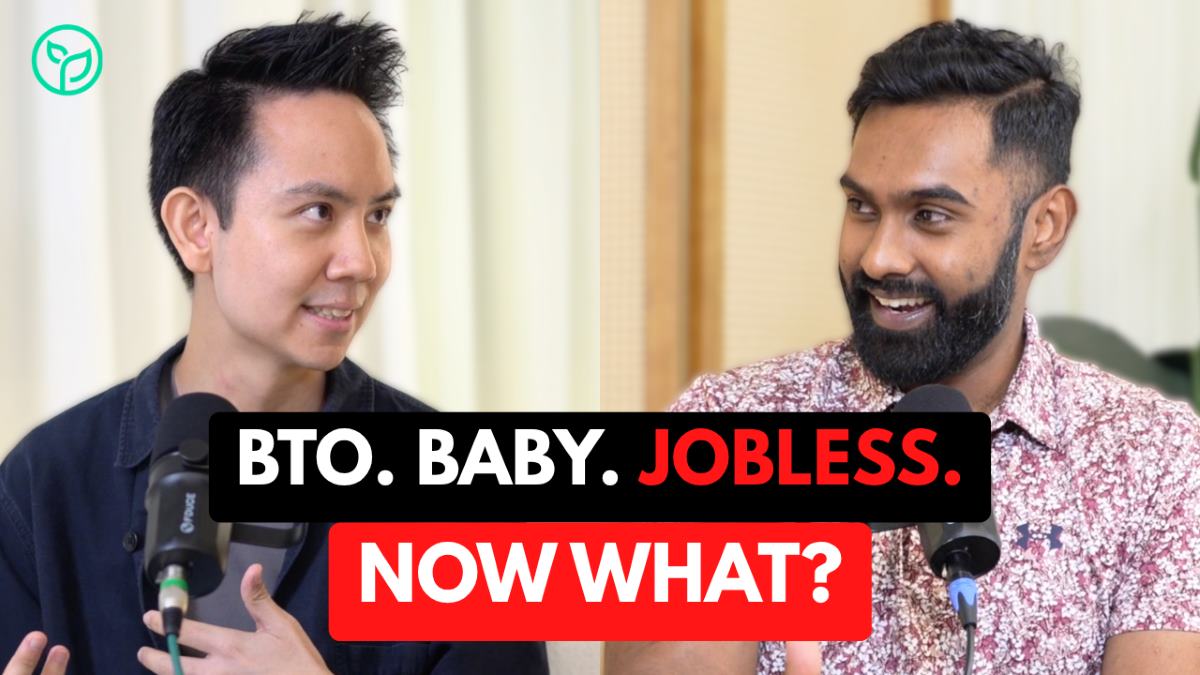
Yuvaraj Uthaman had been awake for 36 hours. His wife had just come through a long labour, and his newborn son was sleeping in the same room.
Suddenly, his phone lit up with a message from his contractor: the renovation plans for his newly purchased home were ready for sign-off.
"I looked at my son, looked at my wife, and I just did the changes,” he says, “I just sent it across.”
He was, he points out, only 5 hours into fatherhood.
"That's when it really hit me."
Son. House. Payments due. Responsibilities calling. All of it was arriving at once.
The plan was fine but the timing wasn't
Yuvaraj—Yuva, to most people—is a marketing professional, podcast host, and freelance personal trainer.
18 months ago, he also became a father. He describes his pre-parenthood approach to life as practical, deliberate, and sequenced: date for five years, get married, wait for the house, then think about kids.
To any Singaporean hearing this, it sounds like a perfectly responsible plan.
And like most Singaporeans, Yuva didn’t account for the fact that life rarely follows well-made plans.
In November 2019, he had applied for his BTO flat. What was supposed to be a 3-to-4 year wait became 5, delayed by Covid-19.
During that same period, he lost his job twice—both times because of the pandemic.
In that season of his career, he had made the deliberate choice to leave a stable job to work for local SMEs and startups. He learnt a lot, but the downside was that when his employment fell through, he had no safety net.
"I wish I had a bonus in the past few jobs," he says. "Then it could have given me a lot more padding."
He doesn't frame this as a mistake, as he knows that his decisions were justifiable at the time. The circumstances he ended up confronting were ones that no one would have seen coming.
Many would resonate with some version of this: the careful construction of the plan, one chapter at a time, assuming it would all come together smoothly.
When this didn’t materialise, "It was not fun," he says simply.
The shift you don't notice making
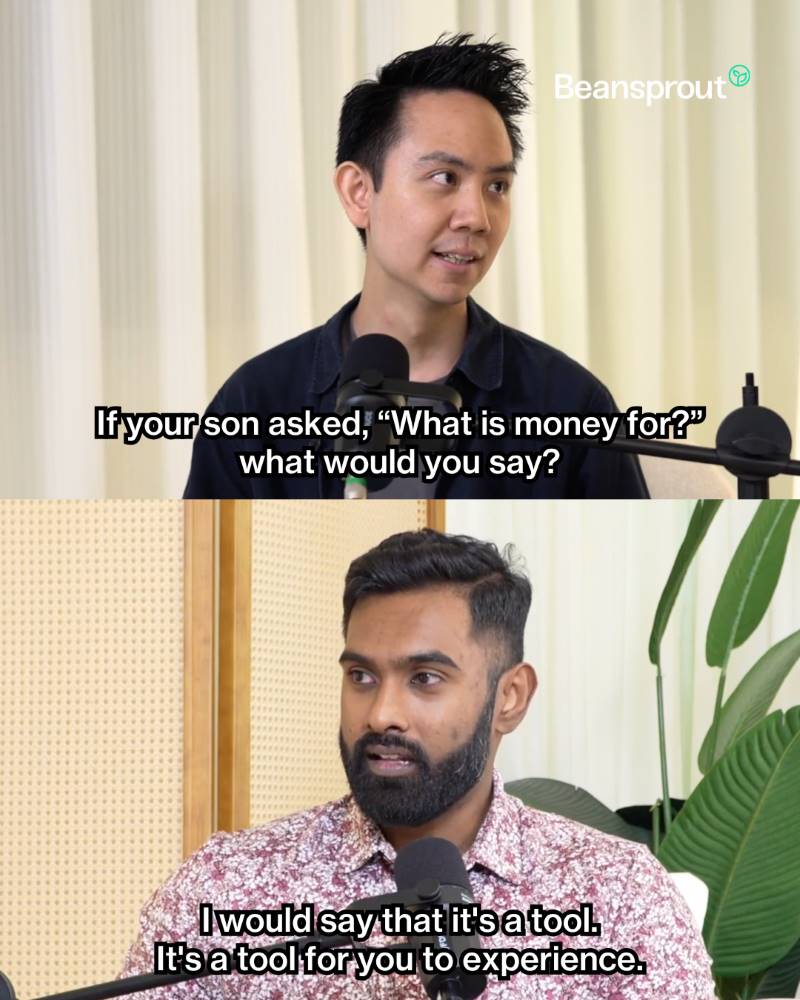
Because the pandemic had shown him what happens when a single employer is your only source of income, Yuva began building multiple income streams.
For him, this looked like podcasting and personal fitness clients alongside his day job.
"I realised that now, whatever gigs that I do on the side, I'm trying to do some long-term planning for every one of those," he says.
"And that is because the primary motivator is that I want my son to have options."
When Yuva first entered the workforce, he had no connections to leverage. No network, no doors already open. He had to build everything with himself as his only resource.
This is a reality he doesn’t want his son to face.
"I'm still adamant that he has to earn his way," he says. "But I just want some options for him."
Parenthood created this shift for him. It did not happen intentionally, but becoming a father somehow ignited an instinct to start thinking in generations.
All the usual conversations continued—the budget recalculations, the navigation of line items like diapers, sterilisers, baby gear—but he began to notice a deeper shift in his time horizon.
He used to think of his side projects in ‘months’—what would help him tackle each month with just a little more buffer of comfort. But now, he started asking how each of these could build towards something that would matter for decades to come.
What 'enough' actually looks like
Ask Yuvaraj what financial freedom looks like to him, and his answer is not a number.
"If I want to travel, I don't want to think about the flight price," he says.
"Being able to maybe go out and have a nice dinner with your family at a nice place and not have to think about, okay, I have $300 this month to spend on this dinner."
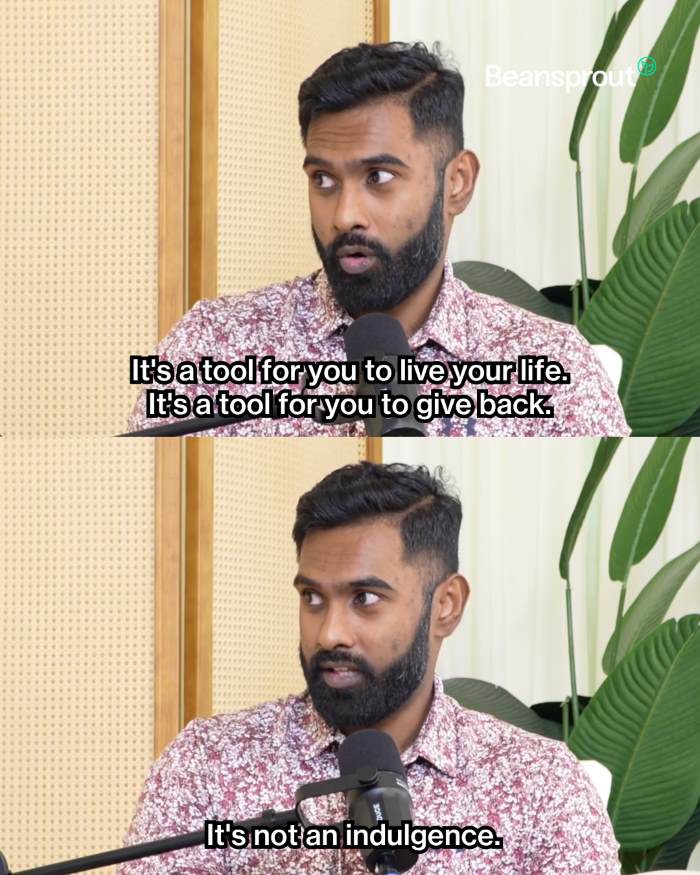
Of course, these things cost money. But in a sense, it is not money he is aiming for; it is the security and experiences the money supports.
As a child, his parents often said no to his requests for new toys. As an adult, he found himself “making up” for this with, at first, one Power Ranger.
This led to a cabinet. And now he has a wall full of it.
"I don't think it ever ends," he says, now seeing why the pursuit of material things is futile.
"But if you're chasing concepts, a way of life, then I think that can last," he adds.
While he might not have understood this frugality when he was younger, it is ultimately a philosophy he has gained an appreciation for.
Yuva’s father is a migrant from Malaysia, and together his parents first lived in rental housing before working their way up to their own HDB flat, then a bigger one, and eventually even added a car.
It was a progressive climb, earned incrementally. What he understood from this was that you build deliberately, you don't borrow unnecessarily, and the goal is a life that doesn't make you anxious.
Today, he’s rying to pass the same thing on.
"I'm very careful about what I say, what I do," Yuvaraj says.
He sees that the financial planning is inseparable from the role modelling now—they are the same project.
The question underneath the question
Most conversations about money tend to focus on tactics. They cover practical aspects like your savings rate, emergency fund, the investment strategy, and so on.
These things matter for sure, and Yuva acknowledges that.
He's focused on rebuilding his savings after a year that drained them steadily: from the renovation and the baby gear to other unforeseen circumstances that life threw at him.
Things are starting to stabilise, and he’s feeling a little more steady.
But what his story tells us is that tactics sit on top of something else.
Underneath them is a question that most of us don't ask directly: what am I actually building toward?
For Yuva, the answer arrived the moment he had someone to build it for.
The long-term planning that he'd been doing loosely became intentional. The side income that was once ‘padding’ was now legacy.
This wasn’t so much a strategy as it was a recognition and then a reorientation of what motivated him.
The practical question—how much do I need to save, how much is enough—turns out to be easier to answer once you answer what’s really below that.
What are you building this for?
Click here to listen to Yuva's full episode on Money Diaries.
Follow us on Telegram, Youtube, Facebook and Instagram to get the latest financial insights.
Read also
Gain financial insights in minutes
Subscribe to our free weekly newsletter for more insights to grow your wealth
Most Popular

Comments
0 comments