
kopi-C with Stoneweg Europe Stapled Trust CEO: Europe's real estate recovery, and the management discipline behind it
Stocks
Powered by

By Julian Wong • 08 Apr 2026
Why trust Beansprout? We’ve been awarded Best Investment Website at the SIAS Investors’ Choice Awards 2025
'%3e%3cpath%20fill-rule='evenodd'%20clip-rule='evenodd'%20d='M17.64%209.20455C17.64%208.56637%2017.5827%207.95273%2017.4764%207.36364H9V10.845H13.8436C13.635%2011.97%2013.0009%2012.9232%2012.0477%2013.5614V15.8195H14.9564C16.6582%2014.2527%2017.64%2011.9455%2017.64%209.20455V9.20455Z'%20fill='%234285F4'/%3e%3cpath%20fill-rule='evenodd'%20clip-rule='evenodd'%20d='M9%2018C11.43%2018%2013.4673%2017.1941%2014.9564%2015.8195L12.0477%2013.5614C11.2418%2014.1014%2010.2109%2014.4205%209%2014.4205C6.65591%2014.4205%204.67182%2012.8373%203.96409%2010.71H0.957275V13.0418C2.43818%2015.9832%205.48182%2018%209%2018V18Z'%20fill='%2334A853'/%3e%3cpath%20fill-rule='evenodd'%20clip-rule='evenodd'%20d='M3.96409%2010.71C3.78409%2010.17%203.68182%209.59318%203.68182%209C3.68182%208.40682%203.78409%207.83%203.96409%207.29V4.95818H0.957273C0.347727%206.17318%200%207.54773%200%209C0%2010.4523%200.347727%2011.8268%200.957273%2013.0418L3.96409%2010.71V10.71Z'%20fill='%23FBBC05'/%3e%3cpath%20fill-rule='evenodd'%20clip-rule='evenodd'%20d='M9%203.57955C10.3214%203.57955%2011.5077%204.03364%2012.4405%204.92545L15.0218%202.34409C13.4632%200.891818%2011.4259%200%209%200C5.48182%200%202.43818%202.01682%200.957275%204.95818L3.96409%207.29C4.67182%205.16273%206.65591%203.57955%209%203.57955V3.57955Z'%20fill='%23EA4335'/%3e%3c/g%3e%3cdefs%3e%3cclipPath%20id='clip0_0_2849'%3e%3crect%20width='18'%20height='18'%20fill='white'/%3e%3c/clipPath%3e%3c/defs%3e%3c/svg%3e)
Make Beansprout your preferred source on Google
Add us on Google to see more of our insights in your search results
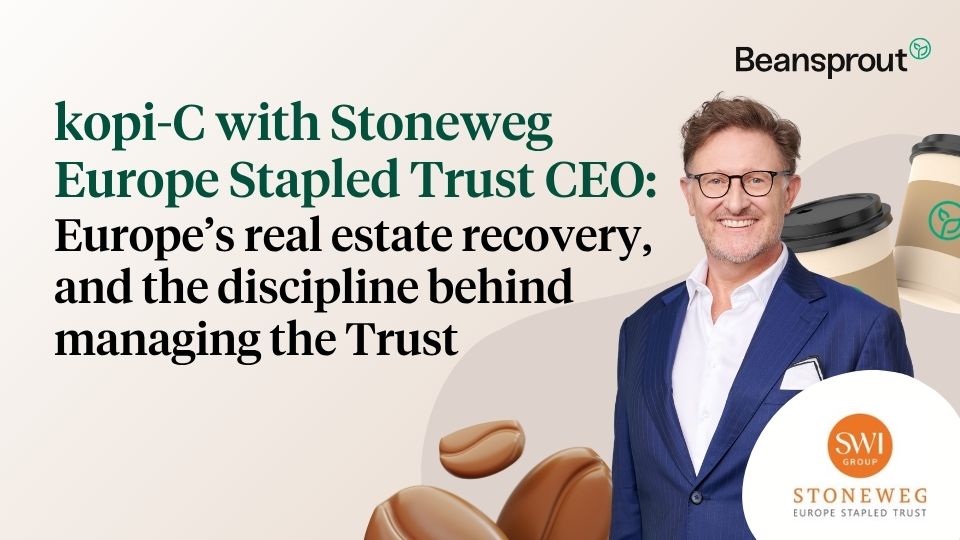
As Europe's real estate recovery gathers pace, Stoneweg Europe Stapled Trust CEO Simon Garing makes the case for why the trust's respositioned logistics portfolio, data centre ambitions, and approach to management incentives make Europe a timely conversation for REIT investors.
Ask most Singapore investors where they look for real estate exposure, and the answers tend to be predictable: Singapore REITs with malls they shop in, offices they work in, or data centres they have read about.
Look further afield and the conversation usually turns to the US or China.
Europe, almost without fail, gets passed over.
Simon Garing thinks this is a mistake, and one that is becoming more expensive to make.
"The Europe economy is diverse," he says.
"It's almost as big as the US and China collectively, across 27 countries. It provides Singapore investors with a unique opportunity to capture real estate returns that are typically higher than out of the US and China. And it's freehold.
Garing is the Chief Executive Officer of Stoneweg Europe Stapled Trust (SERT), Singapore's largest European-focused REIT, with over S$3 billion in assets across around 100 predominantly freehold properties in Western Europe.
He makes the case for why the moment for European real estate has arrived, and why the way SERT is managed is as important to the story as the market itself.
Catch the full conversation in the video below.
Europe's overlooked real estate recovery
In Garing’s view, the past 18 months have redrawn the picture for European real estate in ways that have not yet fully registered with Singapore investors.
He names a few notable events. For one, the European Central Bank began cutting interest rates in mid-2024 and has since brought its deposit rate down to 2%, easing financing conditions across the region.
Germany—the continent's largest economy—passed a landmark constitutional reform in early 2025, freeing up a €500 billion infrastructure fund and removing the ceiling on defence-related spending. Economists estimate the package could unlock up to €1 trillion in total investment over the coming decade.
"The German government is now prepared to invest over a trillion euros into their economy over the next few years," Garing notes.
"That's going to drive stronger GDP growth, and therefore good for rent growth, good for tenant demand."
European equity markets have already responded: broad indices have risen 20 to 30% over the past 12 to 18 months, and the euro has strengthened significantly against the US dollar.
SERT's portfolio sits squarely in the path of these trends.
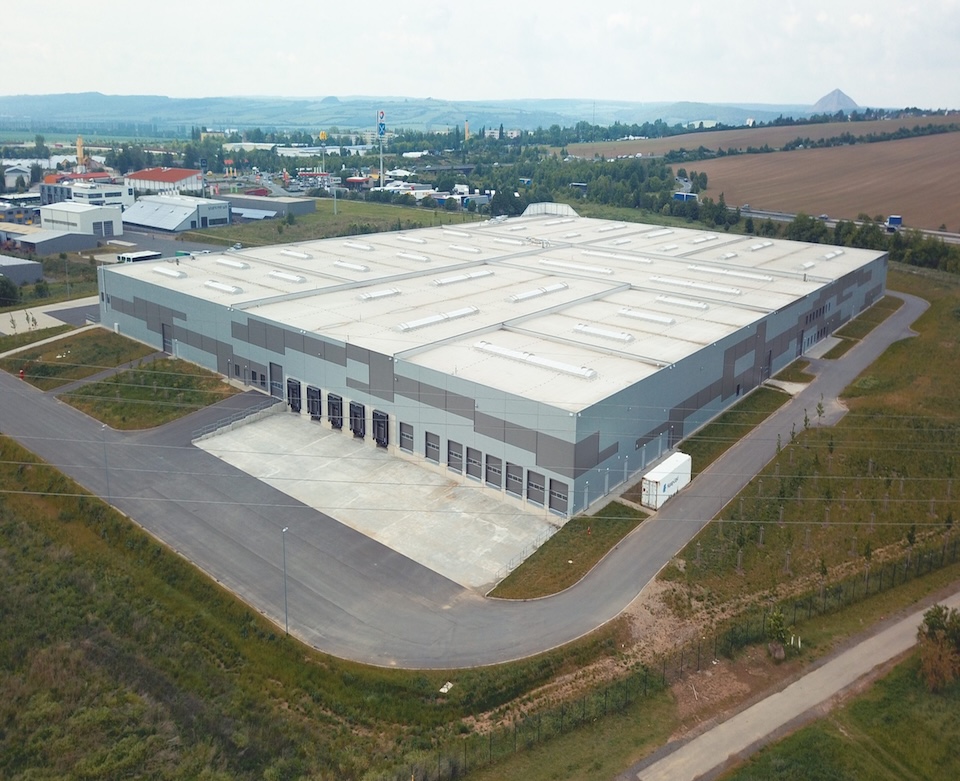
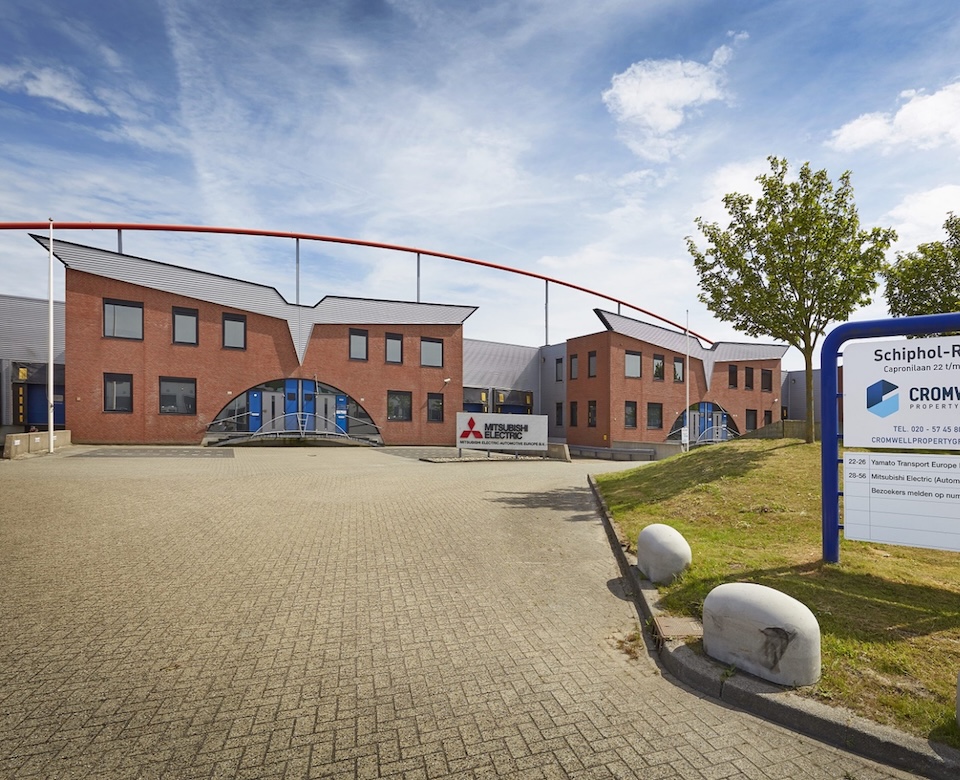
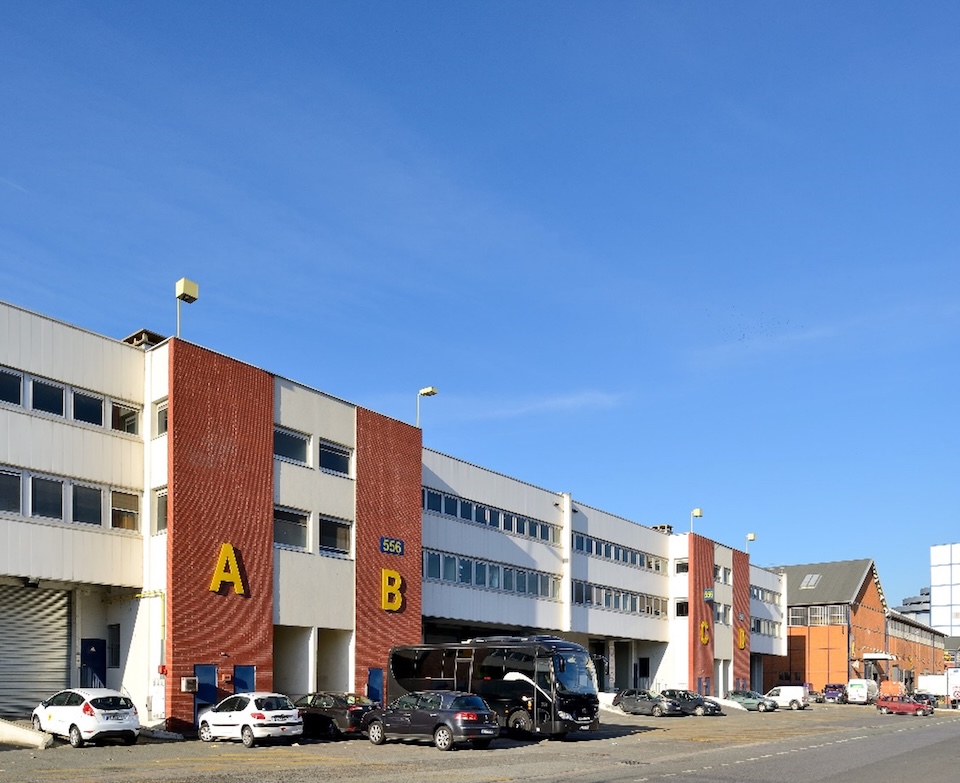
The trust holds warehouses, distribution facilities, and urban last-mile logistics centres in gateway cities including Paris and Amsterdam, and along the key freight corridors linking Germany, the Netherlands, and Denmark.
One of Garing's favourite examples is Parc des Docks in Paris, a 10-hectare property that sits in the area redeveloped for the 2024 Olympics, serviced by fresh infrastructure and anchored by large distribution tenants.
"If you can invest in real estate where the government is spending a lot of money in infrastructure," he says, "Values go up."
A portfolio rebuilt for what comes next
The portfolio Garing is now working with looks meaningfully different from the one SERT held four years ago. Over that period, the trust has sold approximately €400 million of non-core assets, reducing its exposure to office buildings, exiting underperforming markets in Helsinki and Poland, and concentrating its holdings in logistics and industrial assets.
The result, he asserts, is a portfolio where no single tenant accounts for more than 4% of income. The trust has also reported a 10% rent reversion (meaning rents on renewed leases came in 10% above the expiring rates) across 300,000 square metres of space in the past year.
There is also a forward-looking dimension that sets SERT apart from a standard logistics REIT. The "stapled" in its name refers to a business trust component that sits alongside the conventional REIT structure.
Where a REIT is designed to generate and distribute rental income, a business trust can take on more growth-oriented, development-type activities.
In practice, this has meant investing in a data centre development fund managed by the trust's new sponsor, Stoneweg, which manages the largest private equity data centre fund of its kind in Europe.
Currently, the trust has five dedicated development sites that have already secured around 10% of Europe's total data centre power capacity.
The fee you do not see
For all the reasons Garing makes in favour of European real estate, investing in a REIT whose assets are thousands of miles away requires something specific of the retail investor: trust.
By Garing’s own admission, you cannot drive past the warehouses, speak to the tenants, or form a view on whether the Paris logistics park is as well-located as the manager says it is.
What you can evaluate—and what Garing argues most investors do not look at closely enough—is whether the people running the trust are genuinely incentivised to act in your interest.
Essentially, he’s talking about management fees.
Most Singapore-listed REITs pay their management fees partly in units: newly created units issued directly to the manager. It is a common structure, often presented as a feature, with the idea being that the manager is incentivised to grow the trust's value because they become unitholders too.
But Garing is unconvinced by this model.
"A fee is a fee. It's an expense," he says. "Some REITs are paying 10 to 20% more than the headline distribution to create a headline dividend, and that comes at the expense of the capital side."
SERT currently trades at around S$1.65 per unit—a 20% discount to its stated net asset value. This means the trust's units are priced below what the underlying properties are actually worth.
If management fees were paid in newly issued units at that market price, those units would be handed to the manager at a discount to intrinsic value, quietly eroding what each existing investor actually holds, even if the headline distribution figure stays flat.
Instead, SERT pays its management fees in cash, making it a direct expense on the income statement. According to Garing, it is one of only two or three trusts on SGX to adopt this approach.
This philosophy shapes the trust's broader capital decisions.
SERT has not raised new equity since 2021, and over the past 12 months has been actively buying back its own units on the open market, funded partly by asset sale proceeds.
"My KPIs are not based on an AUM target," Garing says flatly. "I'm not going to give you 'we're going to double the size of our REIT in the next two years.' Investors want to hear that the REIT manager is focused on growing dividends and growing NAV."
At the moment, the trust's sponsor, Stoneweg, owns 28% of SERT. The chairman, Garing notes, calls him every Tuesday to discuss the unit price.
What comes next
SERT enters 2026 with approximately €100 million in cash from recent asset sales, a balance sheet with no debt maturing for five years, and investment grade ratings from both Fitch (recently upgraded) and S&P.
Garing is clear-eyed about where the trust is in its cycle.
"If you bought property two years ago, you've probably lost money. It doesn't matter if it's the US, China or Europe. But now is a really good time to be investing into European real estate."
The acquisition focus is logistics assets in the core Western European freight corridors, as well as new ground in Spain and Switzerland, where Stoneweg has an established deal pipeline. The Spanish market is characterised as high-growth, with Switzerland as the safe haven play.
On the development side, Garing expects the data centre pipeline to drive net asset value growth over the coming five to seven years.
The trust also issued formal forward guidance alongside its 2025 results, committing to a distribution per unit for the coming year at least broadly in line with what it delivered last year. It is the first such guidance in five years, and Garing frames it as a statement of confidence rather than a marketing exercise.
He is, characteristically, measured about what it all adds up to.
"The last few years we've been tidying up the kitchen," he says. "Now we're starting to bake the cake."
About Stoneweg Europe Stapled Trust
Stoneweg Europe Stapled Trust (“SERT”) is a stapled group comprising Stoneweg European Real Estate Investment Trust and Stoneweg European Business Trust. SERT is a growth-ready European logistics and data centre platform with resilient income and a clear path to long-term value creation, backed by a well-aligned sponsor ecosystem. SERT aims to provide sustainable distributions through active asset management and a disciplined approach to portfolio construction.
SERT has a principal mandate to invest, directly or indirectly, in income-producing commercial real estate assets across Europe. SERT is strategically focused on its highest-conviction sectors - logistics and data centres - while selectively pursuing value-add redevelopment opportunities to enhance portfolio quality and earnings resilience. At present, SERT has close to 90% exposure to Western Europe and close to 60% exposure to the logistics, light industrial and data centre sectors, with a medium-term goal of increasing its exposure to these sectors to a vast majority weighting.
SERT’s portfolio is valued at approximately €2.2 billion and comprises over 90 predominantly freehold properties located in or near major gateway cities in the Netherlands, Italy, France, Poland, Germany, Finland, Denmark, the Czech Republic and the United Kingdom. The portfolio spans approximately 1.6 million sqm of lettable area and serves more than 700 tenant-customers, providing a diversified income base that supports sustainable distributions.
SERT is an early investor with 6.7% stake in the Sponsor’s data centre development platform, AiOnX, which is expected to drive long-term valuation and earnings upside, subject to development execution and market conditions.
SERT is listed on the Singapore Exchange Limited (SGX counter: SET (Euro) and SEB (SGD)) and is managed by Stoneweg EREIT Management Pte. Ltd. and Stoneweg EBT Management Pte. Ltd. (collectively the “Manager”). SERT’s sponsor is SWI Group, comprising Stoneweg, Icona Capital, its subsidiaries and associates. SWI Group holds a substantial 28% stake in SERT’s stapled securities and wholly owns the Manager and Property Manager.
About kopi-C: the Company brew
kopi-C is a regular column by SGX Research in collaboration with Beansprout, a MAS-licensed investment advisory platform, that features C-level executives of leading companies listed on SGX. These interviews are profiles of senior management aimed at helping investors better understand the individuals who run these corporations.
Read also
Gain financial insights in minutes
Subscribe to our free weekly newsletter for more insights to grow your wealth
Most Popular

Comments
0 comments