
Beyond Singapore and US stocks: How to invest in China blue chips
ETFs
Powered by

By Ng Hui Min • 06 Apr 2026
Why trust Beansprout? We’ve been awarded Best Investment Website at the SIAS Investors’ Choice Awards 2025
The CSOP CSAM CSI A500 Index ETF gives retail investors a simple, low-barrier route to 500 of China's most liquid companies, now listed on SGX.
This post was created in partnership with CSOP Asset Management Pte. Ltd. All views and opinions expressed in this article are Beansprout's objective and professional opinions.
What happened?
Like many Singapore investors, much of my growth exposure has been concentrated in Singapore and US blue-chip stocks.
But while I was focused on the S&P 500 and the local market, China’s stock market quietly delivered one of its strongest years in a decade.
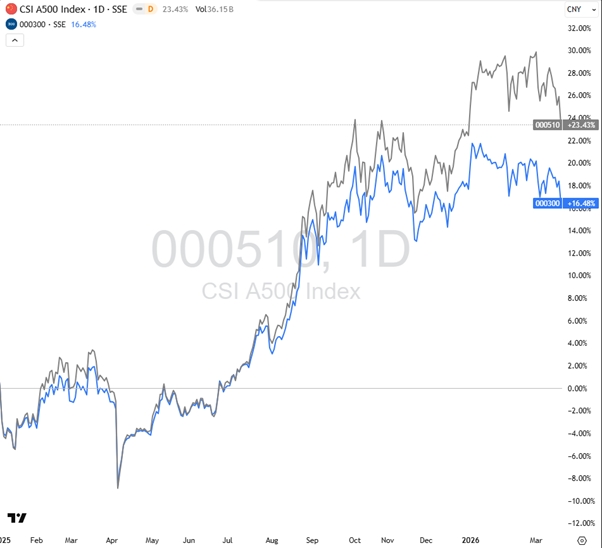
The Shanghai Composite repeatedly touched ten-year highs, while the CSI A500 Index — which tracks 500 of China’s largest and most liquid listed companies — gained around 23% in 2025, ahead of the S&P 500’s roughly 16%.
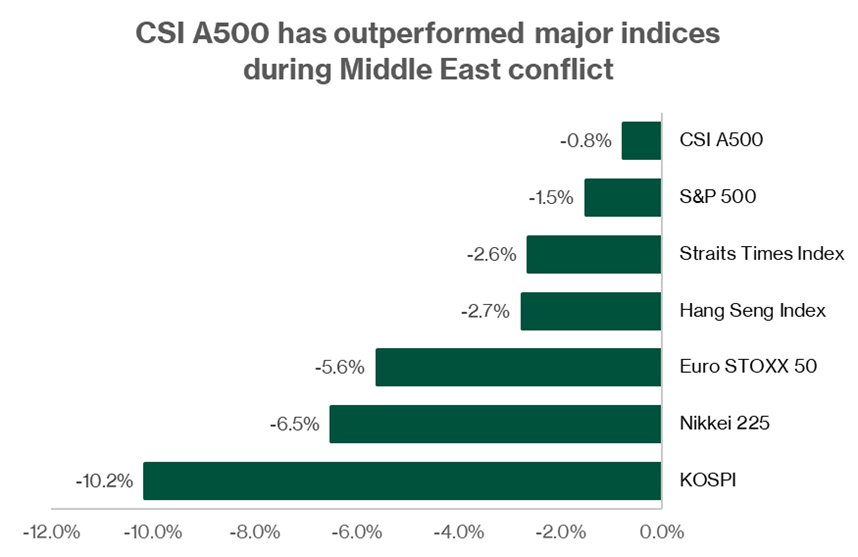
What also stood out was how China held up during the recent Middle East conflict.
Chinese equities were more resilient than many regional and global markets.
This made me think more carefully about diversification and what kind of exposure could help cushion a growth portfolio when global markets sell off together.
That’s what led me to explore the CSOP CSAM CSI A500 Index ETF, which tracks the CSI A500 and is sometimes described as the S&P 500 of China.
In this article, I’ll look at what the CSI A500 is, why it matters, and why Singapore investors may want to pay closer attention to China now.
What is the CSOP CSAM CSI A500 Index ETF?
#1 – The ETF tracks China’s version of the S&P 500
The CSOP CSAM CSI A500 Index ETF gives investors exposure to 500 of China’s largest and most liquid A-share companies listed on the Shanghai and Shenzhen exchanges.
In many ways, it can be seen as an ETF tracking China’s version of the S&P 500, offering broad access to the country’s domestic equity market through a single product.
#2 – A more balanced index than older China benchmarks
What makes this ETF stand out is the nature of the index it tracks.
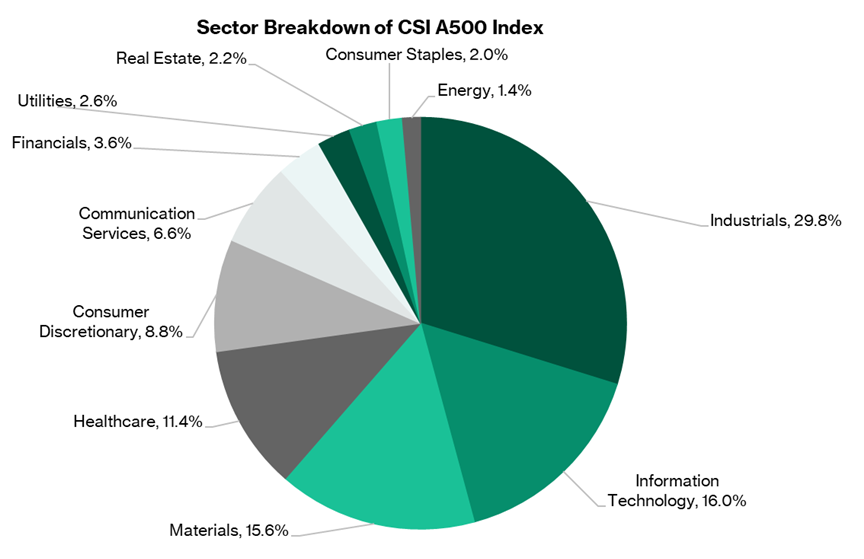
Unlike older China benchmarks such as the CSI 300, which are more heavily concentrated in traditional sectors like banks, insurers, and consumer staples, the CSI A500 provides a more balanced representation of China’s economy.
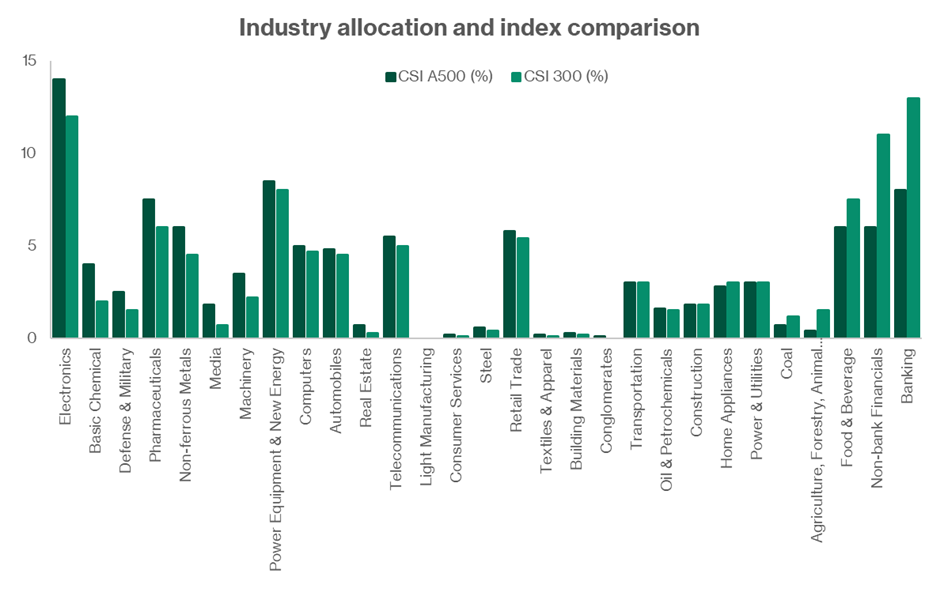
As a result, the ETF offers greater exposure to newer growth areas such as electronics, telecommunications, pharmaceuticals, and advanced manufacturing.
This gives investors access not only to China’s established industry leaders but also to sectors that are more closely tied to the country’s economic transformation.
That is important because more than half of the underlying index is made up of industries linked to what China refers to as its “new productive forces” — areas associated with innovation, technology, and industrial upgrading.
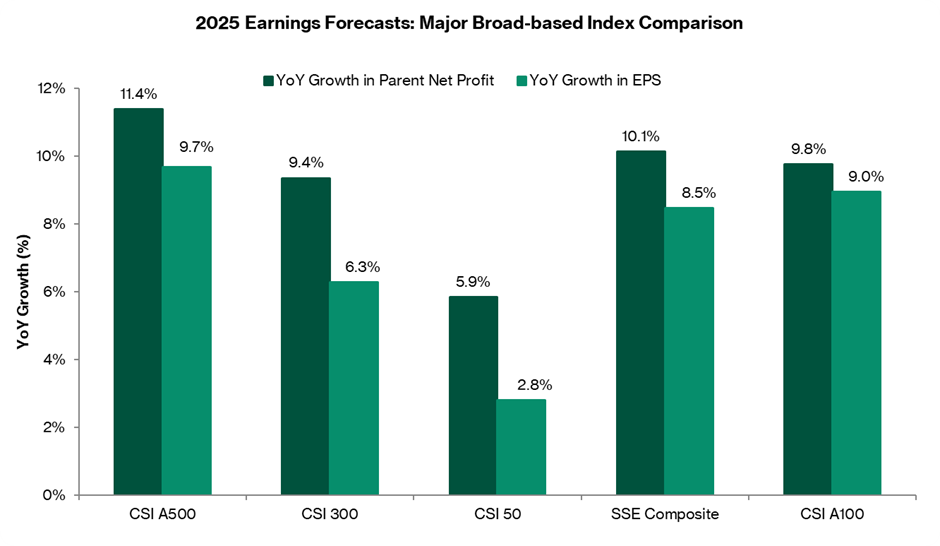
Many companies in the ETF are also leading players in their respective sectors, with stronger earnings power and better long-term growth potential than those found in some broader China benchmarks.
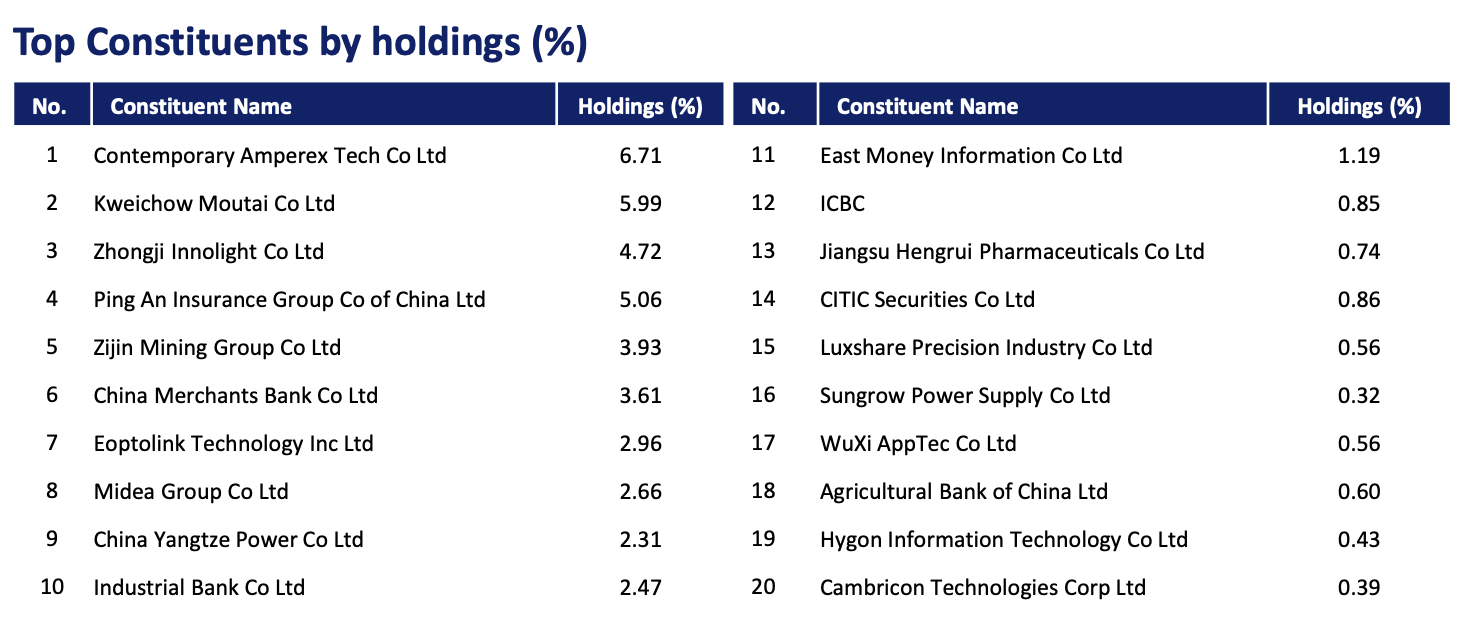
This means the ETF may offer a more forward-looking way to gain exposure to China’s long-term growth story.
As China moves further up the manufacturing value chain and strengthens its innovation capabilities, the CSOP CSAM CSI A500 Index ETF could provide a convenient and diversified way to participate in that shift.
#3 – Managed by CSOP Asset Management Pte. Ltd., subsidiary of Hong Kong's largest exchange-traded fund issuer
The CSOP CSAM CSI A500 Index ETF is managed by CSOP Asset Management Pte. Ltd. (“CSOP SG”), a fully owned subsidiary of CSOP Asset Management Limited (“CSOP HK”), which was founded in Hong Kong in 2008 as the first offshore subsidiary of one of China’s largest fund houses.
That background matters because drawing on the years of experience and expertise from CSOP HK, gives CSOP SG a deeper familiarity with mainland China’s markets and distribution reach across both retail and institutional investors in the region.
According to Bloomberg Intelligence in March 2026, CSOP HK became Hong Kong’s largest ETF issuer by assets under management, with US$28.4 billion across 59 funds.
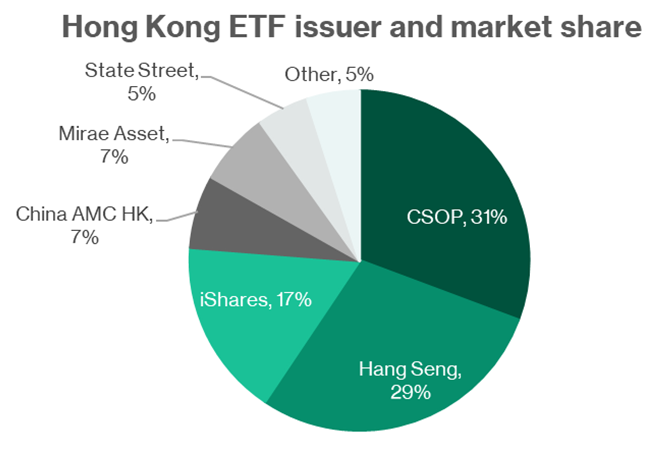
This is relevant because the SGX-listed fund feeds into the CSAM CSI A500 ETF in Shenzhen, which is one of the largest CSI A500-tracking funds in the market.
CSOP SG is also not new to Singapore investors. The asset manager has been a MAS-Licensed Fund Manager since 2019 and has since established a strong presence in Singapore.
Its CSOP CSI STAR and ChiNext 50 Index ETF (SGX: SCY), which gives investors exposure to China’s innovation-focused growth companies, was the third best-performing ETF on the SGX in 2025.
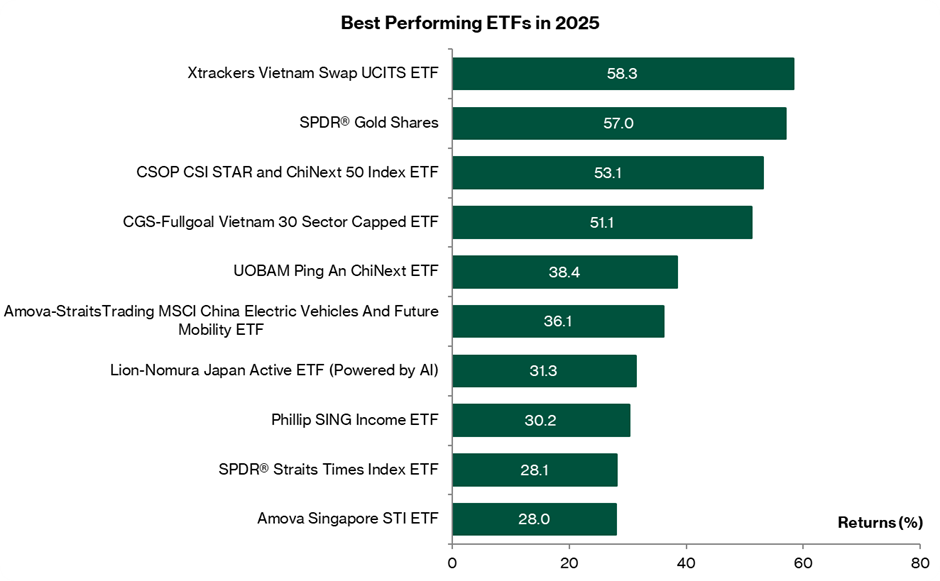
CSOP SG also offers the CSOP Huatai-PineBridge SSE Dividend Index ETF for dividend exposure and the ICBC CSOP FTSE Chinese Government Bond Index ETF for fixed income and diversification.
Seen in this context, the CSOP CSAM CSI A500 Index ETF is part of a broader platform that already gives Singapore investors multiple ways to access China’s capital markets.
Why consider China now?
#1 — A more supportive macro backdrop
The macro environment has become more supportive for China assets.
The Fed cut rates three times in the second half of 2025, reducing the opportunity cost of holding renminbi assets.
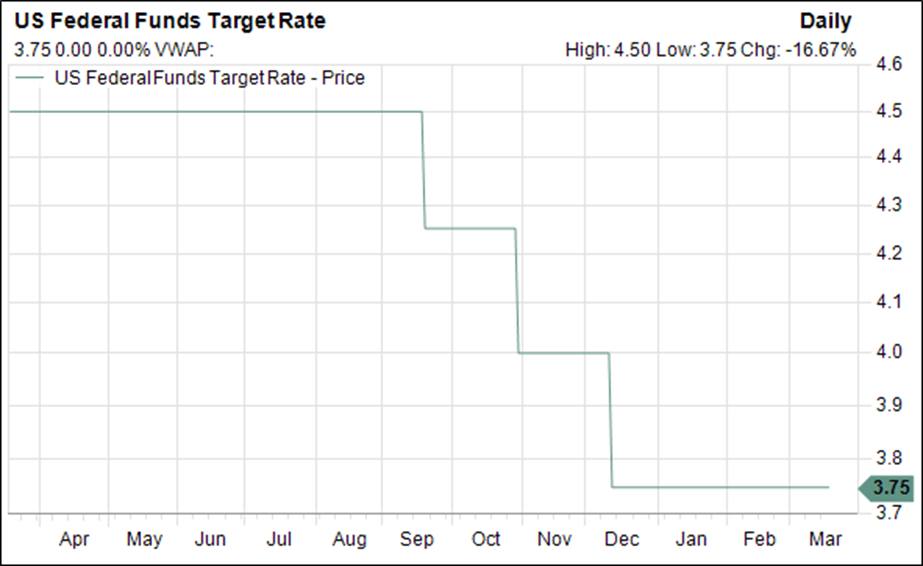
At the same time, the renminbi strengthened to a one-year high against the US dollar, while inflows into US- and EU-registered China passive funds reached record highs in 2025.
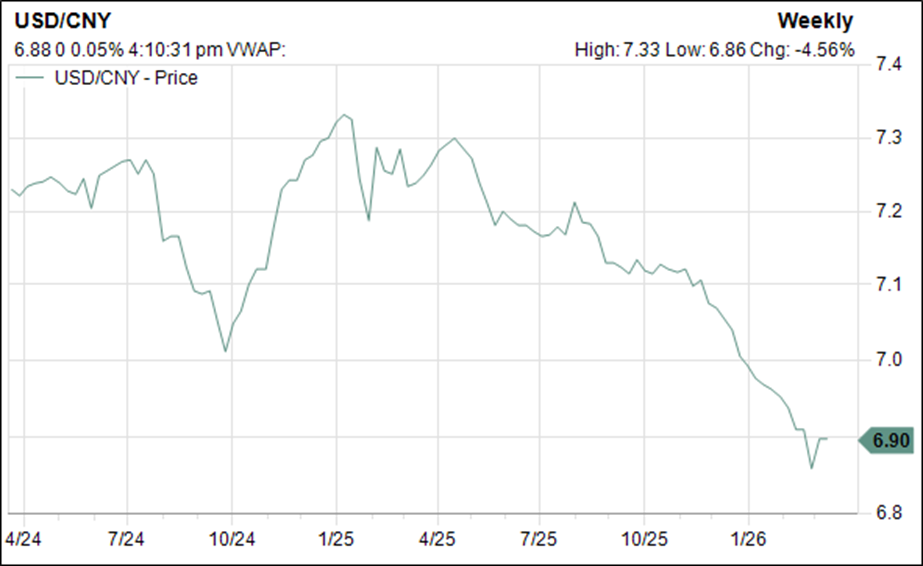
#2 — The new policy cycle could provide another boost
2026 is the first year of China’s 15th Five-Year Plan.
Historically, China has delivered a large share of the targets set out in its five-year plans.
Policy support is expected in areas such as AI, semiconductors, advanced manufacturing, and clean energy — sectors that already make up a meaningful part of the CSI A500.
During the previous plans, priority sectors performed much better than the broader CSI 300.
#3 — Institutional investors are increasing exposure
Institutional participation is also rising.
Chinese insurers had already built sizeable positions in CSI A500-tracking ETFs by mid-2025, while foreign investors were net buyers of A-shares for three straight quarters in 2025.
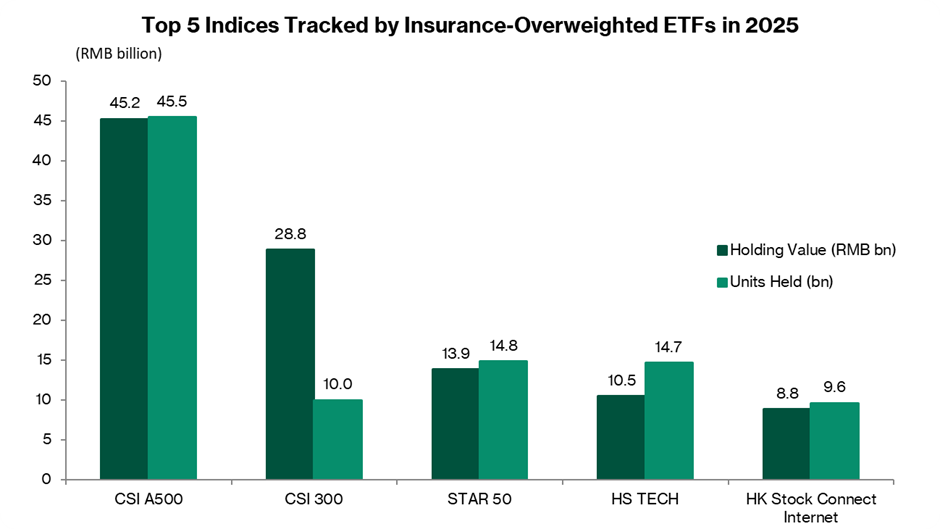
What are the factors to consider before investing in the CSOP CSAM CSI A500 Index ETF?
#1 — Market risks
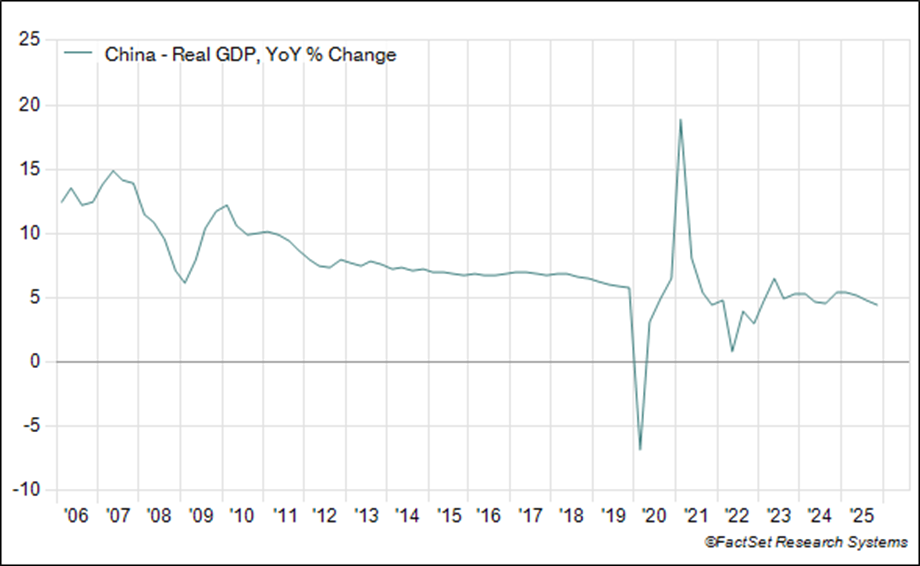
China equities can be more volatile than developed markets, with sentiment often influenced not just by earnings but also by regulation, policy shifts, the property cycle, and geopolitical tensions such as US-China trade restrictions and tariffs.
While China may still offer long-term growth potential, investors should be prepared for sharper swings when macro conditions or policy expectations change.
#2 — Currency risk
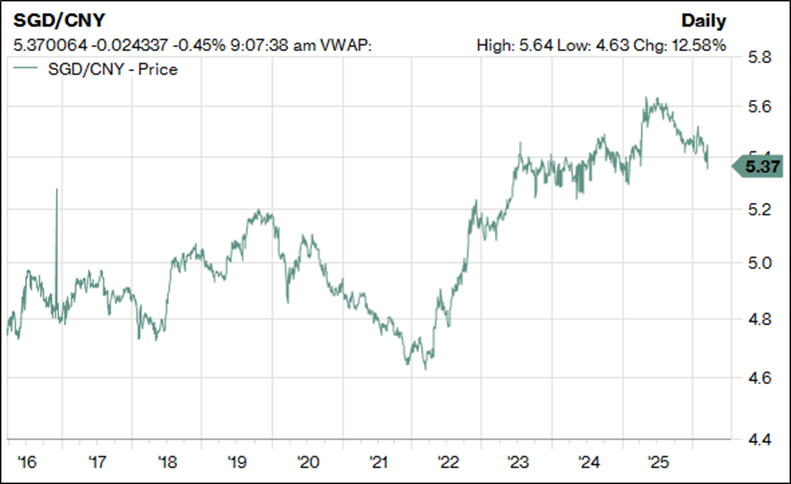
The ETF is traded in Singapore dollars, but its base currency is renminbi (RMB).
If the RMB weakens against the SGD, gains from the China A-share market can be reduced when translated back into Singapore dollars, which may weigh on overall ETF returns even if the underlying stocks perform well.
#3 — Management fee
The ETF currently charges a management fee of 0.89% per year based on its net asset value.
I would be mindful that fees can impact net returns over time, while this can be weighed against the convenience and access it offers through the SGX.
What would Beansprout do?
Most of my growth exposure has traditionally been concentrated in Singapore and the US, with little exposure to China.
However, there are signs of China’s economic transformation with policy support in areas such as AI, semiconductors, advanced manufacturing, and clean energy.
The CSOP CSAM CSI A500 Index ETF gives investors exposure to 500 of China’s largest and most liquid A-share companies listed on the Shanghai and Shenzhen exchanges.
In many ways, it can be seen as an ETF tracking China’s version of the S&P 500.
The ETF is listed on the SGX, can be bought in Singapore dollars, has a very low entry point of around S$1, and is SRS-eligible.
That removes some of the barriers that previously made China’s onshore market harder for retail investors like me to access.
It is managed by CSOP SG, a fully owned subsidiary of CSOP HK, Hong Kong’s largest ETF issuer by assets under management, with US$28.4 billion across 59 funds.
However, I would be mindful that the ETF does not pay dividends, and watch out for risks such as regulation, geopolitics, and currency movements still matter.
Overall, I would consider the CSOP CSAM CSI A500 Index ETF as a potential building block of a diversified growth portfolio, if I want to gain exposure to China’s medium to long-term growth in a simple way.
Learn more about the CSOP CSAM CSI A500 Index ETF here.
Check out the best stock trading platforms in Singapore with the latest promotions to invest in index ETFs.
Disclaimers
The investment product, as mentioned in this material, is registered under section 286 of the Securities and Futures Act (Cap. 289) of Singapore (the “SFA”). This material and the information contained in this material shall not be regarded as an offer or solicitation of business.
CSOP Asset Management Pte. Ltd. (“CSOP”) has provided information contained in this material to Beansprout based upon sources that are believed to be accurate, complete, and reliable. However, CSOP does not warrant the accuracy and completeness of the information, and shall not be liable to the recipient or controlling shareholders of the recipient resulting from its use. CSOP is under no obligation to keep the information up-to-date. The information herein shall not be disclosed, used or disseminated, in whole or part, and shall not be reproduced, copied or made available to others without the written consent of CSOP. Advice should be sought from a financial adviser regarding the suitability of the investment and/or investment product before making an investment. Investment involves risk. The value of investments, and the income from them, can go down as well as up and an investor may get back less than the amount invested. Past performance is not necessarily indicative of future performance. Investor should read the prospectus and product highlights sheet, which can be obtained on CSOP website or authorized participating dealers, before deciding whether to invest.
This advertisement has not been reviewed by the Monetary Authority of Singapore.
Index Provider Disclaimer
All rights in the Index vest in China Securities Index Company (“CSI”). CSI does not make any warranties, express or implied, regarding the accuracy or completeness of any data related to the Index. CSI is not liable to any person for any error of the Index (whether due to negligence or otherwise), nor shall it be under any obligation to advise any person of any error therein. The Product based on the Index is in no way sponsored, endorsed, sold or promoted by CSI and CSI shall not have any liability with respect thereto.
Read also
Gain financial insights in minutes
Subscribe to our free weekly newsletter for more insights to grow your wealth
Most Popular

Comments
0 comments