
kopi-C with CEO of Frasers Centrepoint Trust: From heartland staple to a new era of suburban retail
Stocks
Powered by

By Julian Wong • 18 Nov 2026
Why trust Beansprout? We’ve been awarded Best Investment Website at the SIAS Investors’ Choice Awards

Make Beansprout your preferred source on Google
Add us on Google to see more of our insights in your search results
Richard Ng, CEO of Frasers Centrepoint Asset Management, manager of Frasers Centrepoint Trust, reflects on three decades watching Singapore's suburban malls evolve from transactional pit stops into community "second places".
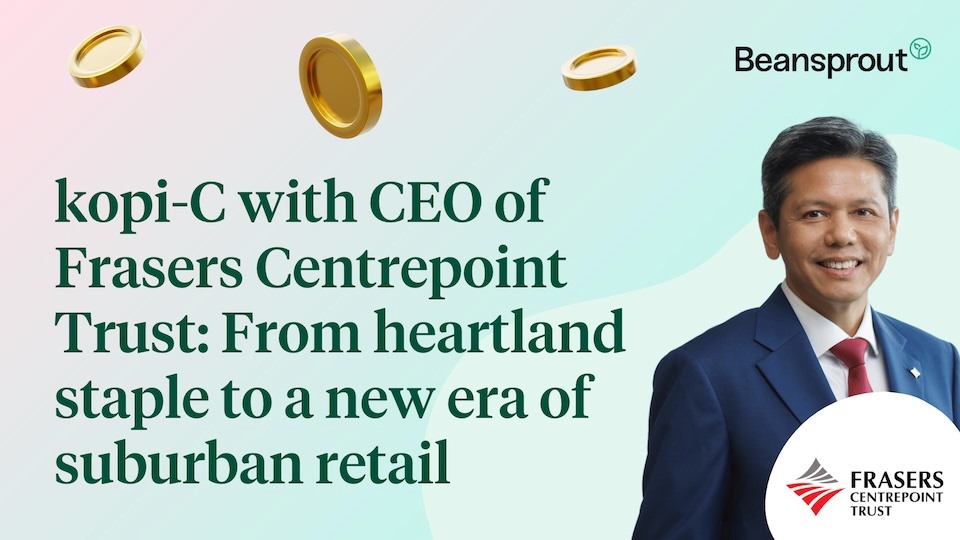
Richard Ng has spent 35 years in Singapore real estate, but he didn't set out to become a mall person.
"It wasn't really something I said, okay, I want to do retail," he says.
But when he joined the team that listed CapitaLand Mall Trust in 2002—Singapore's first REIT IPO—he found himself drawn into a sector that, at the time, barely existed as a serious asset class.
"Twenty-five years ago, the retail sector in Singapore was still relatively small," he recalls.
Ng has been Chief Executive Officer of Frasers Centrepoint Asset Management, the manager of Frasers Centrepoint Trust (FCT), since July 2019, following 14 years at CapitaLand Group and a stint at PGIM Real Estate.
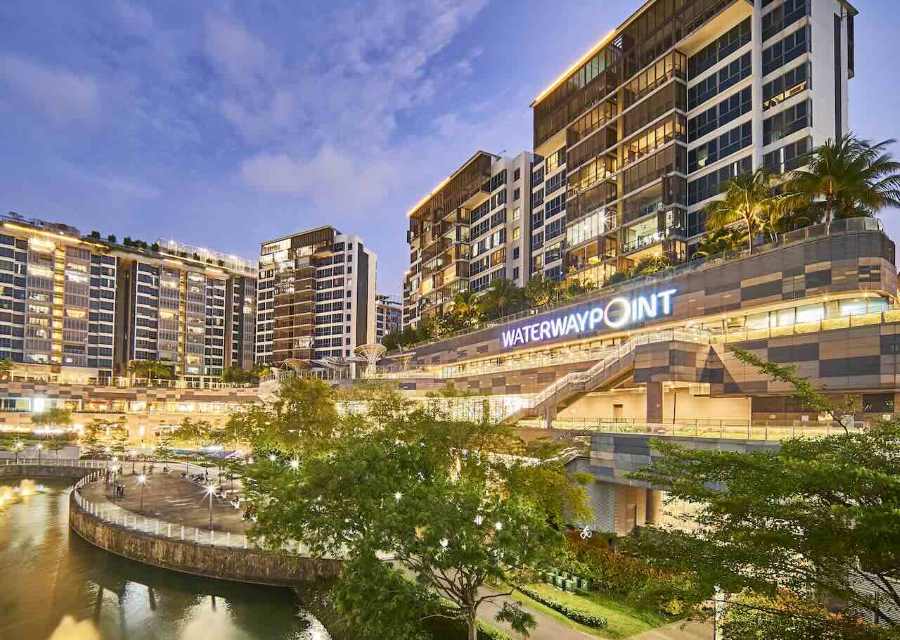
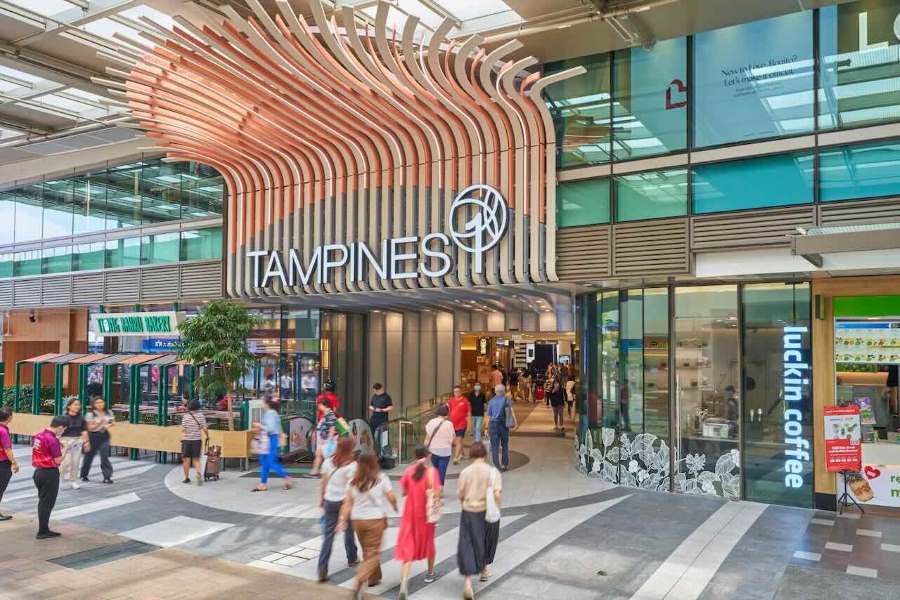
Today, FCT owns or partly owns four of Singapore’s 10 largest suburban malls, including NEX, Causeway Point, Northpoint City, and Waterway Point, with total assets under management of around S$8.4 billion.
For the financial year ended 30 September 2026, FCT reported a distribution per unit (DPU) of 12.35 cents—its highest since listing on the SGX in July 2006.
From transaction to "second place"
What's changed most since 2002, in Ng's telling, is what a mall is actually for.
"In the past, retail came across as a transactional marketplace," he says. "I go to the mall, do my groceries and shop for whatever I need. Then, I'm off."
That began shifting when malls introduced playgrounds and atrium events and activities—small additions, Ng says, that gave shoppers a reason to linger.
"Now it's no longer just transactional; it is more experiential."
For FCT’s suburban malls specifically, Ng frames this as a deliberate positioning of the mall as what he calls a “second place”—a differentiation from merely a “third place” after home and work—reflecting the mall’s role as an integral part of everyday life where people spend significant time. This underscores the role of suburban malls as vital social hubs that facilitate learning, working, gathering, shopping and dining, while fostering social interaction and a sense of belonging.
"Our market catchment is so close to us," he says.
"We want to be able to allow them to come as frequently as they want, and to spend a longer time."
Northpoint City, for instance, sees about five million shopper visits a month.
Ng also points to an ageing population as a reason why this matters more.
FCT has rolled out a loyalty programme benefit, FRx50+, offering shoppers aged 50 and above discounts and free parking on weekday afternoons, amongst other initiatives such as community interest groups and silver-friendly social spaces.
“Seniors are getting more youthful,” he says, observing that they have become a growing group with the time, mobility, and willingness to spend that malls are well placed to cater to.
Refreshing the retail experience
That philosophy also shapes FCT’s approach to evolving tenant formats and consumer preferences.
Ng cites Tiong Bahru Plaza, where the former anchor space for a cinema has been repurposed for an indoor adventure and active sports park, XVenture, marking its first outlet in Singapore. This reflects FCT’s efforts to diversify its tenant mix and enhance shopper experience.
A similar shift is underway at Causeway Point, where FCT is looking to introduce new retail formats and concepts as part of the mall’s broader asset enhancement initiative (AEI), which will commence in the second quarter of next year.
The transformation will see Causeway Point expand its retail offering from over 200 stores to close to 250, with a reconfiguration toward beauty and fashion, medical and aesthetic services and education, alongside expanded dining options.
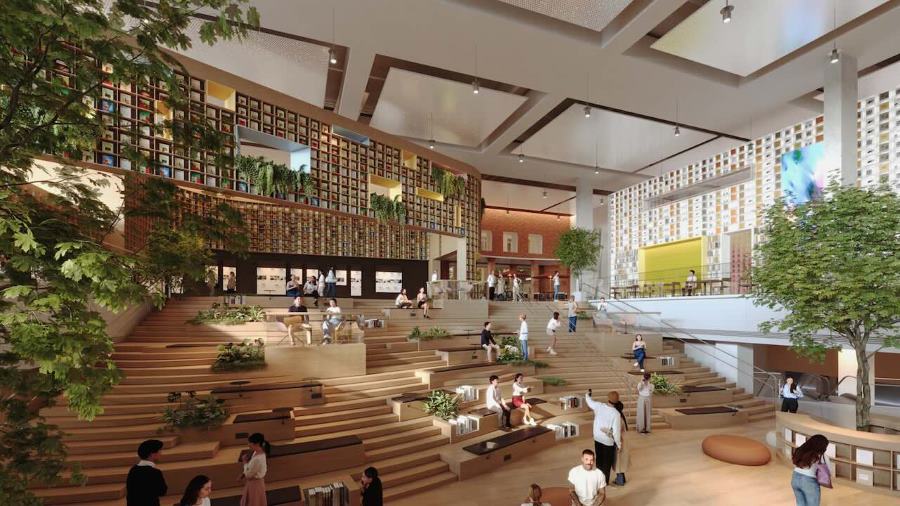
The transformation has also introduced The HomePage @ Causeway Point, a 32,000 square feet first-of-its-kind social and reading destination developed with Singapore's National Library & Archives Board, occupying parts of the mall's sixth and seventh floors.
It brings to life FCT’s 'second place' vision by creating a welcoming social and reading destination beyond home and work where people can gather, connect, learn and discover together.
As at 30 September 2026, FCT's top 10 tenants accounted for 19.1% of gross rental income across its retail portfolio, with its largest tenant, FairPrice Group, contributing 6.5%.
The upcoming transformation of Causeway Point, as well as recent AEI works at NEX and Hougang Mall, reflects FCT’s broader strategy of enhancing value from existing assets.
While AEIs require significant upfront investment and may result in a temporary income disruption during the works, Ng views them as strategic investments to strengthen the long-term resilience and competitiveness of its retail portfolio.
By enhancing the shopper experience and strengthening the tenant mix, the AEIs support sustainable rental growth and asset value. Importantly, they also enable FCT to keep pace with evolving consumer preferences and better serve the changing needs of the communities around its malls.
A first: developing the only retail mall in Bayshore Singapore
In July 2026, a consortium including FCT, sponsor Frasers Property, Sunway MCL, Sekisui House and Lum Chang won a government land sales (GLS) tender for a mixed-use site at Bayshore Drive, with FCT taking a 50% stake in the retail component alongside Sunway MCL and Sekisui House.
This is FCT’s first ground-up development and marks a departure from two decades of buying only completed malls.
Ng frames the underlying development evaluation as unchanged from any acquisition, which takes into consideration factors like catchment, demographics, income, competition and connectivity.
But the structure is new.
“We are going in at cost, meaning that we can achieve a better yield,” he says.
In comparison, “If somebody has built something already, they have to make a profit—the development profit—before they sell it to you.”
He points to Frasers Property and its partners’ track record delivering Waterway Point and Northpoint City as a reason FCT is comfortable taking on development risk as part of a consortium.
The project will not generate income until its expected completion around 2030, which Ng says has drawn questions from FCT's unitholders about the impact on distributions.
His response: funding will be capitalised during construction, so it won't affect DPU in the interim.
"Our DPU is preserved," he says. "You are not affected today and you're going to get something better"—referring to the targeted 5% yield once the project is completed.
FCT says this compares favourably with suburban mall acquisitions in the broader market, transacting at an estimated 4.5% or lower, and with FCT's own portfolio net property income yield of approximately 4.8% to 4.9%.
Separately, FCT funded part of its investment in Bayshore with proceeds from the White Sands divestment, completed on 30 September 2026, at an 8.4% premium to its appraised value. FCT’s aggregate leverage is expected to fall to about 36.8% once the divestment proceeds are applied to debt repayment.
Ng adds that FCT’s overall development capacity is bound by a regulatory limit of 10% of its deposited property value, which he estimates gives the trust roughly S$770m in headroom, against about S$300m committed to Bayshore so far.
Explaining the sponsor relationship
With Frasers Property’s role as FCT’s sponsor and approximately a 38% stake in FCT, Ng acknowledges the importance of robust governance processes to protect unitholders’ interest and ensure transparency.
For transactions, he points to a formal process involving two independent valuations conducted with the manager and trustee each appointing a valuer, and the transaction price capped at the lower of the two valuations.
Any related-party transaction large enough to require unitholder approval, he adds, goes to FCT’s audit and risk committee, and is typically accompanied by an independent financial adviser’s opinion to unitholders.
Ng also highlights the strategic value of FCT’s sponsor relationship, pointing to the 2019-2020 acquisition of a majority stake in AsiaRetail Fund and the purchase of a 50% stake in NEX between 2023 and 2024, as examples of how the sponsor supported FCT’s growth through various arrangements that would have otherwise been difficult for the trust to undertake on its own.
“If not for the sponsor, FCT wouldn’t even have started,” he says.
What he tells shoppers who've never thought of themselves as investors
Asked what he’d want someone who shops at Causeway Point or Waterway Point every week, but has never thought about owning REIT units, to understand, Ng points to the asset class’s visibility.
“You can literally sit there, have coffee, and count how many people go by,” he says. He adds that FCT has invested close to S$6 billion and divested about S$1.3 billion of assets over the past six to seven years as part of what he describes as continuous portfolio improvement.
On his own approach to leading FCT, Ng circles back to patience.
“Even [with Bayshore], you’re not going to see anything now and if you go there, it’s a piece of land,” he says.
“But we believe in investing for the future.”
About Frasers Centrepoint Trust
Frasers Centrepoint Trust is a leading developer-sponsored retail real estate investment trust with assets under management of approximately $8.4 billion.
As Singapore’s only retail-focused REIT and largest suburban retail mall owner, FCT’s portfolio comprises eight suburban malls that enjoy stable and recurring shopper footfall supported by commuter traffic and strong residential catchments. The Singapore retail portfolio has approximately 2.9 million sf of net lettable area and over 1,700 leases, with a strong focus on necessity spending, food & beverage and essential services. FCT also owns Central Plaza, an office building integrated with Tiong Bahru Plaza as part of a mixed-use development.
In July 2026, FCT, along with its consortium partners, was awarded the GLS tender for a mixed-use commercial and residential site at Bayshore Drive in Singapore. FCT will own 50.0% of the project’s retail component.
FCT is an index constituent of several benchmark indices including FTSE EPRA Nareit Global Real Estate Index Series (Developed Index), Straits Times Index, FTSE ST REIT Index, MSCI Singapore Small Cap Index and the SGX iEdge S-REIT Leaders Index.
Listed on the Main Board of the Singapore Exchange Securities Trading Limited since 5 July 2006, FCT is managed by Frasers Centrepoint Asset Management Ltd., a real estate management company and a wholly-owned subsidiary of Frasers Property Limited.
About kopi-C: the Company brew
kopi-C is a regular column by SGX Research in collaboration with Beansprout, Singapore’s trusted investment intelligence platform which helps everyday investors build the knowledge and confidence to make decisions that matter. kopi-C features C-level executives of leading companies listed on SGX. These interviews are profiles of senior management aimed at helping investors better understand the individuals who run these corporations.
Read also
Gain financial insights in minutes
Subscribe to our free weekly newsletter for more insights to grow your wealth
Most Popular

Comments
0 comments