
Why a futures-only trading platform may matter for active traders
Brokerage Account
Powered by

By Nicole Ng • 03 Nov 2026
Why trust Beansprout? We’ve been awarded Best Investment Website at the SIAS Investors’ Choice Awards 2025
If futures are becoming a bigger part of how you trade, does it make a difference whether your platform was built specifically for futures? We look at what futures traders may need from a platform and how KGI Crusoe works.
This post was created in partnership with KGI Securities (Singapore). All views and opinions expressed in this article are Beansprout's objective and professional opinions.
What happened?
If you trade stocks or ETFs, you may already be familiar with using an investment platform to check prices, place an order and monitor your holdings.
But futures work differently. Futures are traded using margin, every contract has its own specifications, and contracts come with expiry dates that traders need to keep track of.
This means the things that matter on a futures trading platform can also be different.
KGI Securities (Singapore) is launching KGI Crusoe, a trading platform built specifically for futures traders.
Rather than being a multi-asset platform where futures sit alongside stocks, ETFs and other investments, KGI Crusoe has been designed around futures trading from the outset.
In this article, I’ll look at why futures traders may have different platform needs, and what KGI Crusoe is offering.
Interested in exploring a dedicated futures trading platform? Find out more about KGI Crusoe and its futures-focused trading experience.
Why might futures traders have different platform needs?
Suppose you buy a stock and plan to hold it for a few months.
You generally decide how many shares you want, place the trade, and can continue holding the shares as long as you want.
With futures, there are a few more things you need to manage.
#1 – Futures are traded using margin
Unlike stocks, you do not pay the full value of the futures exposure upfront.
Instead, you put up a certain amount of money known as margin to open and maintain the position.
Because the value of your exposure can be larger than the margin you put up, futures involve leverage.
This can make futures more capital-efficient, but it also means losses can be magnified.
For example, a Micro E-mini S&P 500 futures contract has a multiplier of US$5 x S&P 500 index. If the index were at 7,000, one contract would represent US$35,000 of notional exposure.
A 1% movement in the underlying index would therefore correspond to roughly US$350 of movement in the contract's value, before fees and other costs.
There are two margin levels traders will commonly come across:
- Initial margin: The amount required to open the position.
- Maintenance margin: The minimum amount that needs to remain in the account while the position is open.
Futures positions are also marked to market, which means gains and losses are reflected as market prices move.
If losses cause your account balance to fall below the required margin level, you may need to add more funds or reduce your position.
If the margin requirement cannot be met, the position may also be liquidated.
Margin requirements themselves can change when market conditions become more volatile.
For an active futures trader, this means keeping track of both your open positions and available margin is an important part of managing a trade.
#2 – Futures contracts expire
A futures contract has an expiry date. As the contract approaches expiry, a trader would generally need to decide whether to close the position, roll it by closing the current contract and opening a later-dated contract, or hold it to settlement.
What happens at settlement depends on the contract. Some futures are cash-settled, while others can involve physical delivery of the underlying asset.
This means that if you have a longer-term market view, you cannot necessarily open one futures contract and forget about it.
You also need to know which contract month you are trading and when it expires.
For an active trader managing several contracts, keeping track of contract months and upcoming expiries therefore becomes part of the trading workflow.
#3 – Every futures contract behaves differently
Even two futures contracts that give exposure to the same market can work differently. Some of the key details include:
| What to check | Why it matters |
| Contract size | Determines how much market exposure one contract represents |
| Minimum price movement | Determines how much the value of the position changes when the price moves |
| Margin | Determines how much capital is needed to maintain the position |
| Trading hours | Determines when the contract can be traded |
| Expiry | Determines when the contract needs to be managed |
| Settlement | Determines what happens if it is held to expiry |
KGI Securities (Singapore)'s existing futures contract specifications, for example, show that contract sizes, trading months, minimum price movements and settlement methods can differ across equity index, currency, metals and energy futures.
This means trading futures can involve more than simply deciding whether you think a market will go up or down.
You may also need to find the right contract, check its specifications and expiry, monitor your margin and position, and manage the trade as market conditions change.
For an active futures trader, these are tasks that may need to be repeated regularly.
If you want to understand these differences in greater detail, CME Group's futures education resources cover topics such as contract specifications, margin requirements, expiry and settlement.
What should futures traders look for in a platform?
If futures are a regular part of how you trade, it may be worth looking beyond whether a platform simply offers the contract you want.
Some of the key things to consider include:
| What to look for | Why it matters |
| Markets and contracts available | Determines whether you can trade the futures you want |
| Contract information | Makes it easier to understand details such as size, expiry and settlement |
| Margin visibility | Helps you monitor how much capital is tied up in your positions |
| Order functionality | Affects how positions can be entered and managed |
| Trading commissions | Can add up if you trade frequently |
| Market data and platform fees | Form part of your overall trading costs |
| Platform workflow | Matters when you are frequently moving between contracts and positions |
| Pricing and exchange connectivity | Helps you understand the market and pricing you are trading against |
| Regulation and support | Relevant when deciding where to maintain your trading relationship |
The more frequently you trade futures, the more important it can be for these functions to be easy to find and manage.
This is where a platform built specifically around futures may differ from a multi-asset platform where futures are just one of many products available.
What makes KGI Crusoe different as a futures trading platform?
#1– A workflow built around futures trading
KGI Crusoe is a futures-only platform.
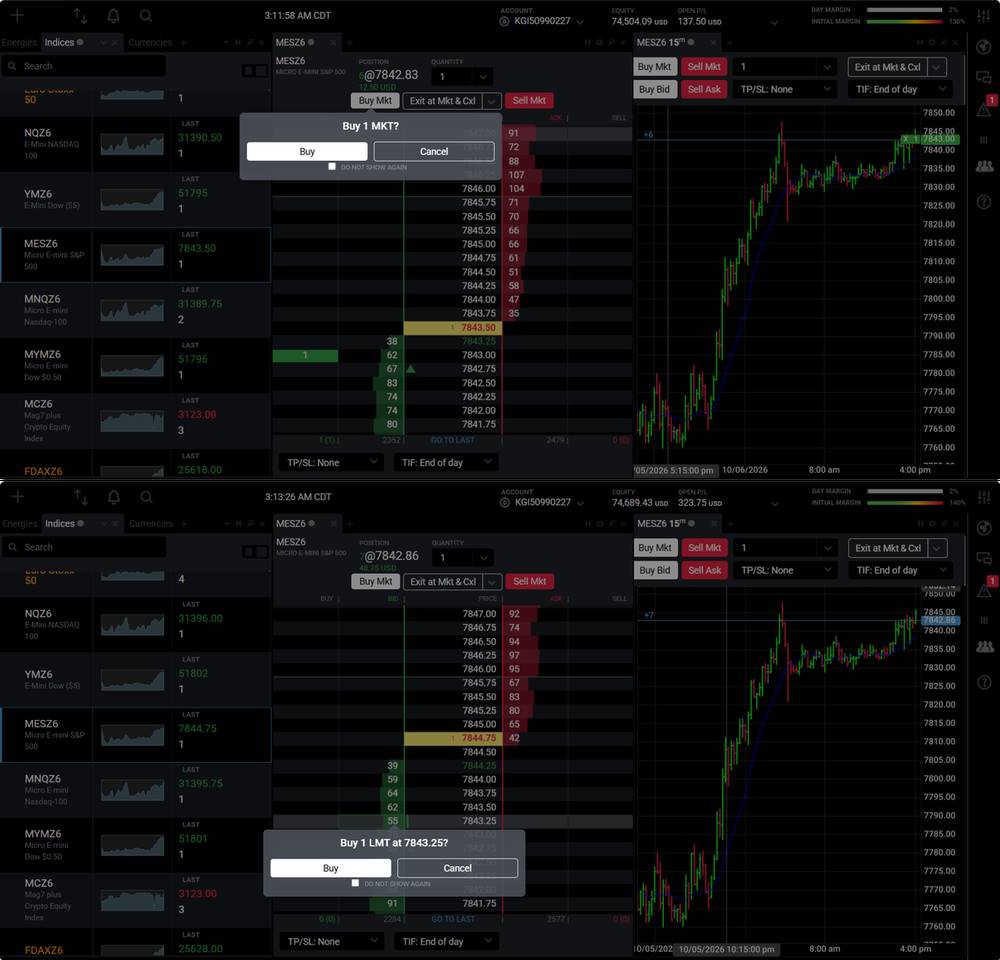
This means the platform can be organised around the tasks a futures trader carries out regularly, such as finding contracts, placing orders, monitoring positions, and moving between different futures markets.
This is different from a multi-asset interface that has a futures functionality added to it.
For someone who trades futures actively, reducing the number of steps between finding a contract, understanding the position and managing the trade can make the overall workflow more intuitive.
#2 – Access to the futures markets you want to trade
KGI Crusoe is expected to offer futures across six broad categories:
- Equity indices
- Metals
- Energies
- Treasury / Interest rates
- Currencies
- Micros
This allows traders to use futures to take views across different parts of the market.
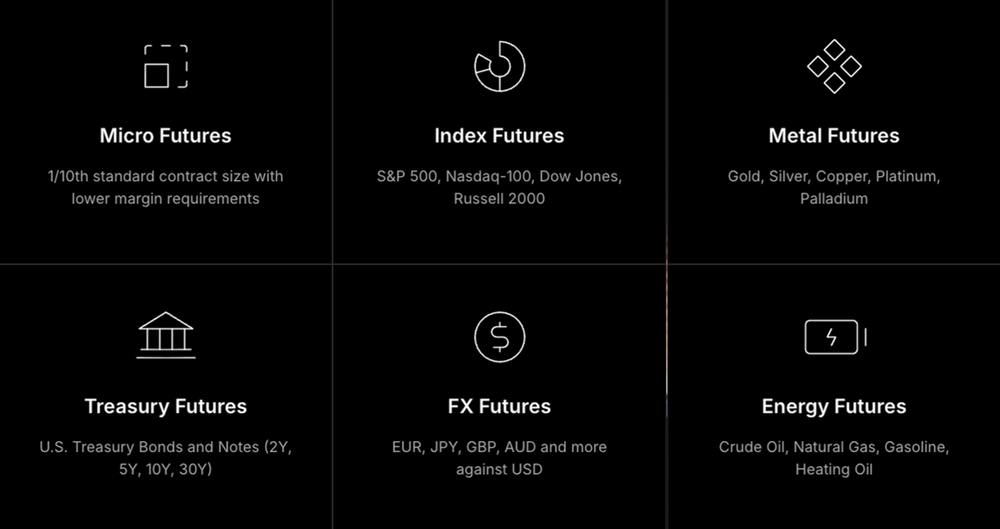
For example, an investor might use an equity index future to trade a view on the S&P 500, a gold future to trade movements in gold prices, or an FX future to take a view on a currency.
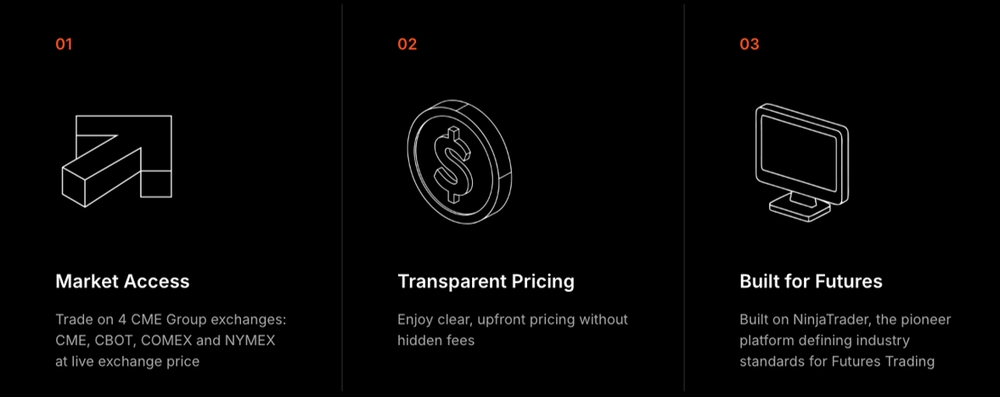
KGI Securities (Singapore) currently provides access to global futures markets including CME, CBOT, COMEX and NYMEX.
The important consideration for traders is still the specific contract. Contract size, liquidity, margin, expiry and settlement terms can all differ.
#3 — More position size options with Micro futures
One category KGI Crusoe will offer that may be particularly relevant to retail traders is Micro futures.
Micro futures provide smaller-sized exposure compared with their larger counterparts.
Take US equity index futures as an example.
CME's Micro E-mini S&P 500 futures contract has a multiplier of US$5 times the S&P 500 Index, compared with US$50 for the larger E-mini S&P 500 futures contract.
Likewise, the Micro E-mini Nasdaq-100 multiplier is US$2 compared with US$20 for the E-mini contract.
In other words, these Micro contracts are one-tenth the size of their E-mini counterparts.
This can make position sizing more granular.
If the same market view can be expressed using a smaller contract, a trader has more flexibility over the notional exposure taken and may be able to scale a position more gradually.
That does not make Micro futures low-risk. They are still leveraged futures contracts and remain subject to margin requirements and market losses.
#4 – Understanding the price and market you are trading
Futures on KGI Crusoe will include contracts listed on exchanges such as CME, CBOT, COMEX and NYMEX.
These are exchange-listed futures, where contracts have standardised specifications set by the relevant exchange.
This is different from an over-the-counter product, where the trade is entered into with a provider rather than buying or selling a standardised contract on an exchange.
According to KGI, KGI Crusoe will provide traders with exchange pricing for these futures without hidden mark-ups or dealing-desk involvement.
Traders should still consider the total cost of trading, including commissions and any applicable exchange, platform or market-data charges,
#5 – Operated by KGI Crusoe
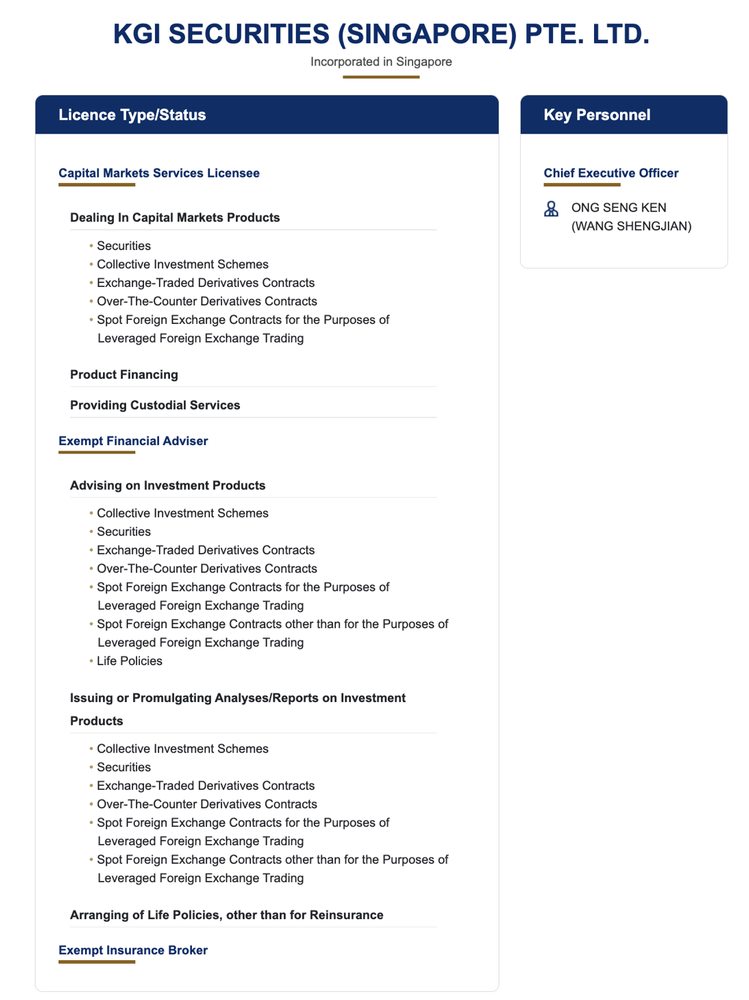
KGI Crusoe is operated by KGI Securities (Singapore) Pte. Ltd.
The Monetary Authority of Singapore's Financial Institutions Directory lists KGI Securities (Singapore) as a Capital Markets Services Licensee, including for dealing in exchange-traded derivatives contracts.
What should traders consider before using a futures platform?
A futures platform can make it easier to access and manage different contracts, but there are still a few things I would look at before choosing where to trade.
#1 – Total cost of trading
For an active trader, costs can add up quickly.
Beyond the commission charged for each trade, there may also be exchange fees, clearing fees, market data charges or platform fees.
This means the lowest headline commission may not necessarily translate into the lowest overall trading cost.
Compare the total cost of trading, especially if you expect to trade frequently.
#2 – Understand the margin requirements
Futures are traded using margin, so the amount of capital required to open and maintain a position is an important consideration.
Margin requirements can differ across contracts and may also change when market conditions become more volatile.
The broker or platform may also require a higher amount of margin than the minimum set by the exchange.
Before placing a trade, check how much margin is required, how clearly this is displayed on the platform, and what happens if the account falls below the required level.
#3 – Be careful with leverage
Because futures allow traders to take on market exposure that can be larger than the margin they put up, they involve leverage.
This can make futures more capital-efficient, but it also means losses can be magnified when the market moves against you.
A platform may make it easy to open a position, but that does not necessarily mean the position is appropriate for the amount of capital in your account.
Pay attention to the size of each contract, the amount of exposure you are taking on, and how much of your available capital is being used as margin.
What would Beansprout do?
Because futures involve margin, leverage, different contract specifications, and expiry dates, I would consider how easy it is to find the right contract, understand my exposure, and manage the position once the trade has been placed.
This is where I think the idea behind KGI Crusoe is interesting because the platform is built specifically around futures trading.
I would pay particular attention to the specific contracts available, margin information, order functionality, fees, and overall trading workflow once the full platform is launched.
The availability of Micro futures may also be useful if I want more options to size my trades.
Find out more about KGI Crusoe
This article is for informational and educational purposes only and does not constitute investment or financial advice. Futures are leveraged products and involve significant risk. Investors should understand the product features, costs and risks before trading.
Read also
Gain financial insights in minutes
Subscribe to our free weekly newsletter for more insights to grow your wealth
Most Popular

Questions and Answers
0 questions