
kopi-C with Nam Cheong CEO: Why oil prices don’t tell the whole story
Stocks
Powered by
By Julian Wong • 22 Apr 2026
Why trust Beansprout? We’ve been awarded Best Investment Website at the SIAS Investors’ Choice Awards 2025
'%3e%3cpath%20fill-rule='evenodd'%20clip-rule='evenodd'%20d='M17.64%209.20455C17.64%208.56637%2017.5827%207.95273%2017.4764%207.36364H9V10.845H13.8436C13.635%2011.97%2013.0009%2012.9232%2012.0477%2013.5614V15.8195H14.9564C16.6582%2014.2527%2017.64%2011.9455%2017.64%209.20455V9.20455Z'%20fill='%234285F4'/%3e%3cpath%20fill-rule='evenodd'%20clip-rule='evenodd'%20d='M9%2018C11.43%2018%2013.4673%2017.1941%2014.9564%2015.8195L12.0477%2013.5614C11.2418%2014.1014%2010.2109%2014.4205%209%2014.4205C6.65591%2014.4205%204.67182%2012.8373%203.96409%2010.71H0.957275V13.0418C2.43818%2015.9832%205.48182%2018%209%2018V18Z'%20fill='%2334A853'/%3e%3cpath%20fill-rule='evenodd'%20clip-rule='evenodd'%20d='M3.96409%2010.71C3.78409%2010.17%203.68182%209.59318%203.68182%209C3.68182%208.40682%203.78409%207.83%203.96409%207.29V4.95818H0.957273C0.347727%206.17318%200%207.54773%200%209C0%2010.4523%200.347727%2011.8268%200.957273%2013.0418L3.96409%2010.71V10.71Z'%20fill='%23FBBC05'/%3e%3cpath%20fill-rule='evenodd'%20clip-rule='evenodd'%20d='M9%203.57955C10.3214%203.57955%2011.5077%204.03364%2012.4405%204.92545L15.0218%202.34409C13.4632%200.891818%2011.4259%200%209%200C5.48182%200%202.43818%202.01682%200.957275%204.95818L3.96409%207.29C4.67182%205.16273%206.65591%203.57955%209%203.57955V3.57955Z'%20fill='%23EA4335'/%3e%3c/g%3e%3cdefs%3e%3cclipPath%20id='clip0_0_2849'%3e%3crect%20width='18'%20height='18'%20fill='white'/%3e%3c/clipPath%3e%3c/defs%3e%3c/svg%3e)
Make Beansprout your preferred source on Google
Add us on Google to see more of our insights in your search results
Nam Cheong's CEO Leong Seng Keat on surviving a decade-long industry collapse, why he doesn't trust the oil price, and what the world's first unmanned landing craft says about where the industry is going.
In February 2026, Nam Cheong Limited announced that it had won a new shipbuilding contract. The last time it had announced something like this was more than 10 years ago.
The deal—US$64.5 million for four vessels commissioned by a UAE-based energy logistics company—was notable for its size, but it also signalled something more.
The Sarawak-based offshore support vessel (OSV) builder had been through one of the most brutal downturns in the history of its industry. It had restructured its debt, let go of staff, and even had customers default and threaten legal action. Through all of this, it survived.
For retail investors who have followed Nam Cheong's journey through those years, the contract announcement must have been a long-awaited sign.
Yet CEO Leong Seng Keat is careful not to read too much into any single data point. This includes the surge in oil prices that has accompanied the ongoing US-Israel-Iran conflict.
In his words, “You can’t invest for 25 years based on a single day’s quote or trend.”
A philosophy for the long term
Nam Cheong was founded in 1968 in Miri, Sarawak—a city whose fortunes have long been tied to the offshore oil and gas industry that operates from its coastline. Leong is part of the founding family, though he is careful to frame his own role as custodian rather than creator.
"Every leader prior has always contributed positively to where we are today," he says.
He mentions the company's motto—QRD, which stands for quality, reliability, and delivery—coined by two generations of leadership before him, back in the 1980s.
This continuity matters, because it was a philosophy that would be tested between 2015 and the early 2020s, when the OSV sector collapsed following the oil price crash.
“There will be a string of good will, based upon the philosophy of the group and the leadership that we had. Maybe some people call it karma, I look at it as cause and effect,” he says.
The crash began in 2014, when crude prices halved and oil companies cancelled contracts across the board. It was made worse by what preceded it: a boom-era building spree funded by cheap debt that left operators holding assets worth a fraction of what they had borrowed against. Then COVID hit in 2020.
Many did not survive. In Nam Cheong’s case, it faced bondholders, banks, suppliers, and staff—“All the stakeholders are going at you at once,” Leong says.
Customers who had placed orders defaulted. Some tried to sue Nam Cheong to recover deposits. Goodwill, accumulated over decades, was suddenly the only currency that mattered.
What stands out in Leong's account is the role of the company's executive chairman, who personally injected capital into the company when its assets were worth almost nothing.
"He had the mindset that if you borrow money from people, you need to pay people back," Leong says. "It may take longer. But he was still willing to inject more money."
The result: in case after case, creditors and counterparties who might have pushed for litigation chose instead to negotiate.
Leong shares: "Many of these, including our customers suing us, were ready up until the last minute to fight. But right in front of the court, when we saw them eye to eye, we asked: do you really want to do this?
"At that very moment, they decided not to go ahead."
Through all of this, Leong kept many of his key technical staff employed—many who were in their 60s and 70s—despite there being almost no work during COVID and the 2015 crash.
The recovery—but not the oil price recovery
With oil prices above US$100 a barrel for the first time since Russia's 2022 invasion of Ukraine, it would be easy to frame the Nam Cheong recovery story as a simple bet on crude. Leong directly resists this framing.
The real argument, he points out, is structural, not cyclical.
Globally, OSV fleets are ageing, with the average vessel now 15 to 16 years old, approaching the end of its economic life. Accordingly, replacement demand was already building before the war started. What matters for the next 25 years—the lifespan of any vessel ordered today—is not where the price of Brent crude is today.
More importantly, Leong argues, the addressable market for OSVs is broader than most retail investors realise.
Beyond servicing oil platforms, any construction or maintenance activity at sea also requires offshore support vessels: from subsea internet cables connecting the US and Japan to Singapore, to bridges linking islands to mainlands, to offshore wind farms and undersea power cables from Vietnam to Singapore.
"Whether it is oil and gas or other related industries, what the OSV stands for is offshore support," he says. "Which means any construction and maintenance in the sea requires a vessel of this class."
This is what Leong’s framing implies. A company that pitches itself purely as an oil and gas play is hostage to the oil price cycle. A company whose vessels are needed wherever the world builds things at sea has a much larger and more durable demand base.
The world's first robot landing craft
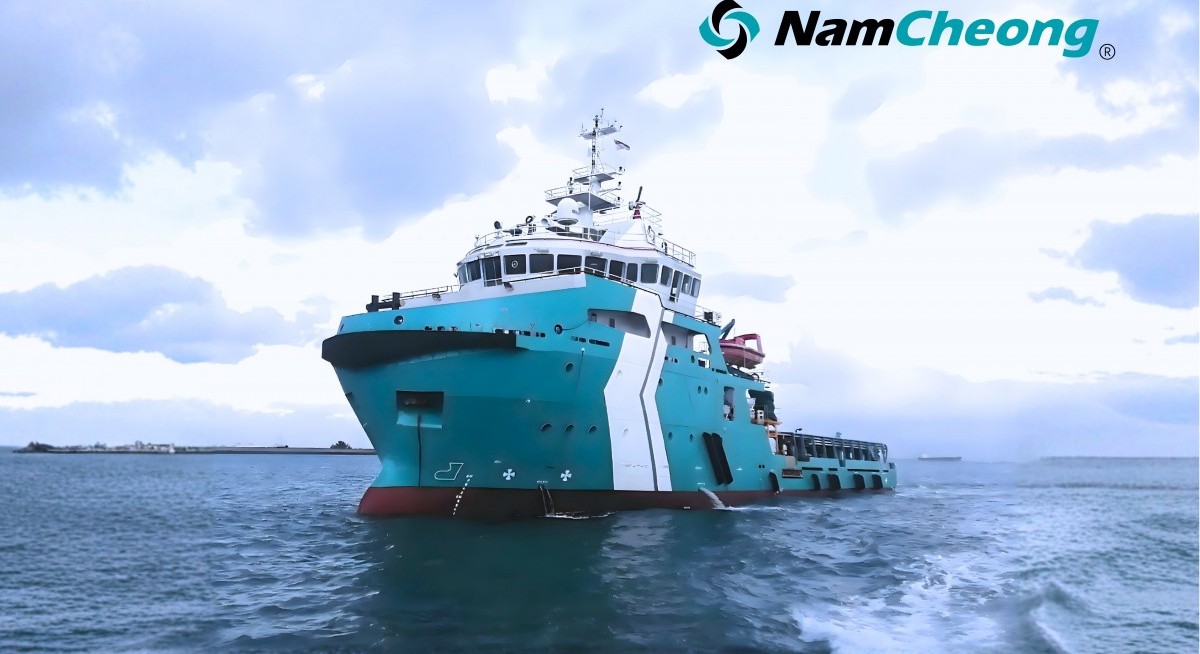
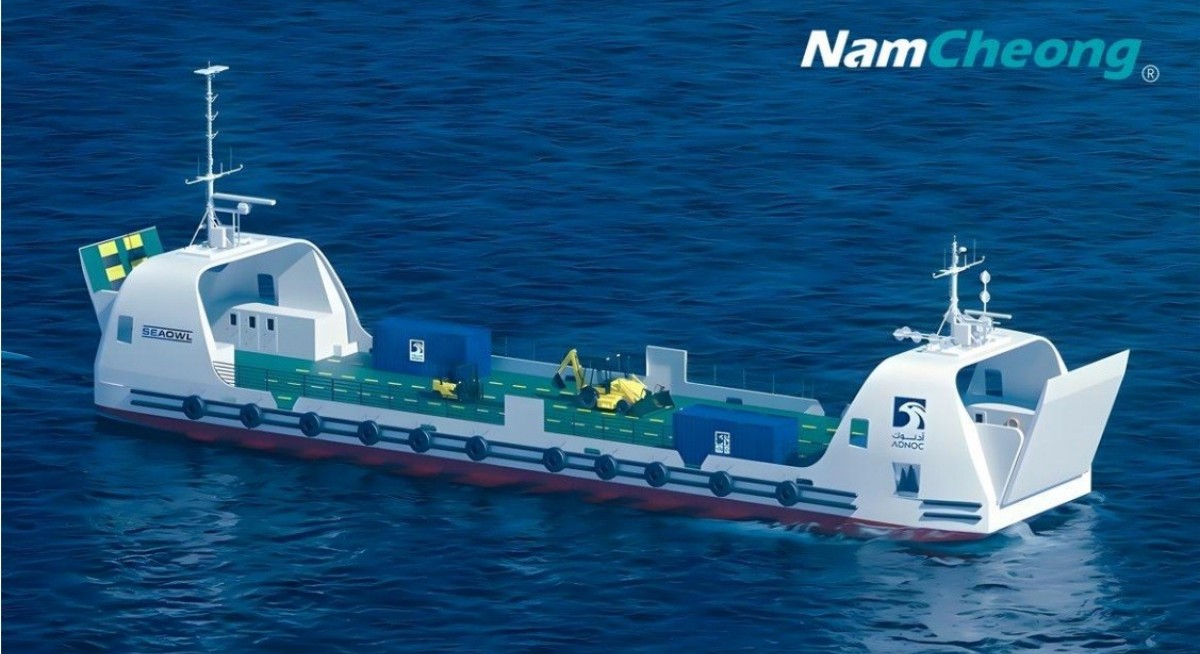
The US$64.5 million contract announced in February includes four vessels: two dive support vessels (DSVs) and two remotely operated landing crafts (ROLCs). The DSVs are sophisticated offshore assets designed for subsea inspection, maintenance, and remotely operated vehicle operations.
The ROLCs, on the other hand, could almost be considered the first vessels of their kind.
Completely unmanned and remotely controlled via satellite from a shore station, they are also equipped with automated docking systems. They require no crew quarters, no firefighting systems for human occupants, and no noise suppression for sleeping sailors.
Leong explains that up to 80% of a conventional ship's cost exists for one reason: the human beings on board.
"The ship has been designed since the Titanic to make it sink slower so humans can escape," he says. Double hulls, rescue systems, comfortable berths—all of this adds cost that has nothing to do with moving cargo.
"What if you remove humans from the offering? What do you design the ship for?"
The answer: just the cargo.
A vessel stripped back to its functional purpose, without the infrastructure needed to service human habitability. If remote-control technology can be reliably implemented across more vessel types, he believes it will drive productivity improvements across the sector.
The technology is being developed in partnership with SeaOwl Group, a French maritime technology firm. It also reflects Nam Cheong's broader philosophy of deploying new vessel types in its own fleet first, using operational experience to refine designs before selling them to external customers.
The irreplaceability of energy infrastructure
For investors trying to assess where Nam Cheong sits today, Leong offers a two-part framework.
The first pillar is risk management. The near-death experience of the downturn was caused by over-leveraged debt. Today, Nam Cheong's net gearing ratio stands at 0.27x—low by industry standards—and the company continues to reduce it.
"Going back to what we can control: we are making sure we are very low leverage," he says. "We're comfortable, and we continue to reduce this."
The second pillar is controlled growth. The company currently has 25 of its 36 vessels on long-term charter contracts, providing stable, predictable income regardless of what the spot market does on any given day.
The second pillar is controlled growth, supported by two distinct engines. The shipbuilding arm provides the capability to construct and renew vessels. The chartering arm—now 25 of its 36 vessels on long-term contracts, representing 69% of the fleet—provides the stable, recurring income that keeps the business running regardless of what the spot market does on any given day.
The most recent example came in April 2026, when Nam Cheong announced charter contracts worth up to RM102.5 million covering two vessels: an anchor handling tug supply vessel chartered to COOEC, a subsidiary of CNOOC, and a maintenance work vessel chartered to a regional independent oil producer, both supporting offshore activity across Southeast Asia.
With these additions, Nam Cheong sits just short of its stated 70% long-term charter target, and expects vessel utilisation to continue improving through 2026 as more vessels enter long-term deployment.
The target is 70%, because 70% of revenue locked in at acceptable returns is the sweet spot that allows the company to sustain operations and grow.
He Leong describes the charter strategy bluntly. In 2024, a strong year for OSV rates, Nam Cheong locked in long-term contracts. Then Trump's tariffs hit in 2025, rates softened, and the company was insulated.
"We need 70% of surety first," he says. "It's more about managing risk than trying to manage the last unit of profit."
When asked what helps him maintain long-term discipline, Leong says:
"When I look at the opportunity, I sometimes think I should go out now and grab all this. But I also have a board to report to, and they are more sober than me."
He describes his board as people of great wisdom who were especially valuable during the darkest years of the downturn.
Often, the companies that survive are the ones whose structures were designed to be resilient to downturns. And for Nam Cheong, it doesn’t matter whether the oil price stays about $100.
What matters is that the world keeps building things at sea—something which Leong doesn’t see stopping anytime soon.
“Ultimately,” he says, “OSV is a product that forms the crux of national energy security. Without offshore infrastructure, a country cannot survive.”
About Nam Cheong Limited
Based in Sarawak Malaysia, Nam Cheong Limited (“Nam Cheong” or the “Group”) is a global offshore marine group specialising in the building and chartering of OSVs. Since its humble beginnings in 1968 building only fishing vessels, the Group is now Malaysia’s largest OSV builder, owning and operating one of the largest shipbuilding yards for OSVs in Malaysia.
The Group focuses on OSV chartering, as well as the construction and engineering of sophisticated, environmentally friendly and quality OSVs that are equipped with the latest technology for use in the offshore oil and gas exploration and production (“E&P”) and oil services industries, with customers hailing from Malaysia, Southeast Asia, Middle East, West Africa, Latin America, Europe, and the United States. The Group has delivered over 150 vessels since 2007, which include anchor handling towing supply (“AHTS”) vessels, platform supply vessels (“PSVs”), accommodation work boats and accommodation work barges.
Beyond building some of the most sophisticated OSVs, Nam Cheong is expanding its vessel chartering operations, with the Group operating a chartering fleet of 36 vessels. Nam Cheong was successfully listed on SGX-ST on May 27, 2011.
About kopi-C: the Company brew
kopi-C is a regular column by SGX Research in collaboration with Beansprout, a MAS-licensed investment advisory platform, that features C-level executives of leading companies listed on SGX. These interviews are profiles of senior management aimed at helping investors better understand the individuals who run these corporations.
Read also
Gain financial insights in minutes
Subscribe to our free weekly newsletter for more insights to grow your wealth
Most Popular

Comments
0 comments