
kopi-C with Raffles Medical Group CEO: “There’s no quick money in healthcare”
Powered by

By Julian Wong • 03 Jun 2026
Why trust Beansprout? We’ve been awarded Best Investment Website at the SIAS Investors’ Choice Awards 2025
'%3e%3cpath%20fill-rule='evenodd'%20clip-rule='evenodd'%20d='M17.64%209.20455C17.64%208.56637%2017.5827%207.95273%2017.4764%207.36364H9V10.845H13.8436C13.635%2011.97%2013.0009%2012.9232%2012.0477%2013.5614V15.8195H14.9564C16.6582%2014.2527%2017.64%2011.9455%2017.64%209.20455V9.20455Z'%20fill='%234285F4'/%3e%3cpath%20fill-rule='evenodd'%20clip-rule='evenodd'%20d='M9%2018C11.43%2018%2013.4673%2017.1941%2014.9564%2015.8195L12.0477%2013.5614C11.2418%2014.1014%2010.2109%2014.4205%209%2014.4205C6.65591%2014.4205%204.67182%2012.8373%203.96409%2010.71H0.957275V13.0418C2.43818%2015.9832%205.48182%2018%209%2018V18Z'%20fill='%2334A853'/%3e%3cpath%20fill-rule='evenodd'%20clip-rule='evenodd'%20d='M3.96409%2010.71C3.78409%2010.17%203.68182%209.59318%203.68182%209C3.68182%208.40682%203.78409%207.83%203.96409%207.29V4.95818H0.957273C0.347727%206.17318%200%207.54773%200%209C0%2010.4523%200.347727%2011.8268%200.957273%2013.0418L3.96409%2010.71V10.71Z'%20fill='%23FBBC05'/%3e%3cpath%20fill-rule='evenodd'%20clip-rule='evenodd'%20d='M9%203.57955C10.3214%203.57955%2011.5077%204.03364%2012.4405%204.92545L15.0218%202.34409C13.4632%200.891818%2011.4259%200%209%200C5.48182%200%202.43818%202.01682%200.957275%204.95818L3.96409%207.29C4.67182%205.16273%206.65591%203.57955%209%203.57955V3.57955Z'%20fill='%23EA4335'/%3e%3c/g%3e%3cdefs%3e%3cclipPath%20id='clip0_0_2849'%3e%3crect%20width='18'%20height='18'%20fill='white'/%3e%3c/clipPath%3e%3c/defs%3e%3c/svg%3e)
Make Beansprout your preferred source on Google
Add us on Google to see more of our insights in your search results
Raffles Medical Group's Dr Loo Choon Yong on 50 years of putting patients before profit, and why healthcare must be built for the long term.
Most CEOs focus on attracting as many investors as possible. Dr Loo Choon Yong focuses on attracting the right ones–those who share his vision.
"I always make it clear to shareholders what they are investing in," says the co-founder and executive chairman of Raffles Medical Group.
"We're not here to maximise short-term profit. We believe that by doing the right things for patients, sustainable value will follow."
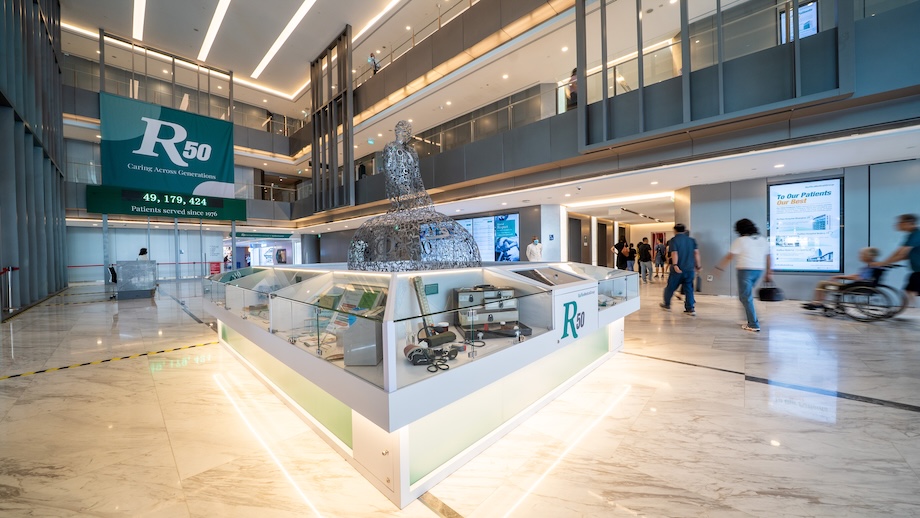
For those unfamiliar with Dr Loo or Raffles Medical Group (RMG), this could sound like an unconventional stance from the head of a company listed on the Singapore Exchange (SGX) since 1997. But as the company marks its 50th anniversary this year, Dr Loo remains steadfast in those principles.
"Healthcare is a medium- to long-term business. Success, for us, is measured in quality care and lasting impact—not quick money."
This "patient-first" philosophy is reflected in RMG’s growth story.
From its humble beginnings as two clinics in Singapore's CBD in 1976, the company has now expanded into a regional network spanning 12 cities across five countries, including three hospitals in China. Revenue reached S$765.3 million in 2025, with Profit After Tax and Minority Interests rising 22% to S$38.5 million in 2H25. The company has remained profitable every year since its listing, even through COVID.
The business grew, Dr Loo says, simply because they held to the sole purpose of looking after patients properly.
"We started with two clinics doing mostly GP work," he recalls. Soon after, he realised that the external commercial labs that were helping to process things like bloodwork had quality issues.
"A specimen came back clotted—you can't run a test on clotted blood. So I said, the only way is to have our own lab to ensure quality and reliability."
The same logic applied to specialists. Raffles used to refer patients, and as a result the standard of care varied amongst the referrals.
"So we said, we'd better have our own specialists to deliver care the way we should."
In turn, this led to building a hospital. And when they spotted an opportunity to provide care to patients overseas, they expanded. Each step followed from a gap in patient care, not a growth target.
"Look after patients properly," Dr Loo says, "and the business will look after itself."
Proving it under pressure
While this sounds like a platitude, Raffles Medical Group has had to prove it.
Most recently during COVID, the company mobilised and were the first to start rolling out COVID tests and setting up vaccination centres. In turn, doctors, nurses and hospital staff went to the dormitories to swab and perform vaccinations.
"Nobody said 'I won't go'. Nobody grumbled," Dr Loo recalls.
The workers’ dormitories were not the consultation rooms and wards of Raffles Hospital that the staff were familiar with, but the staff went anyway, because they knew that they have the duty to serve the community.
Under a collaboration with the Ministry of Health, Raffles Hospital provides care to emergency patients sent in by public ambulances—the first and only private hospital authorised to receive them.
Singaporeans and Permanent Residents will subsequently have access to subsidised inpatient and/or specialist outpatient rates at Raffles Hospital, if clinically required.
He even shares an instance where staff asked whether the level of service for subsidised patients assigned to single rooms should differ.
His response was clear: "Don't change anything. Serve them like we would any other patient."
Once, Dr Loo was approached at Changi Airport by a man—a security officer—that he didn’t recognise.
"Thank you," the man said. During COVID, when he lost his job, Raffles Medical Group had given him temporary work at the hospital, and he had not forgotten it.
"Life is like that," Dr Loo reflects. "If we lose this balance—between doing the right thing and making money—we lose our soul."
The patience test
According to Dr Loo, this same long-term conviction shapes how Raffles Medical Group approaches its China business.
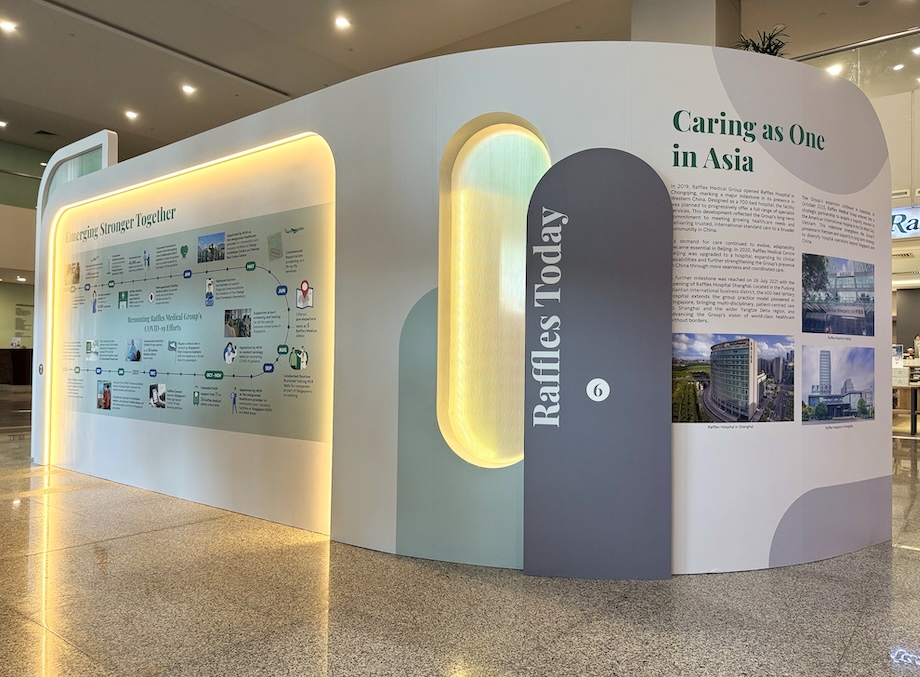
Today, the Group operates three hospitals—in Chongqing, Shanghai, and Beijing. The Beijing hospital has been profitable for some time, while the other two are showing steady improvement as services and patient volumes grow. The Raffles Hospital brand has also been gaining recognition among patients, reinforcing its position as a trusted provider of quality healthcare. The progress reflects the Group’s patient, long-term approach to building a sustainable healthcare presence in China.
COVID posed a major hurdle for the Chinese hospitals. Yet Raffles Medical Group stayed open at that time, vaccinated local policemen, and built community goodwill by rendering help to those who needed it most.
"Going to China is not a spur-of-the-moment decision,” says Dr Loo. “We have been studying the market since 1984. We only decided to build a Raffles Hospital 30 years later. Most companies are not able to take such a long-term view. "
The market math, he argues, justifies the patience. "Shanghai has 24 million people. Singapore has six."
That said, he remains clear-eyed about the distinction that matters: "We are not private equity players. We are operators. We operate our own hospitals."
Despite the challenges, he is optimistic about the path ahead.
The next 50 years
For now, the question is whether this philosophy can outlast its founder.
At 77, Dr Loo has begun thinking seriously about succession. Raffles Medical Group is into its seventh generation of GPs and fourth generation of specialists. The senior leaders who built the company alongside him are ageing too.
"More and more frequently, I hear 'I want to slow down'," he shares.
As part of these efforts, the company offers scholarships, internal leadership programmes, and sends senior leaders on executive courses. At the same time, Dr Loo notes that learning to make money is important, but good leadership also involves knowing when to hold back—an insight he considers essential for developing the next generation of leaders.
“The real filter for new hires is alignment with our beliefs and purpose. They must not just be able to do the job."
As for himself?
"God willing, I want to retire sooner rather than later. But if I retire, I stay on the board. I can guide. I can cheer them on."
His network—built over 50 years across Asia and beyond—still has value, he notes. He shares that he knows most of the “movers and shakers” of healthcare in the region, and these relationships are still valuable.
When asked what he hopes will still be distinctly Raffles in another 50 years, Dr Loo doesn't hesitate: "The same purpose. Raffles Hospital to be present in more cities, more countries and having more people. A group of physicians, nurses, healthcare managers using our talent and skills for the benefit of all our patients."
“As we look ahead to our 100-year vision, our focus remains on building on this legacy and shaping the next chapter of our journey,” he adds.
His parting words are blunt: "Just do it. Don't talk. Anyone can say the right thing, but at the end of the day, it’s about whether you actually do it or not.”
Ultimately, Dr Loo acknowledges that his philosophy may not resonate with every investor. Raffles Medical Group was never meant to be everything to everyone; it was built to do one thing exceptionally well: serve patients, and let the rest follow.
About Raffles Medical Group
Founded in 1976, Raffles Medical Group (RMG or the Group) is one of the leading integrated private healthcare providers in the region, providing a continuum of services from primary, secondary, and tertiary care to wellness and health insurance for people across Asia.
A proudly Singaporean brand, RMG is listed on the mainboard of the Singapore stock exchange (SGX: BSL) and operates in 12 cities in five countries in Asia. This network includes four hospitals and over 100 multi-disciplinary clinics, offering services such as health screening, specialist care, diagnostic radiology, dental, and traditional Chinese medicine. Together with close to 2,900 employees, RMG brings 50 years of trusted healthcare expertise and care to over 2.8 million patients annually across our network as their trusted partner for health.
About kopi-C: the Company brew
kopi-C is a regular column by SGX Research in collaboration with Beansprout, Singapore’s trusted investment intelligence platform which helps everyday investors build the knowledge and confidence to make decisions that matter. kopi-C features C-level executives of leading companies listed on SGX. These interviews are profiles of senior management aimed at helping investors better understand the individuals who run these corporations.
Read also
Gain financial insights in minutes
Subscribe to our free weekly newsletter for more insights to grow your wealth
Most Popular

Comments
0 comments