
The digital money revolution: Why ASEAN's payment infrastructure is the region's most underrated story
Stocks
Powered by

By Gerald Wong, CFA • 21 Sep 2026
Why trust Beansprout? We’ve been awarded Best Investment Website at the SIAS Investors’ Choice Awards 2025
Discover how ASEAN’s trillion-dollar digital payments market is reshaping finance, commerce and investment opportunities across Southeast Asia.
A trillion-dollar transformation happened in Southeast Asia over the past decade without much notice.
The region's 680 million people largely skipped the credit card era and went straight to mobile-first payments and, in the process, accelerated the buildout of digital payment infrastructure at scale.
Several factors are driving this growth, including a mobile-first population, millions of underbanked consumers getting access to financial services for the first time, and governments building fast, low-cost payment systems.
Meanwhile, the rise of e-commerce has created the volume needed to sustain this growth, while regional payment linkages are starting to connect different markets.
Understanding these dynamics is key to identifying where value is accruing, which players are best positioned to benefit, and what it means for investors looking in from the outside.
Why is ASEAN built for digital payments growth?
#1 – A mobile-first population that skipped the credit card era
Unlike developed markets, much of Southeast Asia never built dense credit card or banking branch networks at scale.
Instead, many consumers moved directly from cash to mobile-first payments bypassing traditional card adoption altogether.
According to the Google, Temasek, and Bain e-Conomy SEA 2025 report, Southeast Asia now has around 500 million internet users, with internet penetration across the region estimated at roughly 70–80% (ASEAN, 2024).
Smartphone penetration now exceeds traditional banking and credit card penetration across much of Southeast Asia, making the mobile phone the primary gateway into financial services for millions of consumers.
The broader APAC payments landscape shows just how significant this shift has become.
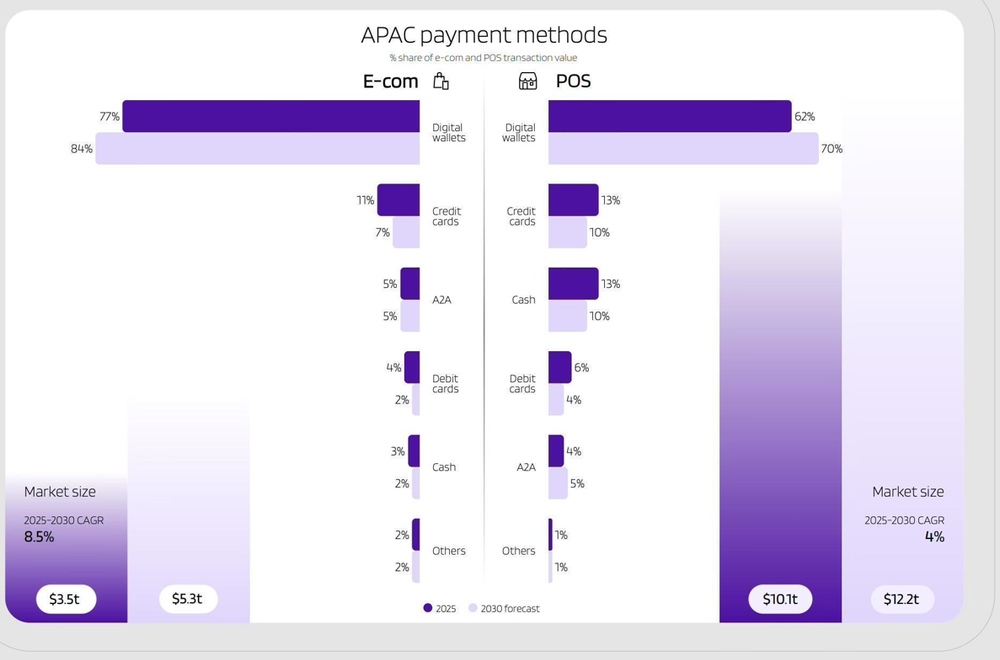
According to the Worldpay Global Payments Report 2026, digital wallets already account for 77% of APAC e-commerce transaction value and 62% of in-store point-of-sale (POS) transaction value.
The numbers in more advanced markets show how far this shift can go.
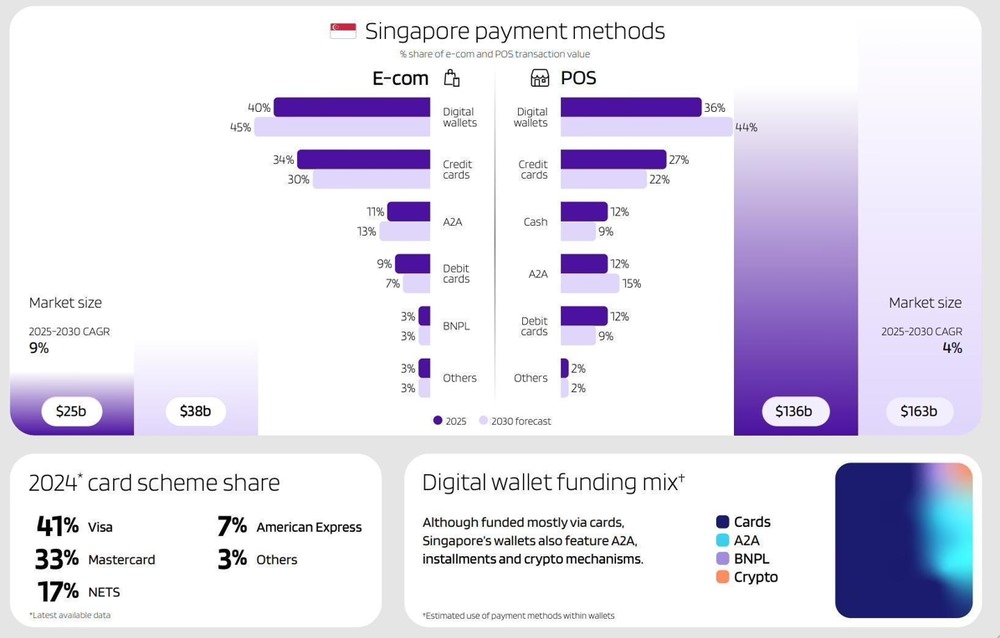
In Singapore, digital wallets are expected to account for 44% of Singapore’s in-store POS transaction value and 45% of e-commerce transaction value by 2030, making wallets the dominant payment method across both online and offline commerce.
What Singapore demonstrates today, markets like Indonesia, Vietnam, Thailand, and the Philippines are already building.
Rather than being driven primarily by credit cards, growth is increasingly being powered by mobile wallets layered on top of QR payments, real-time bank transfers, BNPL services, and embedded finance infrastructure.
#2 – A large and underserved population
Despite rapid economic growth and digital adoption, financial inclusion gaps remain significant across Southeast Asia.
Across major emerging markets in the region, large portions of the population still remain outside the formal banking system.
According to McKinsey analysis using Global Findex and central bank data, banking penetration in countries like Vietnam, Indonesia, and the Philippines remained substantially below more developed Asian markets as recently as 2021.
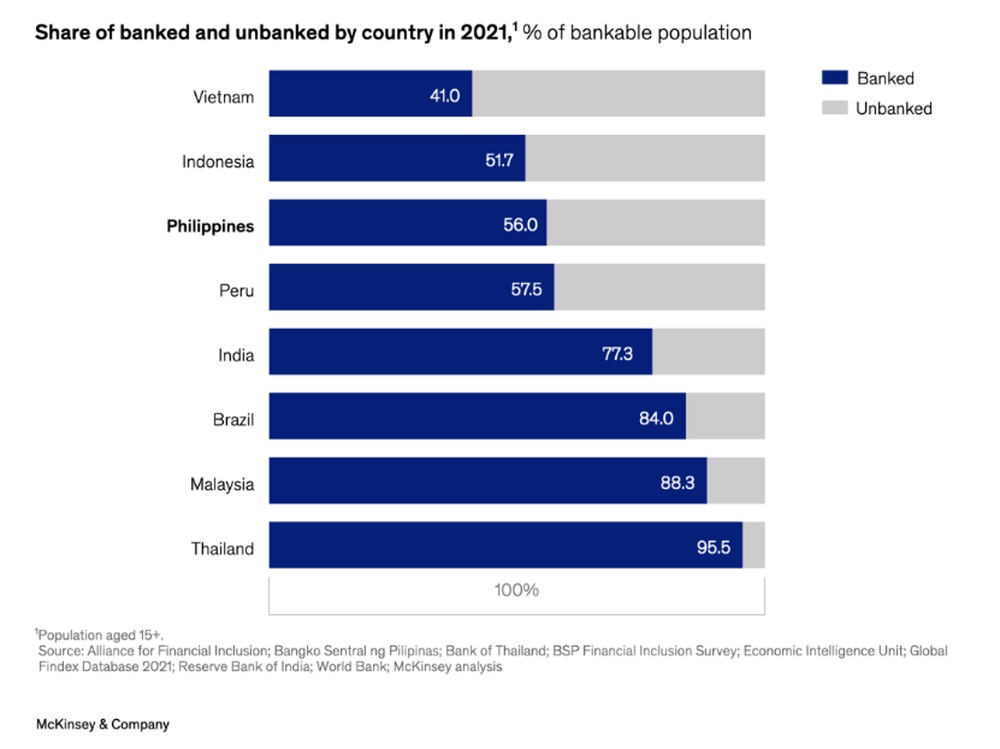
That represents hundreds of millions of adults sitting outside the full formal financial system.
For this group, digital payments are not simply a convenience upgrade. They are often the first point of contact with the formal economy.
Each time a market vendor accepts a QR payment, or a gig worker receives wages through a digital wallet, a financial footprint is created for the first time.
That footprint can later become the basis for access to credit, insurance, savings, and investment products.
In Indonesia, this challenge is amplified by geography.
The country spans more than 17,000 islands, while banking infrastructure remains heavily concentrated on Java.
As a result, digital wallets and mobile-first financial services are increasingly seen as one of the most scalable ways to extend financial inclusion beyond traditional bank branch networks.
#3 – Government-led payment infrastructure supports digital payments
Perhaps the most underappreciated driver of Southeast Asia’s digital payments boom is the extent to which governments have already built the foundational infrastructure.
Every ASEAN-6 nation now operates a national real-time payment or QR payments system: Singapore’s PayNow, Malaysia’s DuitNow, Thailand’s PromptPay, Indonesia’s QRIS and BI-FAST, the Philippines’ QR Ph and InstaPay, and Vietnam’s VietQR.
QR payments have now become commonplace across Southeast Asia, rapidly eroding cash usage across the region.
Across ASEAN-6, cash is projected to account for a much smaller portion of total transaction value, falling from 48% in 2023 to just 27% by 2030 as account-to-account transfers and e-wallet payments continue gaining share.
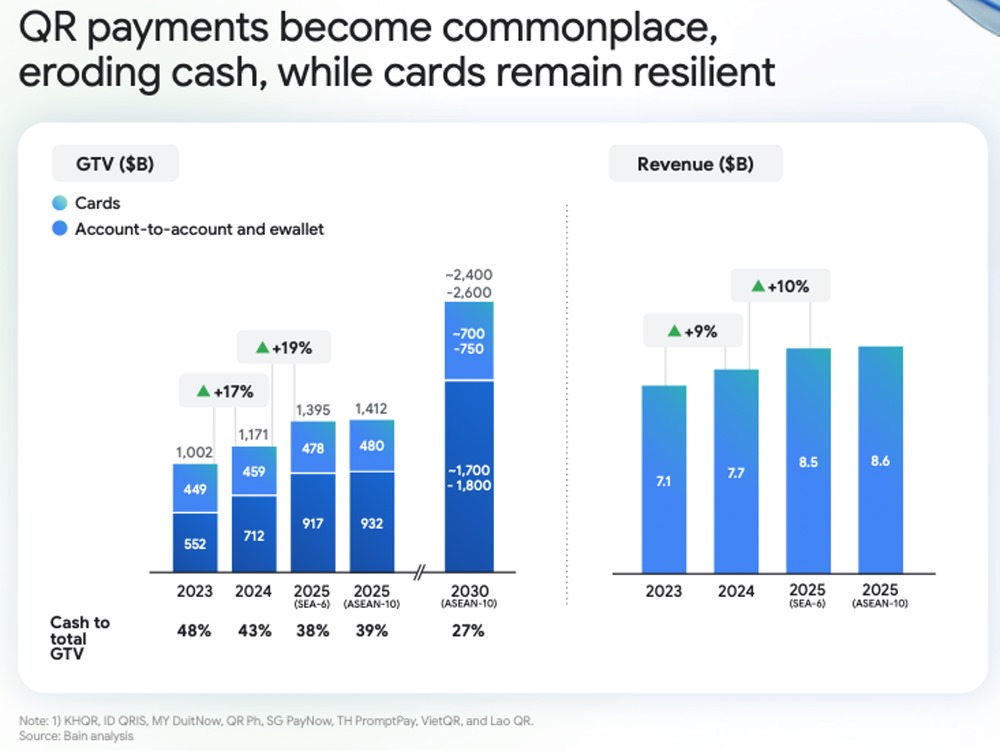
The rise of QR and account-to-account transfers is also lowering merchant acceptance costs across the region, helping accelerate adoption among small businesses and informal merchants that were previously excluded from traditional card networks.
Government-built infrastructure also helps to solve the chicken-and-egg problem that has historically slowed payments adoption in other emerging markets. The infrastructure is now in place. The competition now is for who uses them most effectively.
#4 – E-commerce as the volume driver
The e-commerce boom and the payments boom are feeding each other.
Southeast Asia's digital economy's gross merchandise value exceeded US$300 billion in 2025, up sharply from around US$40 billion a decade earlier, making it one of the world’s fastest-growing digital economies.
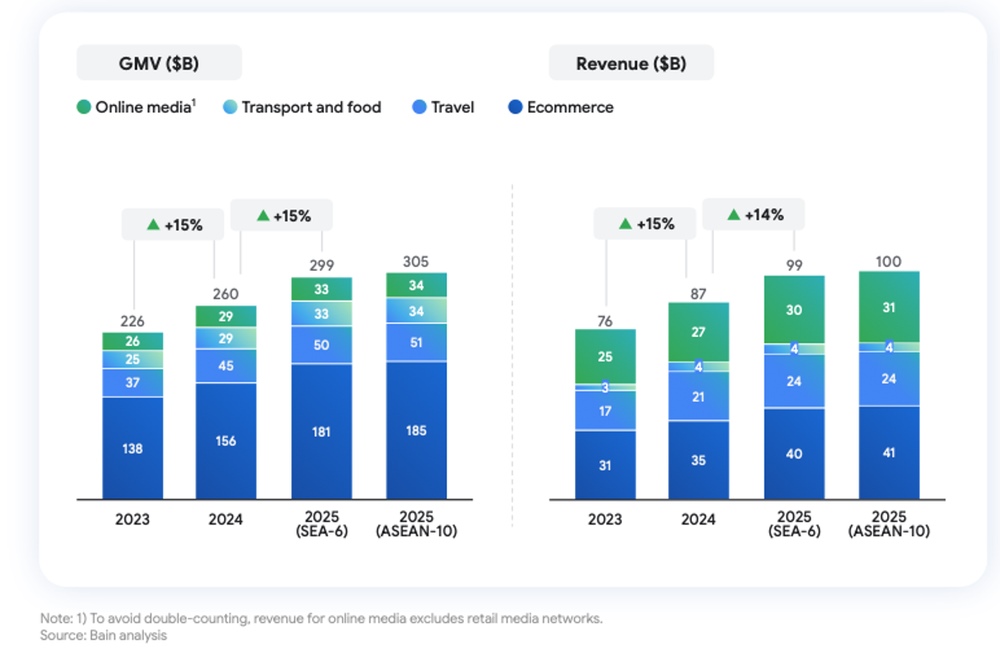
Every Shopee order, every Tokopedia transaction, and every GrabFood delivery is also a payments event.
As e-commerce penetration deepens into smaller cities and rural areas, digital payment volumes grow alongside it.
This is increasingly reshaping the region’s broader payments mix. According to the Worldpay Global Payments Report 2026, digital wallets are projected to rise to 70% by 2030.
#5 – Regional integration: From bilateral links to a regional network
The most structurally significant development in ASEAN payments is also the least discussed in mainstream financial media.
What started as a bilateral real-time link between Thailand's PromptPay and Singapore's PayNow in 2021, reducing transfer times from days to seconds and lowering remittance costs, has expanded into a broader regional network.
Ten Southeast Asian countries now use national unified QR systems, and eight have enabled cross-border QR interoperability.
| ASEAN countries with cross-border QR interoperability | |
| Country | National QR payment system |
| Cambodia | KHQR |
| Indonesia | QRIS |
| Laos | Lao QR |
| Malaysia | DuitNow QR |
| Philippines | QR Ph |
| Singapore | PayNow |
| Thailand | PromptPay |
| Vietnam | VietQR |
| Source: Google, Temasek, and Bain e-Conomy SEA 2025 report | |
Project Nexus, led by the Bank for International Settlements together with regional central banks, aims to take this further through a multilateral hub-and-spoke model that reduces the need for complex bilateral payment integrations between every pair of countries.
Malaysia, the Philippines, Singapore, and Thailand have all participated in the initiative and related interoperability efforts.
When a Thai tourist can pay at a stall in Hanoi using their local banking app, or a Filipino worker can send money home from Singapore in seconds at near-zero cost, the entire payment ecosystem deepens — transaction volumes rise, data accumulates, and the commercial opportunity expands for every participant in the network.
What role does digital payments play in ASEAN?
#1 – Financial inclusion engine
Digital payments are the entry point to the formal financial system for hundreds of millions of people across the region.
Each transaction creates a digital record, which can eventually become the basis for credit scoring, micro-loans, insurance, savings products, and investment access.
For gig workers, market traders, and rural farmers who have never interacted with a bank branch, the payment app is the bank.
Platforms such as GoTo have used transaction data to offer micro-loans and insurance to workers who previously had no access to conventional banking products.
Regulators have increasingly recognised this role, with financial inclusion mandates now embedded in digital finance policy across Indonesia, the Philippines, and Vietnam.
#2 – Commerce infrastructure
Digital payments are also reshaping how small businesses operate.
A QR code on a market stall also functions as a record-keeping system, a sales analytics tool, and an underwriting data point for a working capital loan.
Payment acceptance increasingly comes bundled with inventory management, accounting software, and embedded credit, allowing merchants to build a broader financial identity over time.
This is particularly relevant for the region's Micro, Small and Medium Enterprises (MSMEs), which account for the majority of employment across ASEAN but have historically been underserved by formal financial institutions.
#3 – Cross-border economic integration
Regional payment connectivity is creating the conditions for a more integrated ASEAN economic bloc.
Cross-border real-time payments reduce friction for trade, tourism, and remittances — three of the most important economic flows across the region.
As more bilateral and multilateral payment links come online, the cost of doing business across ASEAN borders falls, which supports trade volumes, tourism spending, and the movement of labour across countries.
A regulatory shift worth watching
For much of the past decade, ASEAN's digital payments sector operated in a relatively permissive regulatory environment.
Platforms were able to scale rapidly, supported by relatively accommodative regulatory frameworks and low-cost payment infrastructure.
That is now beginning to change.
The Economic Research Institute for ASEAN and East Asia (ERIA) policy brief on integrating digital payments in ASEAN identifies three persistent regulatory challenges: achieving interoperability across different national systems, ensuring robust data protection across borders, and managing the diversity of regulatory frameworks that currently fragment the regional market.
Across the region, regulators are moving toward clearer rules on data privacy (personal data protection), anti-money laundering, and consumer protection.
The Philippines' Bangko Sentral ng Pilipinas and the Monetary Authority of Singapore have been among the more active in setting standards that others in the region are likely to follow.
A principles-based approach, one that is flexible enough to accommodate innovation while maintaining consumer protection, appears to be the direction most ASEAN regulators are moving toward.
For larger incumbents with compliance infrastructure already in place, tighter regulation over time is likely to raise the cost of entry for smaller competitors, which supports consolidation and benefits scaled participants.
Where are the investment opportunities?
Each ASEAN market differs in terms of payment system maturity, regulatory framework, and the competitive dynamics between banks, super-apps, and specialist providers.
The opportunity for investors spans platforms, established banks, and infrastructure companies.
Singapore: The regional anchor
Singapore is widely regarded as ASEAN’s most advanced digital payments market and the region's key regulatory benchmark. Only 12 to 15% of POS transactions used cash in recent years, and the government has consistently led on standardisation through initiatives like SGQR and PayNow.
DBS (SGX: D05), Southeast Asia's largest bank by assets, is a founding PayNow participant and one of the clearest beneficiaries of growing regional payment flows. It's PayLah! mobile wallet has also become one of Singapore’s most widely used consumer payment apps, helping DBS deepen everyday customer engagement and capture more digital payment activity. Its digital bank Digibank has expanded into India and Indonesia, targeting underserved demographics. As cross-border ASEAN payment volumes grow, DBS's transaction banking revenues stand to benefit.
Malaysia: Digital adoption at speed
According to a 2024 UnaFinancial study using data.ai app usage data, mobile fintech app adoption in Malaysia reached 55% of the adult population by May 2024, supported by government digitalisation programs and a domestic digital economy contributing over 20% of GDP (Department of Statistics Malaysia, 2024).
Maybank (Bursa: MAYB) operates the MAE digital wallet and is a leading DuitNow participant, with its ASEAN presence spanning Singapore, Indonesia, the Philippines, Thailand and Vietnam. Its strong dividend profile is complemented by a structural growth overlay from digital payment monetisation.
CIMB Group (Bursa: CIMB) is the largest shareholder of TNG Digital, which operates the Touch 'n Go eWallet, Malaysia's leading e-wallet. TNG Digital was officially recognised as a unicorn in August 2025, valued at more than US$1 billion. CIMB’s pan-ASEAN digital-first strategy also gives it exposure across multiple markets.
Indonesia: The scale story
Indonesia is the largest digital payments market in ASEAN by merchant network, with QRIS processed transactions reaching 6.05 billion in H1 2025 and almost 40 million merchants accepting QRIS payments.
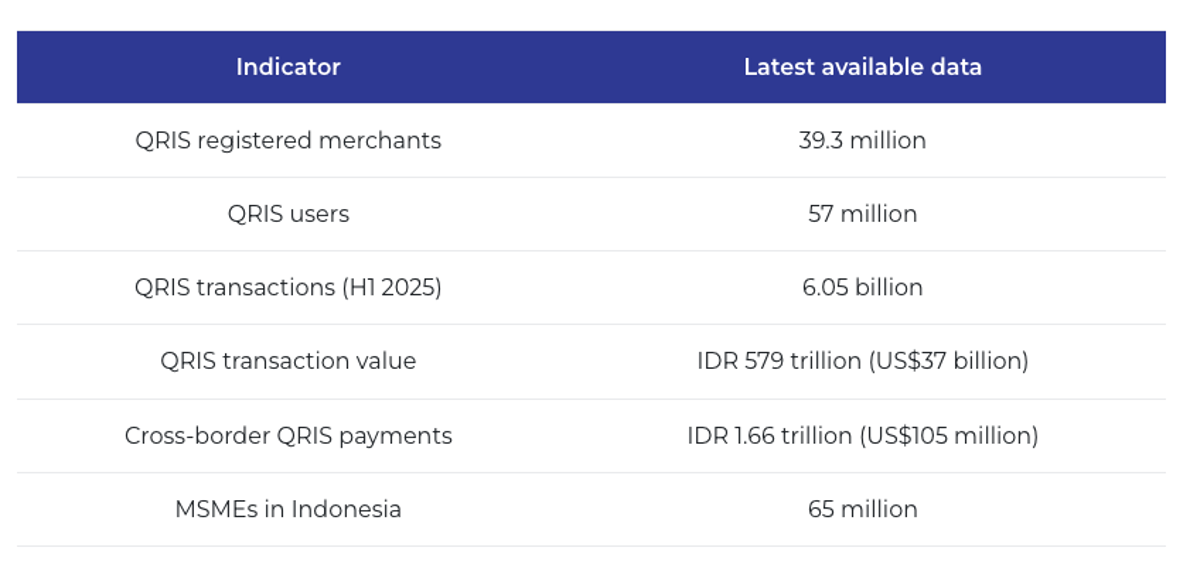
GoTo Group (IDX: GOTO), through Gojek and GoPay, is the clearest listed proxy for Indonesia's digital payments and gig economy themes combined. GoPay is embedded across millions of daily transactions, while GoBiz Plus serves SMEs with payment and business management tools.
Bank Rakyat Indonesia (IDX: BBRI), Indonesia's pre-eminent rural financial institution, operates over 7,400 branches and an extensive agent banking network that serves as cash-in and cash-out infrastructure for e-wallets in remote villages. Its participation in BI-FAST, a national real-time payment infrastructure, and LinkAja, a consumer digital wallet, makes it a key node in Indonesia's digital financial inclusion story.
Bank Central Asia (IDX: BBCA), Indonesia's largest private bank, operates one of the country's top-ranked digital banks through myBCA, allowing customers to access their bank accounts, make transfers, pay bills, invest, and withdraw cash cardlessly, with deep QRIS and BI-FAST integration serving both urban and SME segments.
Thailand: From penetration to monetisation
Thailand’s PromptPay has become a core part of the country’s urban commerce infrastructure. The next phase of growth is likely to come not from payment adoption itself, but from the financial services and ecosystems built on top of it.
Kasikornbank (SET: KBANK) operates K PLUS, Thailand's most downloaded banking app with over 20 million users. It was among the first Thai banks to connect to Indonesia's QRIS and has been active in PromptPay's cross-border rollout. Its KASIKORN LINE joint venture combines messaging, payments and financial services.
SCBX (SET: SCB), restructured as a financial technology group in 2021, represents one of the most forward-looking institutional pivots in ASEAN. Its acquisition of Home Credit Vietnam in 2024 deepens its exposure to consumer finance across the Mekong region.
Bangkok Bank (SET: BBL) has a significant presence across ASEAN, including branches in Indonesia, Malaysia, Vietnam and the Philippines, making it a natural beneficiary of growing cross-border payment volumes.
The Philippines: Inclusion at scale
The Philippines has emerged as one of Southeast Asia’s fastest-growing digital payments markets. According to the Bangko Sentral ng Pilipinas, digital payments accounted for more than half of retail payment volume by 2023, up from just 1% in 2013, as mobile finance helps overcome the country’s historically fragmented banking infrastructure.
Globe Telecom (PSE: GLO) is the parent of Mynt, which operates GCash, the Philippines' dominant super-app with 81 million registered users. Globe's telecom infrastructure has been the backbone for financial inclusion across the archipelago, and through GCash it is a direct play on digital payments, micro-credit, micro-insurance, and digital investment adoption.
BDO Unibank (PSE: BDO), the Philippines' largest bank by assets, is a core participant in InstaPay and QR Ph. Its BDO Pay app and integration with major e-commerce platforms place it at the centre of the country's retail payment digitisation, while its network of over 1,500 branches supports the hybrid digital-physical transition for customers in underserved areas.
Vietnam: Technology behind the transactions
Vietnam is among the fastest-growing digital financial services markets in the region, with FPT Corporation and Vietcombank offering two distinct angles on the same theme.
FPT Corporation (HOSE: FPT), Vietnam's largest technology company, provides digital transformation services including payment systems, banking software and fintech infrastructure to the country's major banks and government agencies. It is less a payment platform than the technology backbone that payment platforms run on.
Vietcombank (HOSE: VCB) is Vietnam's largest bank by market capitalisation and the primary distributor of VietQR-linked payment services. As the country's digital payment migration accelerates, Vietcombank sits at the centre of it.
The unlisted opportunities
Major private fintech players such as Vietnam's MoMo, Singapore-based Nium, Thailand's Ascend Money (operator of TrueMoney), the Philippines' GCash, and Indonesia's Xendit serve millions of users and businesses across the region, with valuations ranging from over US$1 billion to a reported US$8 billion for GCash ahead of its IPO.
While investors cannot yet access these companies through public markets, their growth, funding activity, and potential listing plans make them names to watch as ASEAN's digital payments ecosystem continues to evolve.
What risks should investors consider?
The structural growth case for ASEAN digital payments is clear, but there are several risks investors should keep in mind.
Cybersecurity and fraud are rising with transaction volumes.
As more money moves through digital channels, the attack surface for fraud expands.
Singapore Police Force data showed that overall scam cases fell in 2025 for the first time in several years, although e-commerce scams continued to rank among the country’s most common scam categories by volume.
Regulatory fragmentation across ten sovereign jurisdictions creates compliance complexity and market access barriers.
While the direction of travel is toward greater harmonisation through Project Nexus and DEFA negotiations, the pace is uneven, and inconsistencies between national frameworks can constrain cross-border business models.
Infrastructure gaps in rural areas mean the full financial inclusion opportunity remains harder to unlock than headline numbers suggest.
Reliable internet coverage, affordable devices, and digital literacy remain constraints in parts of Indonesia, the Philippines, Vietnam and Myanmar.
Margin pressure on payments revenue is a structural feature of the industry.
As competition intensifies and regulators cap merchant discount rates, pure payment processing becomes a lower-margin business. The most durable plays are those using payments as a foundation for higher-value services like lending, insurance and wealth management.
Currency risk applies across the board.
Investing across ASEAN means exposure to multiple regional currencies, and returns for Singapore-based investors can be affected by local currency movements relative to the Singapore dollar or US dollar.
Putting ASEAN's digital payments in perspective
For investors looking at this theme, the risk is viewing it too narrowly — as a bet on which payment app captures the most transaction volume.
The more durable investment case is broader than that.
Digital payments in ASEAN are the connective tissue of a digitalising economy. That is, the infrastructure through which e-commerce flows, gig workers get paid, small businesses access credit, and a region of 680 million people gradually integrates financially.
That means taking a diversified approach to exposure.
Established banks like DBS, Maybank and BCA offer structural exposure with balance sheet resilience. Super-apps like GoTo provide the clearest direct link to payment volume growth and financial services expansion. Specialist providers like GHL Systems give access to the merchant infrastructure layer. And technology enablers like FPT offer a different angle with the software and systems that the entire ecosystem depends on.
We would also look across markets rather than focus on just one country. Singapore provides a regulatory benchmark and a regional hub story. Indonesia offers scale. The Philippines adds exposure to financial inclusion dynamics. Malaysia and Thailand present more established platforms approaching the monetisation phase. Vietnam sits at an earlier stage with strong growth momentum.
Overall, we think the most resilient way to invest in ASEAN's digital payments story is to spread exposure across platforms, banks, merchant infrastructure, and technology enablers, instead of trying to pick a single winner in what is still a fast-moving and evolving landscape.
About ASEAN Exchanges
ASEAN Exchanges is a collaboration among the exchanges in the ASEAN countries with the objectives of promoting greater integration of the ASEAN capital markets, enhancing the visibility of ASEAN as an asset class, and strengthening ASEAN as an attractive investment destination for both ASEAN and global investors.
Current participating ASEAN exchanges (“Member Exchanges”) are Bursa Malaysia Berhad, Indonesia Stock Exchange, The Philippine Stock Exchange, Singapore Exchange, The Stock Exchange of Thailand, and Vietnam Exchange.
More information about ASEAN Exchanges can be found here.
Follow us on Telegram, Youtube, Facebook and Instagram to get the latest financial insights.
This article is for informational and educational purposes only and does not constitute investment advice. Investors should conduct their own due diligence and consult a qualified financial adviser before making any investment decisions.
Read also
Gain financial insights in minutes
Subscribe to our free weekly newsletter for more insights to grow your wealth
Most Popular

Comments
0 comments