
kopi-C with CIO of Manager of Parkway Life REIT: The art of waiting for the right moment
Stocks
Powered by

By Julian Wong • 12 Aug 2026
Why trust Beansprout? We’ve been awarded Best Investment Website at the SIAS Investors’ Choice Awards 2025
'%3e%3cpath%20fill-rule='evenodd'%20clip-rule='evenodd'%20d='M17.64%209.20455C17.64%208.56637%2017.5827%207.95273%2017.4764%207.36364H9V10.845H13.8436C13.635%2011.97%2013.0009%2012.9232%2012.0477%2013.5614V15.8195H14.9564C16.6582%2014.2527%2017.64%2011.9455%2017.64%209.20455V9.20455Z'%20fill='%234285F4'/%3e%3cpath%20fill-rule='evenodd'%20clip-rule='evenodd'%20d='M9%2018C11.43%2018%2013.4673%2017.1941%2014.9564%2015.8195L12.0477%2013.5614C11.2418%2014.1014%2010.2109%2014.4205%209%2014.4205C6.65591%2014.4205%204.67182%2012.8373%203.96409%2010.71H0.957275V13.0418C2.43818%2015.9832%205.48182%2018%209%2018V18Z'%20fill='%2334A853'/%3e%3cpath%20fill-rule='evenodd'%20clip-rule='evenodd'%20d='M3.96409%2010.71C3.78409%2010.17%203.68182%209.59318%203.68182%209C3.68182%208.40682%203.78409%207.83%203.96409%207.29V4.95818H0.957273C0.347727%206.17318%200%207.54773%200%209C0%2010.4523%200.347727%2011.8268%200.957273%2013.0418L3.96409%2010.71V10.71Z'%20fill='%23FBBC05'/%3e%3cpath%20fill-rule='evenodd'%20clip-rule='evenodd'%20d='M9%203.57955C10.3214%203.57955%2011.5077%204.03364%2012.4405%204.92545L15.0218%202.34409C13.4632%200.891818%2011.4259%200%209%200C5.48182%200%202.43818%202.01682%200.957275%204.95818L3.96409%207.29C4.67182%205.16273%206.65591%203.57955%209%203.57955V3.57955Z'%20fill='%23EA4335'/%3e%3c/g%3e%3cdefs%3e%3cclipPath%20id='clip0_0_2849'%3e%3crect%20width='18'%20height='18'%20fill='white'/%3e%3c/clipPath%3e%3c/defs%3e%3c/svg%3e)
Make Beansprout your preferred source on Google
Add us on Google to see more of our insights in your search results
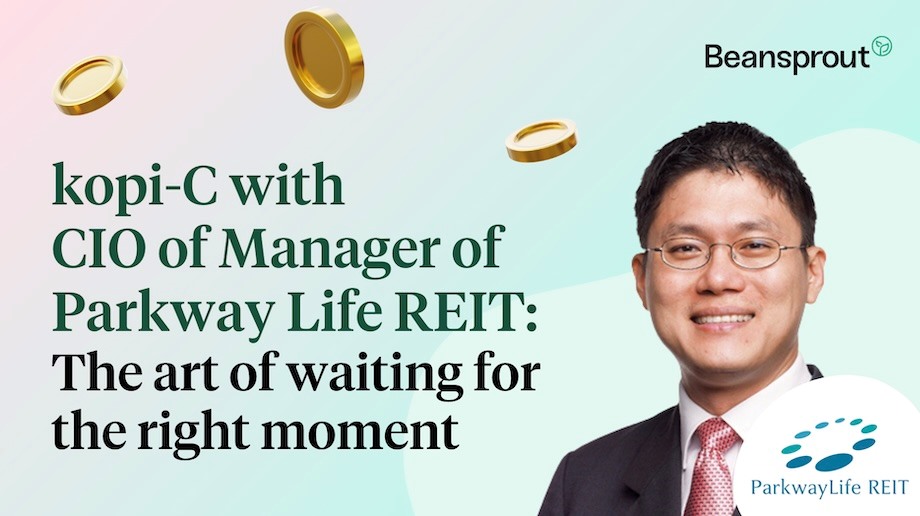
Chief Investment Officer Tan Seak Sze explains why instinct—sensing the moment, then waiting for the right one to act—has shaped everything from a 2008 investment into Japan to a decade-long courtship of France.
Earlier this year, the Miyako Group, which leased a few of Parkway Life REIT’s Osaka properties, entered insolvency/ restructuring proceedings.
“We were having conversations with potential operators, and there was immediate interest from several parties to take over some of the affected properties,” says Chief Investment Officer Tan Seak Sze.
“We could have taken this easy route. But we decided to undertake a comprehensive review of these properties rather than settling for the obvious next step.”
Instead, the REIT Manager worked closely with the local asset manager, third party agents and consultants to develop strategy for each of the properties, including rejuvenation and refurbishment initiatives to future-proof the assets and maintain asset competitiveness, and lease restructuring efforts to incorporate rental escalation provisions supporting future income growth.
Tan explains why, “These properties were getting a bit dated, so it’s timely to do some work on them—to refresh the assets and improve their market appeal. The thinking was: by investing in a series of asset enhancement initiatives to modernise the assets, this would either enable us to command a better price, or enhance their attractiveness to quality replacement operators, ultimately creating greater long-term value for the REIT.”
This episode captures something important about how Tan runs the investment side of Parkway Life REIT: a habit of reading a situation carefully and weighing the possible courses of action rather than rushing into the first available option.
The same instinct also explains how the REIT, with just three Singapore hospital seed assets at IPO, has expanded into fifty-nine nursing homes across Japan and, more recently, eleven in France, with AUM more than doubling since listing.
Knowing where to look, and where not to
Before any acquisition, Tan says the REIT works through a layered read of a market.
First, they look at macro stability: is it a mature economy with functioning politics? After all, healthcare real estate is often tied to how a country funds its own systems.
Second, the funding itself: whether long-term care is paid through structured insurance or government contribution. In Japan, for example, a slice of tax contributions is earmarked specifically for this.
Third, demographics: whether a population is ageing and—more vital still —where the population is ageing, healthcare demand follows.
Run through these filters, several markets fell away quickly, Tan says. Indonesia, Vietnam and China were some examples of markets that lacked mature healthcare funding. In Taiwan and Korea, hospitals tend to sit with large conglomerates with little reason to sell. Australia was tracked for years and ultimately set aside as a market that was too small and too concentrated among two large hospital operators.
On the other hand, Japan (and France later on), cleared the filters.
But clearing the filters was just the first step. More importantly, it was timing that had to align.
Waiting for the right moment
Parkway Life REIT entered Japan in 2008, started with the acquisition of a pharmaceutical manufacturing facility followed by a nursing home portfolio in the aftermath of the global financial crisis. Some funds that had borrowed heavily to buy such properties came under pressure from their lenders to sell quickly, pushing prices down.
This worked in the REIT's favour: the rental income on the portfolio it bought came to more than 8% of the price paid—an unusually attractive entry point for this kind of long-leased, stable asset, which typically trades far more expensively.
"Looking back now, this is now impossible," Tan says.
France, however, took much longer. Tan traces the REIT’s interest in the country back to 2014, with a more serious push from 2017 onwards. In between, the price was never right.
“Pre-Covid, the market was very hot, a lot of PE funds were there,” Tan says.
For Tan, he judges a deal against one simple comparison: the rental return (yield) it offers, versus what it costs the REIT to borrow the money to buy it. If the yield is lower than the borrowing cost, the deal shrinks earnings per unit even as the portfolio grows bigger—what he calls "dilutive".
This was the trap in France before 2024.
"They were able to get deals done at about 4% [yield], and we refused, because based on our cost of borrowing, it would be dilutive. We don't invest for the sake of investing." Tan asserts.
The opening came in 2024, when tighter financing conditions across France's aged-care sector brought pricing back to a level where the yield cleared this bar—around 6%-plus level—in a sale-and-leaseback deal with operator DomusVi for eleven nursing homes.
Even then, the REIT held back from moving further. It spent most of 2025 out of the market entirely, integrating the new portfolio and cultivating its relationship with DomusVi.
“It was our first time in Europe,” Tan says. “So we told ourselves: don’t buy anything yet. Focus on integrating this portfolio.”
An anchor that enables patience
Underpinning all of this is Singapore, which still contributes about 68% of the REIT’s revenue through its three crown jewels—a share Tan expects to settle nearer 50–60% over time. This is by design, he says, “Like an anchor.”
“As we grow, the entire growth pie will be Singapore-centric as it remains the cornerstone of our portfolio. From a strategy perspective, that’s intentional,” he emphasises.
After all, he credits the REIT’s premium valuation to the long, CPI-linked leases for the Singapore hospitals and its strong relationship with sponsor IHH Healthcare. By extension, these also give it room to be patient overseas rather than chase deals simply to keep growing.
“If you look at REITs that get too heavy overseas, the stock premium starts to dilute. We are very cognisant of that,” he points out.
A career spent reading unfamiliar markets
Tan’s own career has moved through unfamiliar terrain in much the same way.
Before joining the REIT’s manager in 2009, he was Vice President (Investments) at CapitaLand, overseeing retail investments in India. Prior to this, he had been seconded by Ascendas to run an IT-park developer in Hyderabad, and also spent two years in the Philippines as a Chief Operating Officer.
With all this experience, he now treats each new market less as a transaction to close and more as a relationship to build.
“Because the leases are so long—20 years—we look at operators not as tenants, but as partners we want to grow with,” he says.
“The first thing we do, before we even focus on the real estate, is understand the culture, and nothing beats speaking directly with the people on the ground.”
That same patience carries into how the REIT manages risk once it owns a property. Rather than concentrate with a single operator, it spreads leases across twenty-eight operators in Japan alone, and leans on its relationships across the sector. Hence, when one runs into trouble—as with the Osaka properties—they are able to easily arrange an orderly handover, with sufficient security deposits structured to cover any rental gap.
Even its read of demographics stays active rather than fixed: the REIT has shifted its Japan buying focus toward the greater Tokyo region and other metropolitan regions as the elderly population concentrates there, recycling older assets in areas where that growth looks less durable.
“It’s not a static thing,” Tan says. “You need a second level of knowledge that moves with the market.”
Income, growth, or both?
Asked how investors should think about the REIT—as an income play or a growth story—Tan resists picking one.
The core, he says, is a portfolio built for stable income. This is augmented by growth added on top, firstly as seen in how it turned an empty Osaka building into an upgrade, as well as asset enhancements like the recently completed renovation of Mount Elizabeth Hospital. Secondly, it is augmented also by markets that complement one another, with France’s inflation-linked leases and Singapore’s CPI-linked hospital rents offsetting Japan’s flatter lease structure.
“Our goal is never to grow for growth’s sake,” Tan says. “It is to build a portfolio that can continue to deliver sustainable income, but we also create opportunity for future growth.”
He offers one number as his own answer to the question: the REIT’s distribution per unit has grown every year since its 2007 listing.
“Our report card is DPU,” he says. “It reflects the value we have delivered to unitholders and underpins what we believe is a unique track record of 18 consecutive years of recurring DPU growth.”
About Parkway Life REIT
Parkway Life Real Estate Investment Trust (“PLife REIT”) is one of Asia’s largest listed healthcare REITs by asset size. It invests in income-producing real estate and real estate related assets that are used primarily for healthcare and healthcare-related purposes (including but are not limited to, hospitals, healthcare facilities and real estate and/or real estate assets used in connection with healthcare research, education, and the manufacture or storage of drugs, medicine and other healthcare goods and devices).
PLife REIT owns a well-diversified portfolio of 73 properties, with a total portfolio size of approximately S$2.56 billion. It owns the largest portfolio of strategically located private hospitals in Singapore comprising Mount Elizabeth Hospital, Gleneagles Hospital and Parkway East Hospital. In addition, it has 59 assets of high-quality nursing home and care facility properties in various prefectures of Japan, and 11 assets of high-quality nursing homes well located across six regions in France.
About kopi-C: the Company brew
kopi-C is a regular column by SGX Research in collaboration with Beansprout, Singapore’s trusted investment intelligence platform which helps everyday investors build the knowledge and confidence to make decisions that matter. kopi-C features C-level executives of leading companies listed on SGX. These interviews are profiles of senior management aimed at helping investors better understand the individuals who run these corporations.
Read also
Gain financial insights in minutes
Subscribe to our free weekly newsletter for more insights to grow your wealth
Most Popular

Comments
0 comments