
Why China A-shares are worth considering: 3 SGX ETFs to gain exposure
ETFs
Powered by

By Gerald Wong, CFA • 22 Apr 2026
Why trust Beansprout? We’ve been awarded Best Investment Website at the SIAS Investors’ Choice Awards 2025
'%3e%3cpath%20fill-rule='evenodd'%20clip-rule='evenodd'%20d='M17.64%209.20455C17.64%208.56637%2017.5827%207.95273%2017.4764%207.36364H9V10.845H13.8436C13.635%2011.97%2013.0009%2012.9232%2012.0477%2013.5614V15.8195H14.9564C16.6582%2014.2527%2017.64%2011.9455%2017.64%209.20455V9.20455Z'%20fill='%234285F4'/%3e%3cpath%20fill-rule='evenodd'%20clip-rule='evenodd'%20d='M9%2018C11.43%2018%2013.4673%2017.1941%2014.9564%2015.8195L12.0477%2013.5614C11.2418%2014.1014%2010.2109%2014.4205%209%2014.4205C6.65591%2014.4205%204.67182%2012.8373%203.96409%2010.71H0.957275V13.0418C2.43818%2015.9832%205.48182%2018%209%2018V18Z'%20fill='%2334A853'/%3e%3cpath%20fill-rule='evenodd'%20clip-rule='evenodd'%20d='M3.96409%2010.71C3.78409%2010.17%203.68182%209.59318%203.68182%209C3.68182%208.40682%203.78409%207.83%203.96409%207.29V4.95818H0.957273C0.347727%206.17318%200%207.54773%200%209C0%2010.4523%200.347727%2011.8268%200.957273%2013.0418L3.96409%2010.71V10.71Z'%20fill='%23FBBC05'/%3e%3cpath%20fill-rule='evenodd'%20clip-rule='evenodd'%20d='M9%203.57955C10.3214%203.57955%2011.5077%204.03364%2012.4405%204.92545L15.0218%202.34409C13.4632%200.891818%2011.4259%200%209%200C5.48182%200%202.43818%202.01682%200.957275%204.95818L3.96409%207.29C4.67182%205.16273%206.65591%203.57955%209%203.57955V3.57955Z'%20fill='%23EA4335'/%3e%3c/g%3e%3cdefs%3e%3cclipPath%20id='clip0_0_2849'%3e%3crect%20width='18'%20height='18'%20fill='white'/%3e%3c/clipPath%3e%3c/defs%3e%3c/svg%3e)
Make Beansprout your preferred source on Google
Add us on Google to see more of our insights in your search results
Why China A-shares are worth considering, and how to gain exposure through 3 SGX-listed ETFs offering growth, income and diversification.
This post was created in partnership with SGX. All views and opinions expressed in this article are Beansprout's objective and professional opinions.
What happened?
Like many Singapore investors, much of my growth exposure has often been concentrated in Singapore stocks and US equities.
That has worked well in recent years. But it also means my portfolio can end up leaning heavily on just selected markets and themes.
What caught my attention is that parts of China’s onshore market have been holding up better than many investors may expect.
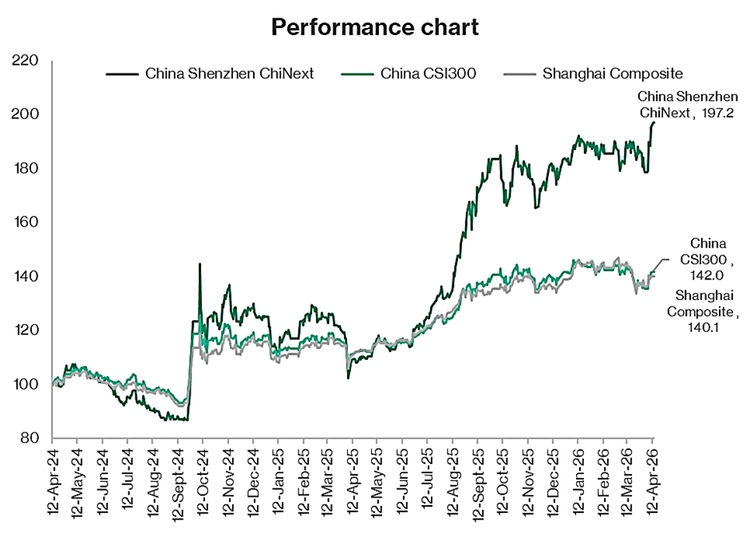
Over the past one year, as of 14 Apr 2026 according to Factset data, Chinext was up 97.2% in USD terms, outperforming the US Nasdaq’s 41.3%, while the Shanghai Composite (up 35.6% in USD terms) and CSI300 (up 37.7% in USD terms) have also outperformed the S&P 500’s 28.9%.
This is why I have been paying closer attention to China A-shares, which are companies listed in Shanghai and Shenzhen and offer more direct exposure to China’s domestic economy.
Rather than trying to pick individual A-share winners in a market that can be volatile and policy-sensitive, I would rather look at listed funds that offer targeted exposure to different parts of the China opportunity set.
In this article, I will look at three SGX-listed ETFs that provide different ways to invest in China, depending on whether I want broader market exposure, a stronger innovation angle, or a steadier dividend tilt.
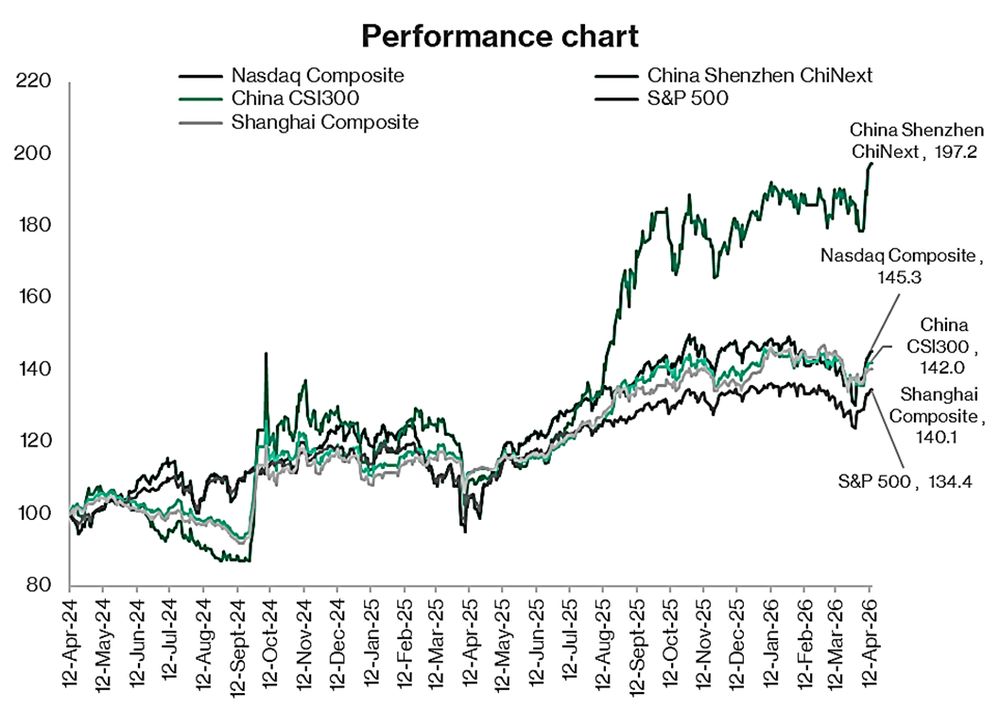
Here are 3 reasons why the investment case on China is strengthening.
#1 - China’s earnings growth is recovering and becoming broader
One reason China A-shares are looking more interesting again is that earnings expectations are starting to improve.
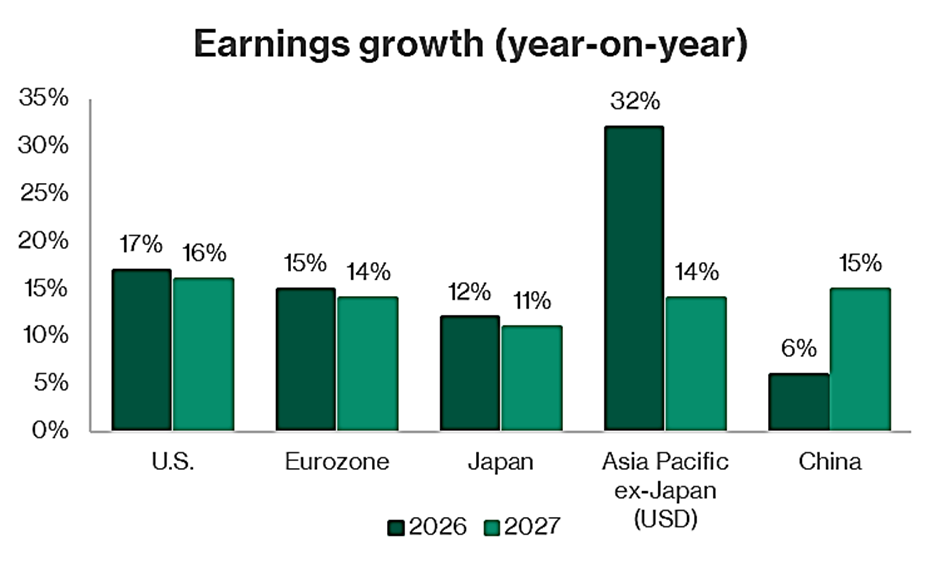
Compared with Asia-Pacific and global peers, China’s earnings growth outlook is becoming more competitive, especially heading into 2027.
China’s earnings growth is estimated at 6% for 2026 and 15% for 2027, suggesting stronger momentum further out.
What is more encouraging is that the recovery is becoming broader across sectors, with earnings growth in consumer discretionary, technology and healthcare expected to outpace the broader China index.
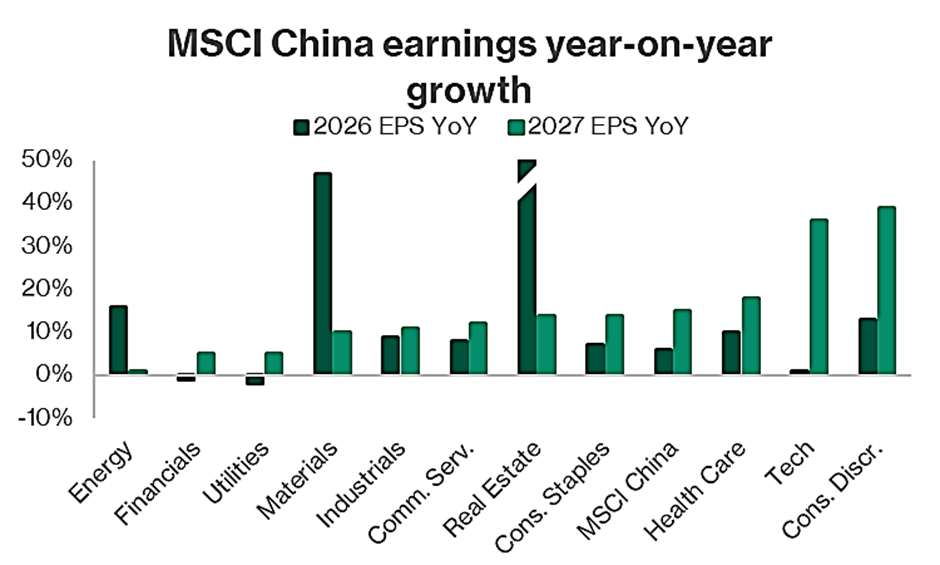
This suggests that China's story is no longer just about a narrow rebound in a few large names.
Instead, the earnings recovery appears to be spreading to sectors tied to domestic demand, innovation and the upgrading of the broader economy.
When earnings growth starts to broaden, it can create a wider set of opportunities across the market rather than concentrating returns in just one or two themes.
#2 - China’s structural growth themes are still intact
Another reason China A-shares remain relevant is that the longer-term structural growth story still appears to be in place.
China’s growth story is no longer only about property, exports, or a broad economic rebound.
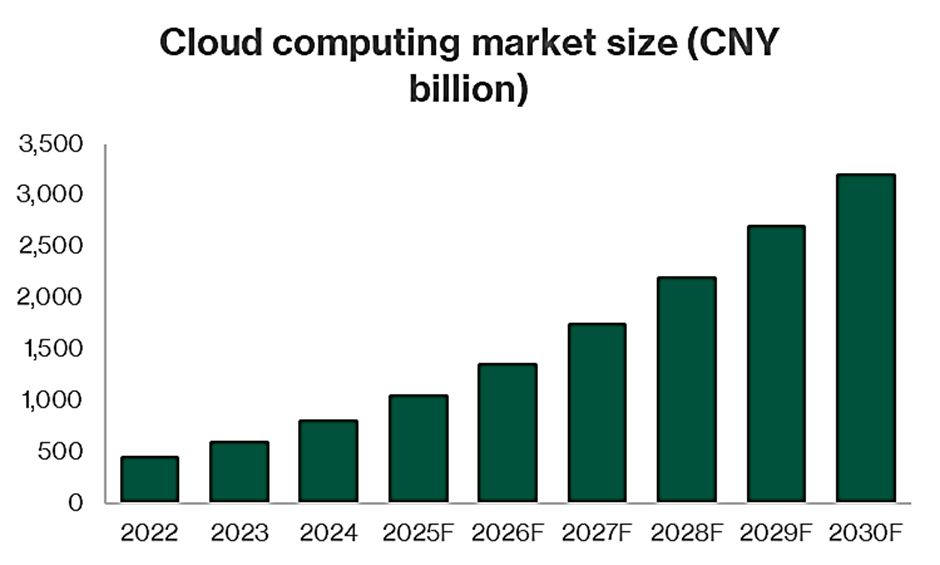
Despite concerns around the macro environment, China continues to invest heavily in industries it sees as strategically important, including AI, robotics, semiconductors and cloud computing.
These are areas where policy support, investment and domestic demand may continue to reinforce one another over time.
AI and cloud, in particular, still appear to have significant room to expand. That creates a longer runway for businesses exposed to software, computing demand, and the broader digital ecosystem.
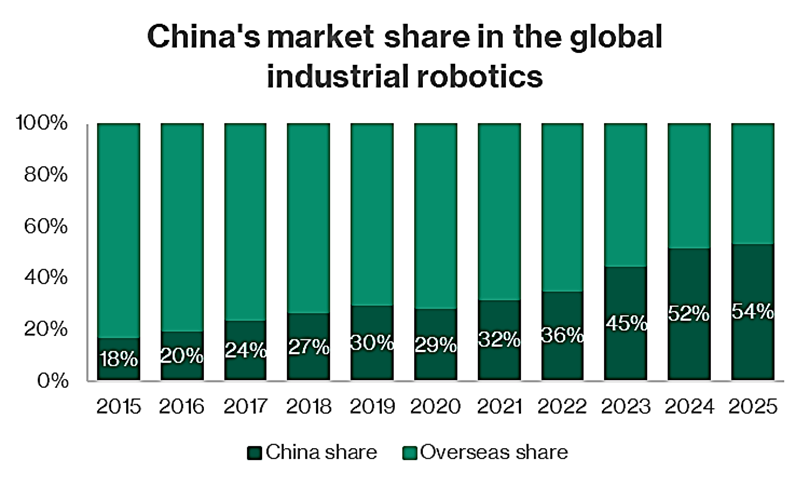
Robotics is another area where China has built meaningful scale.
Its share of the global industrial robotics market rose from 17.5 per cent in 2015 to 54.0 per cent in 2025, pointing to a manufacturing base that is becoming more automated and technologically capable over time.
Semiconductor investment also remains important.
In a world where technology self-sufficiency has become a bigger priority, continued spending in this area suggests that China is still committed to strengthening domestic capability.
This is beginning to matter more in the stock market as well.
Technology focused A-shares have already shown stronger momentum, with the Chinext Index (up 84.1%) outperforming both the CSI300 (+28.6%) and the Shanghai Composite (+26.6%) over the past one year, as of 14 April 2026.
That leaves investors with a market that looks increasingly shaped not just by cyclical recovery, but by a set of longer-term structural trends.
#3 - China is also becoming more relevant for shareholder returns with attractive income opportunity
China A-shares are also becoming more interesting from a shareholder returns perspective.
Part of this is being supported by SOE reform and capital market reforms, which are placing greater emphasis on improving shareholder returns.
This means China A-shares are no longer just relevant for investors seeking growth, but also for those looking for companies with stronger cash generation and more meaningful payouts.
China also contributes a large share of dividend yielding companies in Asia Pacific, suggesting there is meaningful breadth for investors looking beyond pure growth.
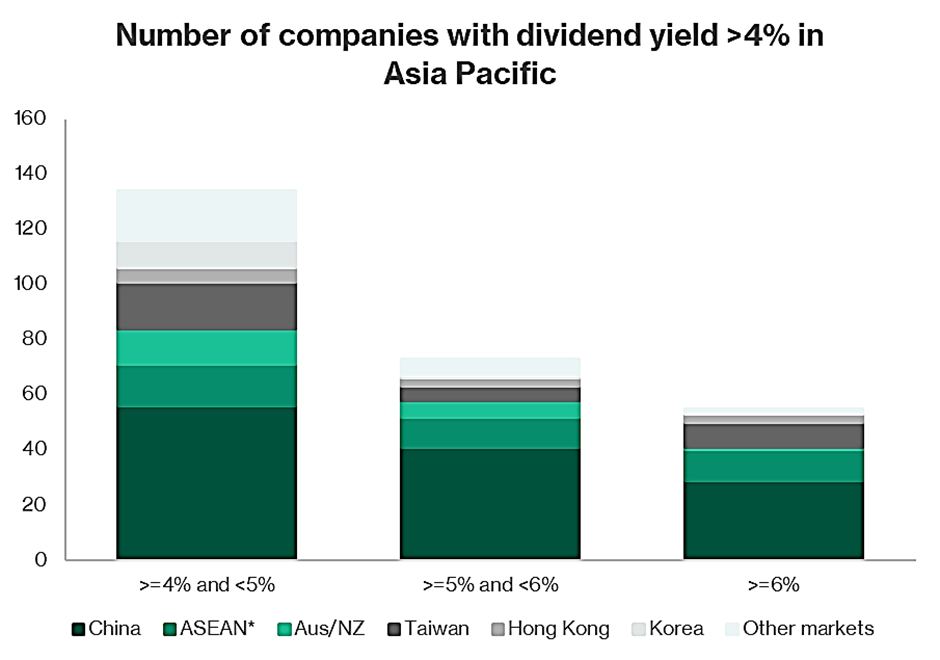
This gives investors more flexibility in how they approach the market, whether through broad market exposure, innovation-led growth, or a steadier dividend angle.
Taken together, these trends suggest that China A-shares may be worth a closer look again.
How to gain exposure to China A-shares via SGX ETFs
Rather than trying to pick individual winners in a market that can still be volatile, I would rather look for a simpler way to gain exposure.
This is where SGX-listed ETFs may be useful.
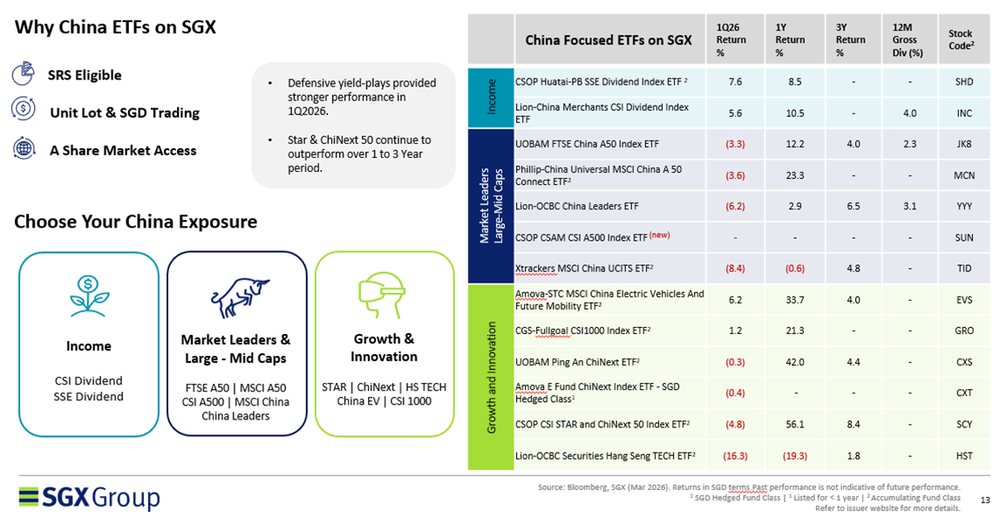
Depending on whether I want broader market exposure, a stronger growth angle, or a steadier dividend tilt, the three ETFs below each offer a different way to access the China A-share market.
#1 - CSOP CSAM CSI A500 Index ETF (SGX: SUN) for core China exposure
If I want broad China A-share exposure, this is the ETF I would start with.
The CSOP CSAM CSI A500 Index ETF (SGX: SUN) tracks the CSI A500 Index, which is designed to reflect the overall performance of 500 representative Shanghai-listed or Shenzhen-listed companies across different industries.
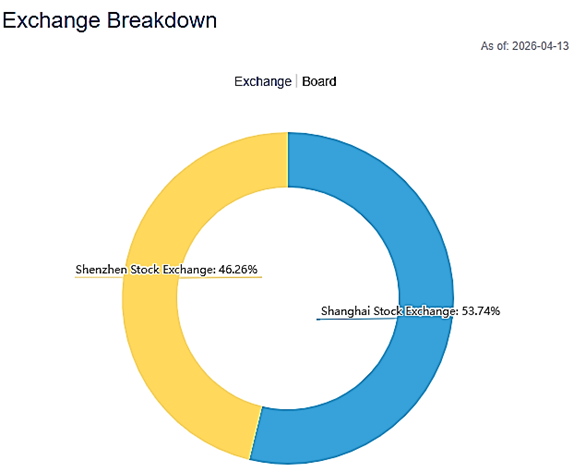
The ETF is structured as a feeder fund and invests at least 90% of its net asset value into the China Southern CSI A500 ETF.
The top 10 index constituents include Contemporary Amperex Technology, Kweichow Moutai, Zhongji Innolight, Ping An Insurance, Zijin Mining, China Merchants Bank, Eoptolink Technology, Midea Group, China Yangtze Power, and Industrial Bank.
| Constituent Name | Sector | Weight(%) |
| Contemporary Amperex Technology Co., Limited. | Industrials | 3.8 |
| Kweichow Moutai Co Ltd | Consumer Staples | 3.1 |
| ZHONGJI INNOLIGHT CO., LTD. | Communication Services | 2.8 |
| Ping An Insurance (Group) Company of China Ltd | Financials | 2.1 |
| Zijin Mining Group Co Ltd | Materials | 1.9 |
| Eoptolink Technology Inc., Ltd | Communication Services | 1.7 |
| China Merchants Bank Co Ltd | Financials | 1.6 |
| Midea Group CO., LTD | Consumer Discretionary | 1.3 |
| China Yangtze Power Co Ltd | Utilities | 1.1 |
| Industrial Bank | Financials | 1.1 |
| Source: China Securities Index, as of 13 April 2026 | ||
The CSOP CSAM CSI A500 Index ETF (SGX: SUN) started trading on 20 January 2026 and has a total NAV of about RMB 242.9 million, with 48.156 million outstanding shares.
The management fee is currently 0.89% per annum, with a maximum of 1.50% per annum.
Distributions, if any, are at the manager’s discretion and may be declared annually.
What stands out to me is that this is not a narrow thematic ETF. It is meant to be a broad-market China allocation.
That makes it more suitable as a core holding for investors who want exposure to the onshore market without going all-in on any single sector or theme.
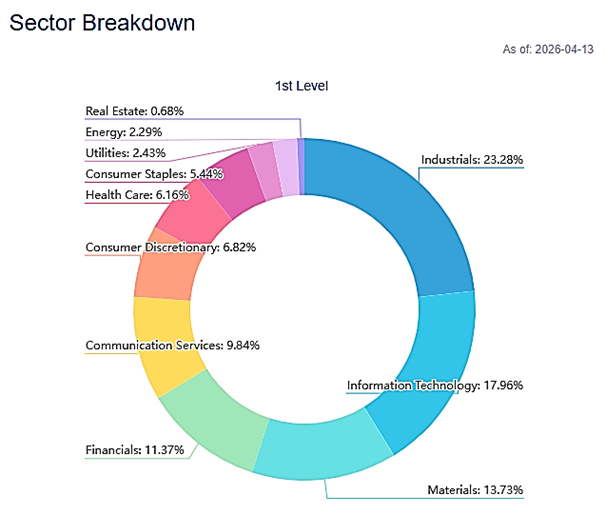
In portfolio terms, I would see this as the foundation of a China allocation.
This is the broadest of the three China A-share strategies and the one that looks most suitable for investors who want wider exposure to China’s domestic market without leaning too heavily into either high-growth innovation names or high-dividend traditional sectors.
#2 - CSOP CSI STAR and CHINEXT 50 Index ETF (SGX: SCY) for China growth
If the CSI A500 is the core, then the CSOP CSI STAR and CHINEXT 50 Index ETF (SGX: SCY) is the higher-growth satellite.
The CSOP CSI STAR and CHINEXT 50 Index ETF (SGX: SCY) tracks the CSI STAR & CHINEXT 50 Index, giving investors exposure to companies listed on two of China’s more innovation-focused boards.
It is also a feeder fund, primarily holding units in the China Southern CSI STAR and CHINEXT 50 ETF.
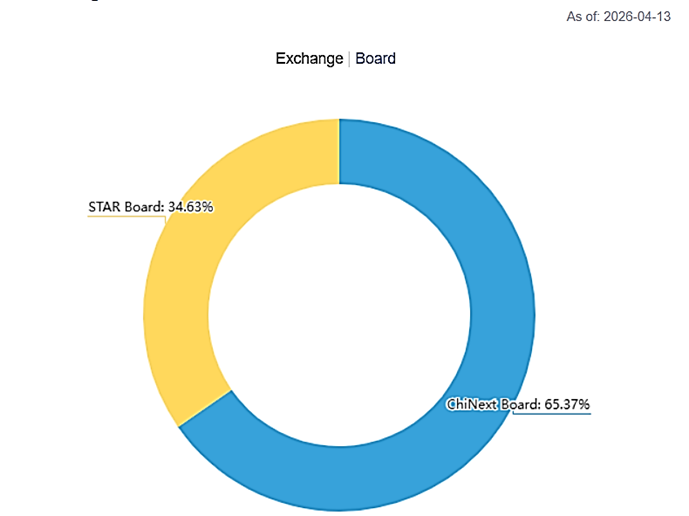
As of 27 February 2026, the fund had a total fund size of CNY 58.43 million.
The fund was listed on the SGX on 30 December 2022, and its management fee is currently 0.89% per annum with a total expense ratio of 2.79%.
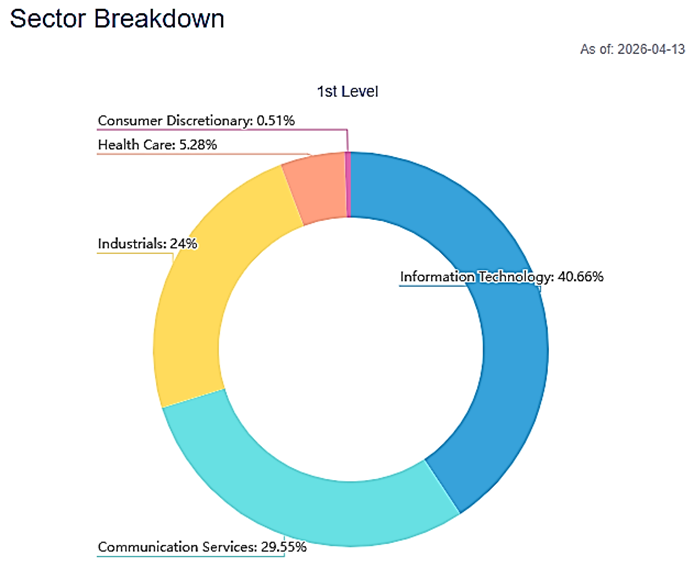
The top 10 index constituents of the CSOP CSI STAR and CHINEXT 50 Index ETF (SGX: SCY) highlight its focus on China’s innovation-led sectors, with strong weightings in communication services, information technology, and industrials.
As of 13 April 2026, its largest holdings were Zhongji Innolight, Eoptolink Technology, and Contemporary Amperex Technology, followed by Cambricon Technologies, Hygon Information Technology, Semiconductor Manufacturing International Corporation, Sungrow Power Supply, Victory Giant Technology, Montage Technology, and Suzhou TFC Optical Communication.
| Constituent Name | Sector | Weight(%) |
| ZHONGJI INNOLIGHT CO., LTD. | Communication Services | 12.9 |
| Eoptolink Technology Inc., Ltd | Communication Services | 11 |
| Contemporary Amperex Technology Co., Limited. | Industrials | 11 |
| Cambricon Technologies Corporation Limited | Information Technology | 5.6 |
| Hygon Information Technology Co., Ltd. | Information Technology | 4.9 |
| Semiconductor Manufacturing International Corporation | Information Technology | 4.3 |
| Sungrow Power Supply Co Ltd | Industrials | 4.2 |
| Victory Giant Technology (HuiZhou)Co.,Ltd. | Information Technology | 3.9 |
| Montage Technology Co., Ltd. | Information Technology | 3.8 |
| Suzhou TFC Optical Communication Co., Ltd. | Communication Services | 3.5 |
| Source: China Securities Index, as of 13 April 2026 | ||
This is the part of the China story that may appeal most to investors looking for stronger long-term upside.
It offers exposure to sectors tied more closely to innovation, newer-economy businesses, and companies that may benefit from China’s push into advanced manufacturing and technology.
At the same time, this is clearly the more volatile part of the market.
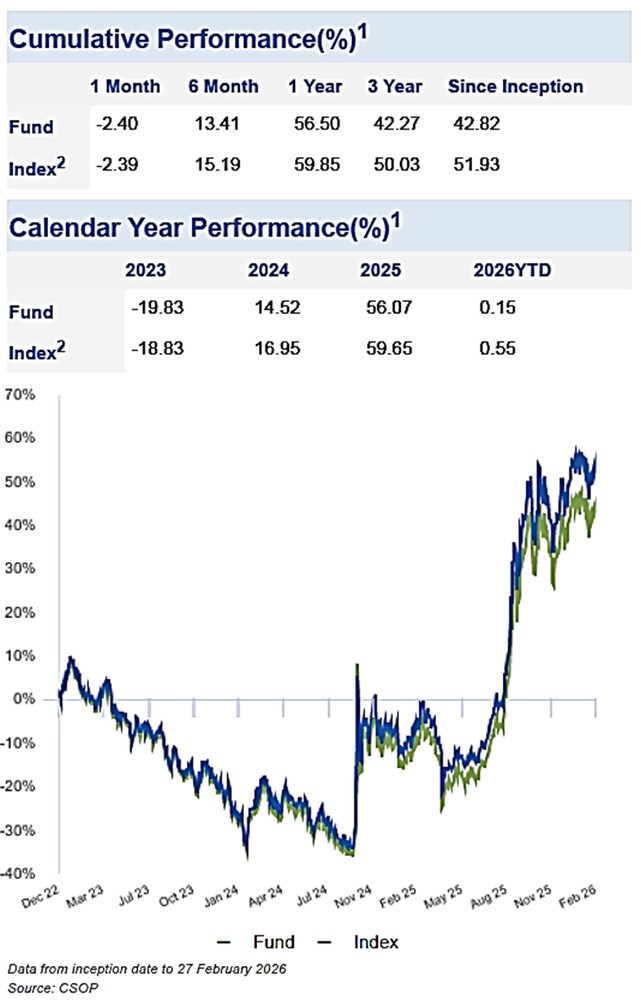
As of 27 February 2026, the fund had delivered a 56.5% one-year return on a NAV basis, while the underlying index returned 59.85%.
Since inception, the fund has returned 42.82% versus 51.93% for the index.
#3 - Lion-China Merchants CSI Dividend Index ETF (SGX: INC) for China dividends
Listed on the SGX on 28 March 2025, the Lion-China Merchants CSI Dividend Index ETF is also the first CSI Dividend Index ETF listed outside Mainland China.
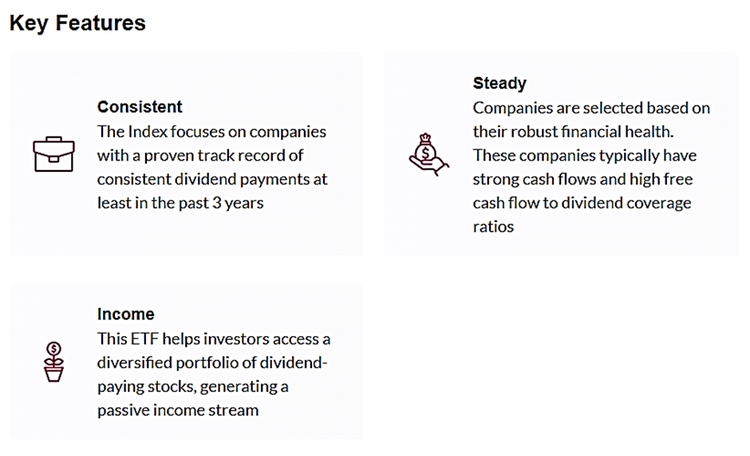
The Lion-China Merchants CSI Dividend Index ETF (SGX: INC for SGD; ICH for CNH) tracks the CSI Dividend Index, which comprises 100 A-shares selected for high cash dividend yields, stable dividends, and sufficient scale and liquidity.
The CSI Dividend Index is tilted towards traditional industries such as commodities and energy, which may offer a higher dividend yield compared to technology companies. The index is rebalanced annually in December.
| Constituent Name | Sector | Weight(%) |
| COSCO SHIPPING Holdings Co., Ltd. | Industrials | 2.9 |
| GUANGHUI ENERGY CO., LTD. | Energy | 2.3 |
| Yankuang Energy Group Company Limited | Energy | 1.9 |
| Shanxi Coal International Energy Group Co., Ltd | Energy | 1.7 |
| Shanxi Lu'an Environmental Energy Development Co Ltd | Energy | 1.6 |
| Inner Mongolia Eerduosi Resources Co.,Ltd. | Materials | 1.6 |
| Shanghai Zhonggu Logistics Co., Ltd. | Industrials | 1.6 |
| Shaanxi Coal Industry Company Limited | Energy | 1.6 |
| Yongxing Special Materials Technology Co.,Ltd. | Materials | 1.5 |
| China Shenhua Energy Co Ltd | Energy | 1.5 |
| Source: China Securities Index, as of 13 April 2026 | ||
It trades in SGD and CNH, has a board lot size of 1 unit, and currently charges a management fee of 0.50% per annum, with a maximum of 0.99% per annum. It has a total expense ratio of 1.32%.
The ETF had a fund size of S$18.1 million and an annual distribution frequency, though distributions are not guaranteed.
Its early performance has also been reasonably steady.
As of February 2026, the fund had returned 6.0% year to date, 7.9% over six months, and 10.4% since inception on a NAV basis.
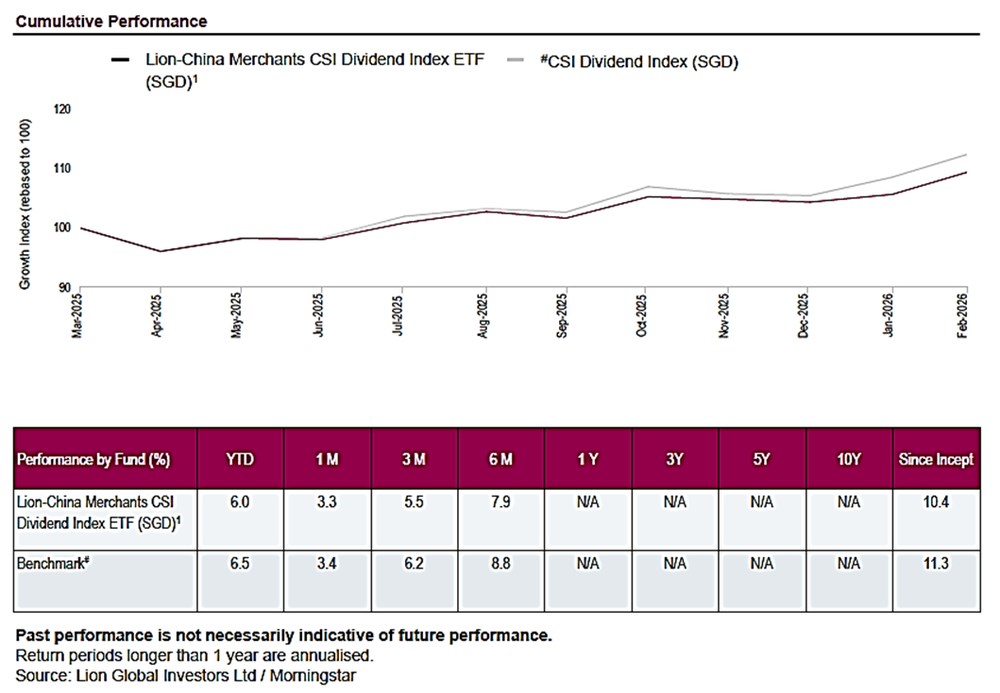
Compared with the other two ETFs, the Lion-China Merchants CSI Dividend Index ETF is more tilted towards traditional sectors and businesses with stronger payout characteristics, which may appeal more to investors looking for a steadier way to gain China A-share exposure.
What are the risks to watch?
China A-shares can offer diversification and access to different parts of the market, but they also come with risks investors should be aware of.
Geopolitical tensions remain a key overhang. Headlines around US-China trade, technology restrictions, or supply chains can affect sentiment quickly, even when the direct impact on company earnings is still uncertain.
Currency movements also matter. Because the underlying assets are denominated in renminbi, fluctuations in the RMB can affect returns for Singapore investors.
Policy risk is another important consideration. Regulatory changes in China can be introduced quickly, particularly in sectors that are closely tied to national priorities or capital market reforms. While policy support can create opportunities, it can also add uncertainty.
China’s stock market is also more retail-driven than many developed markets, which can lead to sharper short-term price swings. Growth-focused segments such as STAR and ChiNext may therefore be more volatile than a broader-market or dividend-focused strategy.
For this reason, I would view China A-share ETFs as part of a diversified portfolio, rather than a single high-conviction bet on one market.
What would Beansprout do?
I would look at China A-shares as a useful way to add both diversification and flexibility, depending on whether I want broader market exposure, stronger growth potential, or a steadier income stream.
What appeals to me is that China A-shares give me access to a part of the market that does not always move in sync with Singapore stocks or US equities.
For a portfolio that is already tilted towards Singapore and US names, I think this can be helpful not just from a geographic perspective, but also in terms of sector mix and return drivers.
If I want to add China exposure, I would first be clear about what role I want it to play in my portfolio.
For broader access to China’s domestic market, I would start with the CSOP CSAM CSI A500 Index ETF (SGX: SUN), which offers exposure across 500 representative A-share companies and may serve as a balanced starting point for investors looking to add China exposure.
If I want more upside from China’s innovation cycle, I would consider the CSOP CSI STAR and CHINEXT 50 Index ETF (SGX: SCY) as a smaller satellite position, while recognising that it is likely to be the most volatile of the three.
If I prefer a steadier angle with a stronger income tilt while gaining exposure to China, I would pay closer attention to the Lion-China Merchants CSI Dividend Index ETF (SGX: INC for SGD; ICH for CNH) .
Taken together, these SGX-listed ETFs offer different ways to gain exposure to China A-shares depending on whether I prioritise broader market access, growth, or dividends.
That makes them a practical option for investors who want to add China exposure without having to pick individual A-share stocks.
Explore other SGX ETFs to invest in China’s growth story here or find out more about these ETFs on the SGX ETF screener page.
If you are considering where to buy them, you may also want to check out our review of the best stock trading platforms in Singapore and the latest broker promotion.
Are there any ongoing broker promotions when I invest in SGX ETFs?
Several brokers and platforms offer promotions to incentivize ETF investments:
| Broker | Promotion Description |
| iFast FSMOne |
|
| Phillip Securities |
|
| *Terms and conditions of participating brokers apply. Please refer to their website for more details. | |
Disclaimer
This advertisement has not been reviewed by the Monetary Authority of Singapore.
Any information provided in this article is meant purely for informational and investor education purposes and should not be relied upon as financial or investment advice, or advice on corporate finance.
This article is not and does not constitute or form part of any offer, recommendation, invitation or solicitation to purchase any financial product or subscribe or enter any transaction. This article also does not take into account your personal circumstances, e.g. investment objectives, financial situation or particular needs and shall not constitute financial advice. You should consult your own independent financial, accounting, tax, legal or other competent professional advisors.
The information provided in this article are on an “as is” and “as available” basis without warranty of any kind, whether express or implied. Beansprout does not recommend any particular course of action in relation to any investment product or class of investment products. No information is presented with the intention to induce any person to buy, sell, or hold a particular investment product or class of investment products.
Read also
Gain financial insights in minutes
Subscribe to our free weekly newsletter for more insights to grow your wealth
Most Popular

Comments
0 comments