
US markets are near record highs. Here’s how to still get exposure through Webull
Brokerage Account
Powered by

By Nicole Ng • 15 Jun 2026
Why trust Beansprout? We’ve been awarded Best Investment Website at the SIAS Investors’ Choice Awards 2025
US markets are near record highs. Here are the different ways to get US exposure through Webull Singapore, from stocks and ETFs to Treasuries.
This post was created in partnership with Webull Singapore. All views and opinions expressed in this article are Beansprout's objective and professional opinions.
What happened?
US markets are sitting near record highs again.
The S&P 500 closed at an all-time high of 7,230 on 1 May 2026, then climbed above 7,500 for the first time on 14 May before easing back.
Continued optimism around AI and technology, supported by strong big-tech earnings and heavy investment in AI infrastructure, has helped keep market momentum going.
But interest rate uncertainty and geopolitical tensions are still weighing on investor sentiment.
A lot of investors I speak to feel torn. They don't want to miss out on the rally, but buying at these levels feels uncomfortable.
The question is less about whether to invest and more about how to do it sensibly.
The good news is that getting US exposure doesn't have to mean buying single stocks; you can take several routes depending on your comfort with risk.
In this article, I look at the different ways to get US market exposure through Webull Singapore, and who each option tends to suit.
Why investors are still looking at US markets, even at highs
The instinct to wait for a pullback is understandable, but it has a poor track record.
US equities have historically continued to compound even after reaching record highs.
According to FactSet and Standard & Poor’s data cited by J.P. Morgan Asset Management, investing in the S&P 500 at a new high between 1988 and 2024 produced average cumulative total returns of 13.4% over the following year and 80.9% over five years.
This was broadly comparable to, and in some cases higher than, investing on any day during the same period:
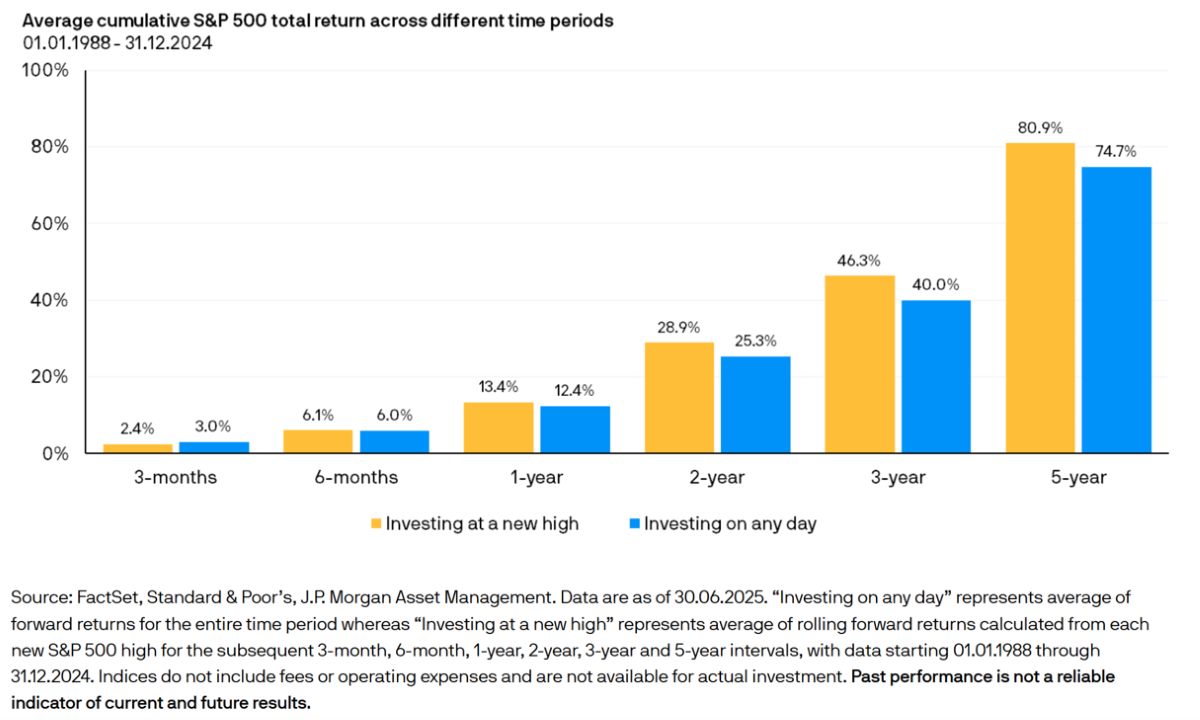
In other words, selling simply because the market has reached a new peak could mean missing further long-term gains.
What also stands out is how broad the US market is.
With equities, ETFs, mutual funds, US Treasuries and US government bonds, you don’t have to take a single, all-or-nothing bet on direction.
In equities, you can find fast-growing AI and high-growth technology names at one end and steadier, defensive dividend payers at the other.
Meanwhile, US government bonds and Treasuries behave differently from shares, providing investors with a source of passive income.
ETFs and mutual funds can sit across both, offering either broad market exposure in a single trade or more targeted, thematic exposure to a particular sector or strategy.
This market breadth means that not all US exposure carries the same level of risk.
For investors who are cautious about equity valuations, shorter-duration US Treasuries and lower-risk USD funds can offer a way to remain invested in US dollar assets with less volatility than equities, while still earning a yield.
So the real question isn't whether to get US exposure, but which tool fits what you're trying to do.
5 ways to get US exposure on Webull Singapore
I'll go through five routes here, roughly from typically higher risk to lower. Note that the names mentioned are illustrative, and not specific recommendations.
#1 – US stocks
The most direct route is to own the companies themselves, whether that is Apple, Nvidia or Meta.
This is where Webull can help to lower one of the traditional barriers for Singapore investors.
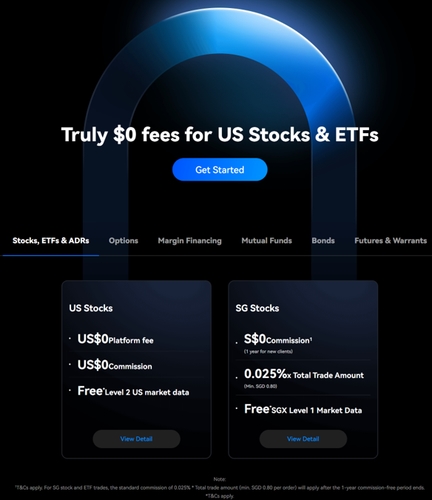
With Webull, investors can trade US stocks & ETFs at 0 commission and 0 platform fees, which makes it easier to build positions directly in the companies they want exposure to:
Webull also offers 24/5 trading, so investors have more flexibility to place trades outside regular US market hours.
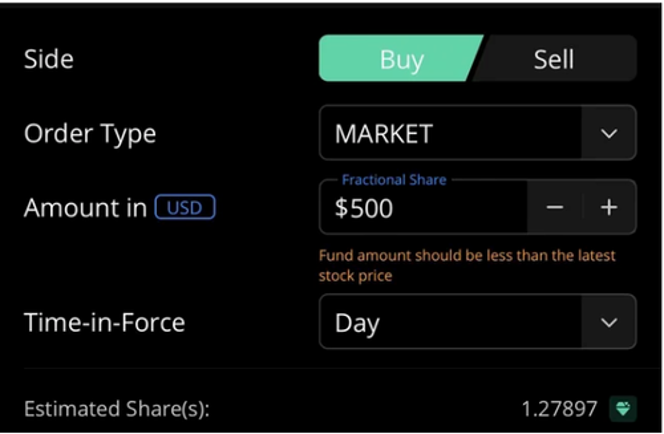
Another useful feature is fractional shares.
Webull gives investors access to more than 1,000 fractional shares, which means you do not need to buy one full share of a high-priced stock to get started.
Instead of saving up hundreds of dollars for a single share, you can put a smaller amount into different companies and gradually build a more diversified portfolio.
This route tends to appeal to investors who have a clear view on specific companies or sectors, and want direct exposure without paying fund management fees.
#2 – Index ETFs
If picking individual stocks feels like too much, exchange-traded funds (ETFs) are a simpler way in.
A fund like SPY tracks the S&P 500, and QQQ tracks the Nasdaq-100, so a single trade gives you a spread of companies rather than a concentrated bet.
The same Zero trading fees structure applies to ETFs on Webull, per its pricing page, which means more of each dollar goes into the investment rather than to costs.
For investing regularly, Webull's Regular Savings Plan (RSP) lets you automate purchases into US stocks and ETFs on a schedule you set.
There's also a Dynamic RSP option that adjusts how much you invest based on market movements.
Either way, spreading your buying over time takes some of the pressure off trying to pick a perfect entry point, which is exactly the worry many investors have at current levels.
This route may appeal to investors who want US exposure without the stress of choosing individual names.
#3 – Mutual funds
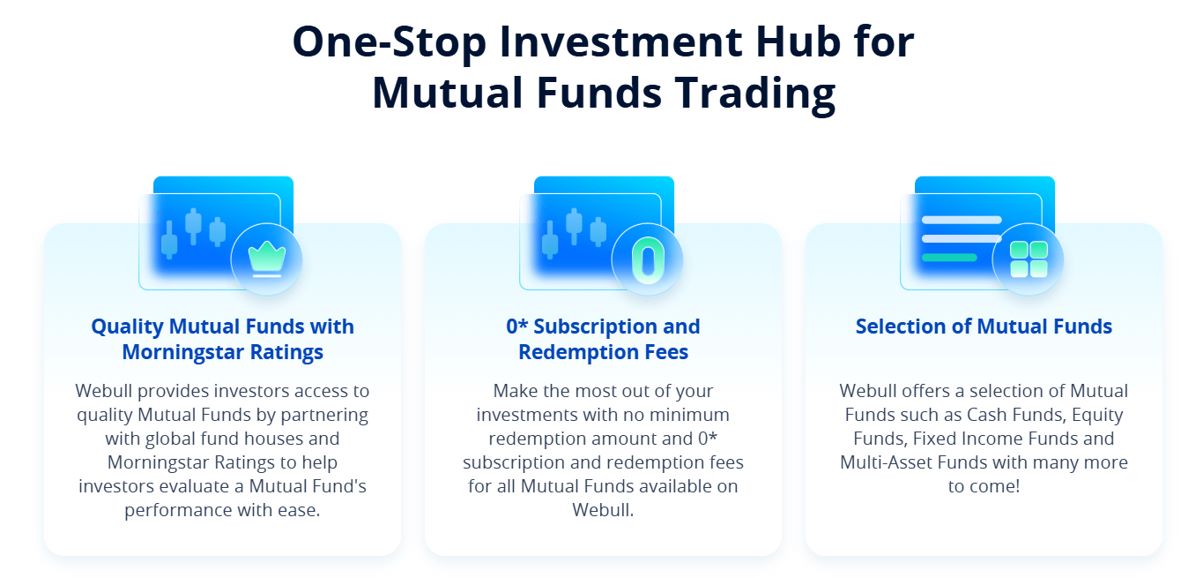
For investors who'd rather leave the stock selection to a professional, Webull also offers mutual funds across equity, fixed income and multi-asset strategies, including US dollar-denominated options.
Two things stand out here. First, Webull offers zero subscription and redemption fees on the mutual funds available on its platform, per its mutual funds page.
This is a meaningful difference from some traditional fund distributors that still charge a sales fee.
Second, Morningstar fund ratings are built into the app. This saves you the time and mental capacity of digging through external research, as you can get a sense of a fund’s track record and how it stacks up against its peers without leaving the platform.
Mutual funds are also RSP-compatible and available in both SGD and USD versions.
This helps if you'd prefer to invest in Singapore dollars and skip the currency conversion step.
This route may appeal to you if you want a managed, hands-off approach rather than building a portfolio yourself.
#4 – US Treasuries
If you're wary of equities at these levels but still want US dollar exposure, US Treasuries are worth a look.
These are bonds issued by the US government, and they offer a more predictable return with far less price swing than shares.
On Webull, you can start from as little as US$1000 for US treasuries, which makes them accessible even if you're only testing the waters or starting small.
US Treasuries give you a way to earn a yield in US dollars.
Treasuries can act as a steadier, income-generating layer that balances out the ups and downs of an equity holding.
#5 – US options
Options are the most advanced route here, and they come with the most risk.
Options give you the flexibility to generate income on shares you already own, hedge an existing position, or express a specific view on a stock.
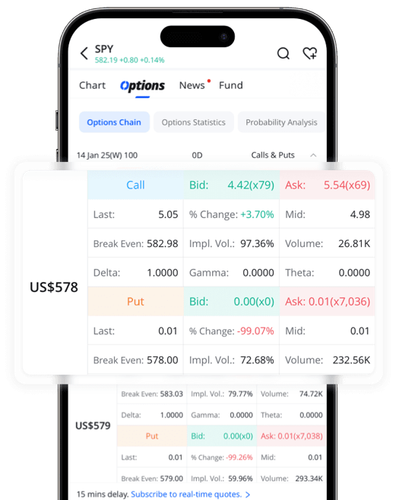
Webull Singapore supports single-leg trades and up to 13 multi-leg strategies, and its fee of US$0.55 per contract is among the lowest in Singapore.
The platform also gives you an options chain with real-time Greeks and implied volatility built in, so you can assess an option’s sensitivity to price moves (delta), the pace of time decay as expiry approaches (theta), and other risk measures before you trade.
There’s also a paper-trading mode so you can practise a strategy with live market data before putting real money in.
Having said that, options trading involves significant risk as it involves leverage, which could lead to outsized losses. So, proper risk management and position sizing are important.
Key risks and considerations
Whichever approach you take, it’s important to understand the risks involved when investing in US markets.
#1 – US markets can still be volatile
US stocks have rallied strongly in recent years, but markets can still swing sharply in the short term.
For investors who are worried about entering at the “wrong” time, investing gradually instead of deploying a lump sum all at once may help smooth out volatility.
One way to do this is through dollar-cost averaging (DCA), where you invest a fixed amount regularly regardless of market conditions.
For investors looking for an approach that goes beyond traditional dollar-cost averaging, Webull’s Dynamic RSP adjusts contribution amounts based on market movements while maintaining a disciplined investment schedule. This may help reduce the pressure of trying to time the market manually.
#2 – Currency movements can affect your returns
When investing in US assets, Singapore investors are also exposed to currency risk.
Even if the underlying investment performs well, fluctuations in the USD/SGD exchange rate will affect your returns when converted back into Singapore dollars.
A stronger Singapore dollar could reduce overall returns, while a stronger US dollar could boost them.
#3 – US dividend investing may be less tax-efficient
Singapore investors should also be aware that the US imposes a 30% withholding tax on dividends paid to non-resident investors.
Because Singapore does not have a tax treaty with the United States, local investors are unable to benefit from a reduced withholding tax rate.
This means that income-focused US investing strategies may be less efficient than they initially appear, especially compared to Singapore-listed dividend investments.
As a result, some investors prefer to use US markets primarily for long-term growth exposure, while keeping dividend-focused holdings closer to home.
#4 – The macro environment remains uncertain
Markets will continue to be influenced by broader macroeconomic and geopolitical developments.
This includes factors such as:
- US Federal Reserve interest rate decisions
- Inflation trends
- US tariff and trade policies
- Economic growth expectations
- Geopolitical tensions
These developments can affect both short-term market sentiment and longer-term investment performance, especially for globally exposed US companies.
What would Beansprout do?
At current market levels, we think building US exposure does not have to mean making one big bet on where markets will go next.
Instead, investors may consider building exposure gradually through a more balanced portfolio approach.
For long-term core exposure, broad US index ETFs such as the S&P 500 ETF (SPY) or Nasdaq-100 ETF (QQQ) can provide diversified access to some of the world’s largest companies.
Investors who want additional upside opportunities can then complement this with smaller positions in individual stocks or sector themes they have conviction in.
For more cautious investors, US Treasuries available on Webull may also play a role within the portfolio.
Rather than replacing equities entirely, Treasuries can potentially serve as a lower-risk component of a USD portfolio while still generating yield, especially during periods of market uncertainty.
For investors who prefer not to invest a lump sum at current market highs, Webull’s Dynamic RSP feature may also help reduce the pressure of market timing by allowing investments into stocks or ETFs to be deployed gradually over time.
At the same time, Webull’s zero-fee structure on US stocks and ETFs may make it a compelling platform for investors building long-term US exposure, particularly for those investing regularly or in smaller amounts where fees can have a larger impact on returns over time.
If you are looking to get started, you can open a Webull Singapore account through Beansprout to access US stocks, ETFs, mutual funds and Treasuries on a single platform.
As part of the exclusive Beansprout x Webull promotion, eligible new users can receive:
- A S$50 FairPrice voucher when funding at least S$3,000
- A S$160 FairPrice voucher when funding at least S$10,000
These rewards can also be stacked with Webull’s own welcome promotions, which include up to S$1,888* in NVDA fractional shares and stock vouchers, depending on the funding tier and holding period.
Learn more about the promo here.
Summary of Webull Promotion
Snatch these exclusive rewards when you sign up via Beansprout
Disclaimer
*T&Cs apply. For detailed terms and conditions and full disclaimer, please refer to Webull Singapore’s website at https://www.webull.com.sg/. All investors should consider for themselves if the investment products are suitable. Options trading involves significant risk and is not suitable for all investors as investors may be exposed to potentially rapid and substantial losses. All investments involve risk and are not suited for every investor.
All views expressed in the article are the objective opinions of Beansprout. Neither Webull or its affiliates shall be liable for the content of the information provided.
This advertisement has not been reviewed by the Monetary Authority of Singapore.
This article contains affiliate links. Beansprout may receive a share of the revenue from your sign-ups to keep our site sustainable. You can view our editorial guidelines here.

Get up to S$160 Fairprice voucher^ within 10 working days plus up to S$1,888 in welcome rewards.
Read also
Gain financial insights in minutes
Subscribe to our free weekly newsletter for more insights to grow your wealth
Most Popular

Questions and Answers
0 questions
