
The future of retirement is changing. Here are 4 lessons for investors.
CPF & Retirement
Powered by

By Nicole Ng • 17 Jul 2026
Why trust Beansprout? We’ve been awarded Best Investment Website at the SIAS Investors’ Choice Awards 2025
Retirement is changing as people live longer and markets grow more uncertain. Here are four investing lessons we learned from the Amundi World Investment Forum (AWIF) 2026 to build long-term wealth.
This post was created in partnership with Amundi. All views and opinions expressed in this article are Beansprout's objective and professional opinions.
What happened?
Retirement is changing.
In Singapore, the retirement age rose from 63 to 64 recently. People are living longer, and many of us may spend 20 to 30 years in retirement.
At the same time, investors are facing a more uncertain environment marked by higher debt levels, geopolitical tensions and inflation pressures.
We’ve seen recent discussion among investors in the Beansprout community: Will the retirement plan we're building today be enough for the future?
To better understand the challenges and opportunities ahead, we attended the Amundi World Investment Forum (AWIF) 2026 in Paris, where economists, policymakers and investment leaders gathered to discuss the forces shaping the global economy.
The discussions ranged from technological disruption, demographic shifts, and inflation to sovereign debt.
These themes may seem distant from everyday retirement planning, but they all tell us that the way we plan for retirement today will be very different from previous generations.
Here are some of the key lessons that stood out to us, and what they could mean for investors planning for retirement today.

#1 – Retirement planning is becoming more complex
Retirement planning used to be relatively straightforward.
Work for several decades, accumulate savings, retire in your early 60s, and rely on a combination of pensions, personal savings and family support.
That model is becoming harder to sustain.
Citing OECD data, Karin Franceries, Head of Business & Strategy for Retirement Solutions at Amundi, shared that a 65-year-old today has an average life expectancy of around 20 years. By 2065, that figure is expected to rise to 24 years.
"That's effectively 20% to finance per person," she told us.
In other words, many people may need to fund a retirement lasting 25 to 30 years or more.
At the same time, demographic trends are putting pressure on traditional retirement systems.
Franceries noted that Southeast Asia's population aged over 60 is expected to almost double from 12% today to 23% by 2050.
"The pressure on children to support ageing parents is such that it is just not feasible as the primary model," she said.
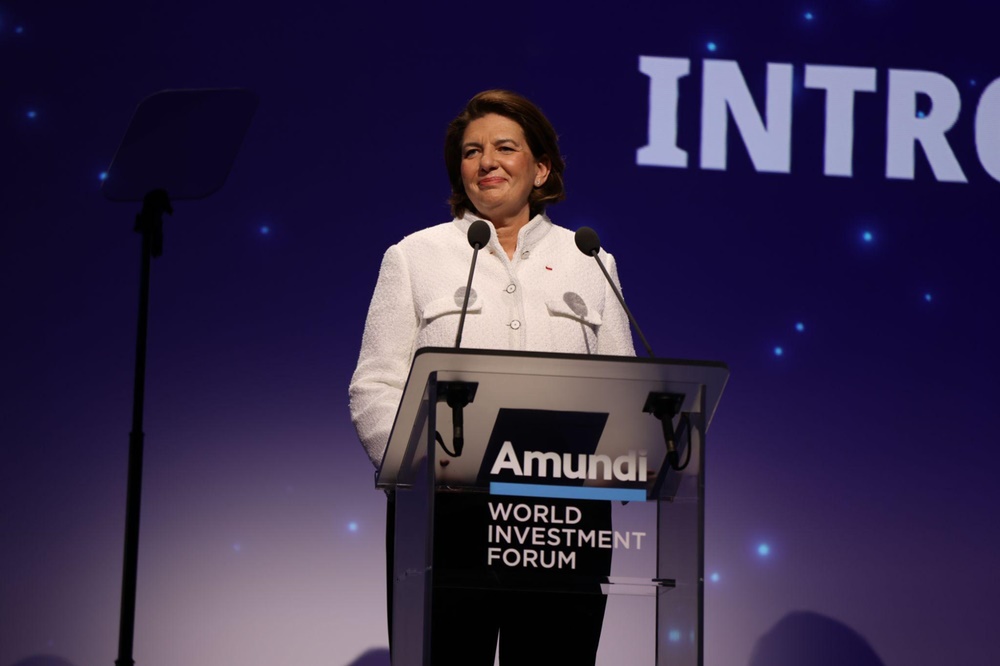
This challenge was echoed throughout the forum. In her opening address, Amundi CEO Valérie Baudson highlighted ageing populations and the growing need to help more people transition from being savers to becoming investors.
For individual investors, the implication is that a longer retirement increases the value of starting early.
As Benoît Sorel, Head of ETF & Indexing at Amundi, put it: "Savers need to be investors."
One of the biggest mistakes investors make, he suggested, is believing they need to wait for the right moment to begin. Instead, he highlighted the importance of systematic investing.
"When you get your salary every month, whether you can save $20, $100 or $1,000, invest it systematically," he said.
Several speakers at the event highlighted that the first step may simply be reviewing how much of their long-term retirement savings is sitting in cash and asking whether those funds are working hard enough to support their future goals.
#2 – The role of asset managers in building long-term wealth is evolving
Knowing you need to save for retirement and actually doing it are two very different things.
Franceries shared that 53% of people surveyed by Amundi want some form of support in building their retirement portfolio, whether through an adviser or through investment solutions that remove complex decision-making.
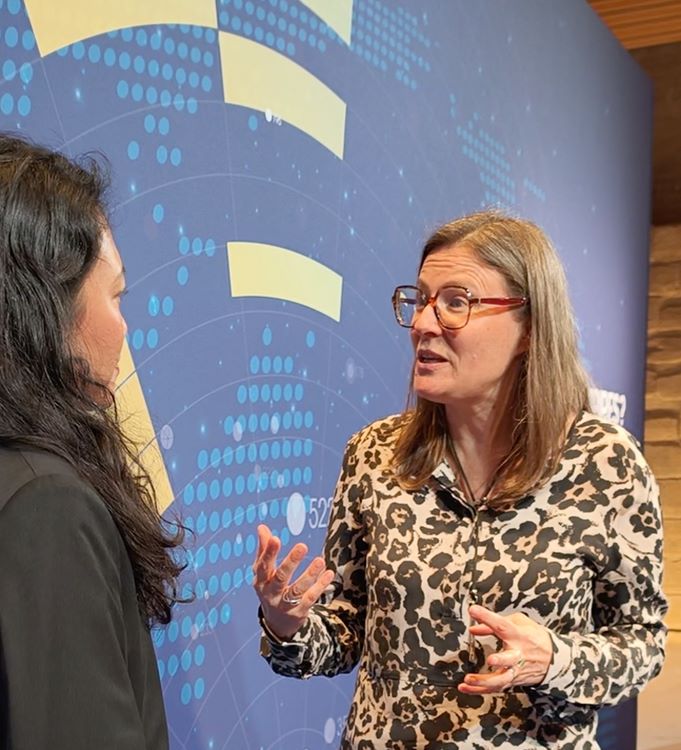
Retirement planning today involves far more than deciding how much to save each month.
Investors need to think about how to build wealth during their working years, how much risk to take at different stages of life, and eventually how to generate income from their portfolio in retirement.
As a result, asset managers are increasingly focusing on helping investors build long-term habits and frameworks, rather than simply offering investment products.
One development Franceries highlighted was the growth of auto-enrolment retirement programmes in markets such as Australia and the UK.
These programmes automatically direct contributions into diversified investment portfolios unless individuals choose to opt out.
The idea is rooted in a simple observation about human behaviour.
"Inertia is an obstacle because you don't want to do anything if you don't know about it," Franceries explained.
"But once you're nudged into doing something without thinking about it, then that inertia is actually a strength. It makes you save for longer and save better."
Whether through an automated investment plan, regular CPF top-ups, SRS contributions or monthly investments into a diversified portfolio, the principle is the same: make investing a habit rather than a decision that needs to be revisited every month.
As Franceries put it, "Set it and forget it. Compounding works for you. You don't need to think about it."
#3 – Building wealth in a more uncertain world
While uncertainty cannot be eliminated, investors can focus on building resilient portfolios that can withstand different market environments.
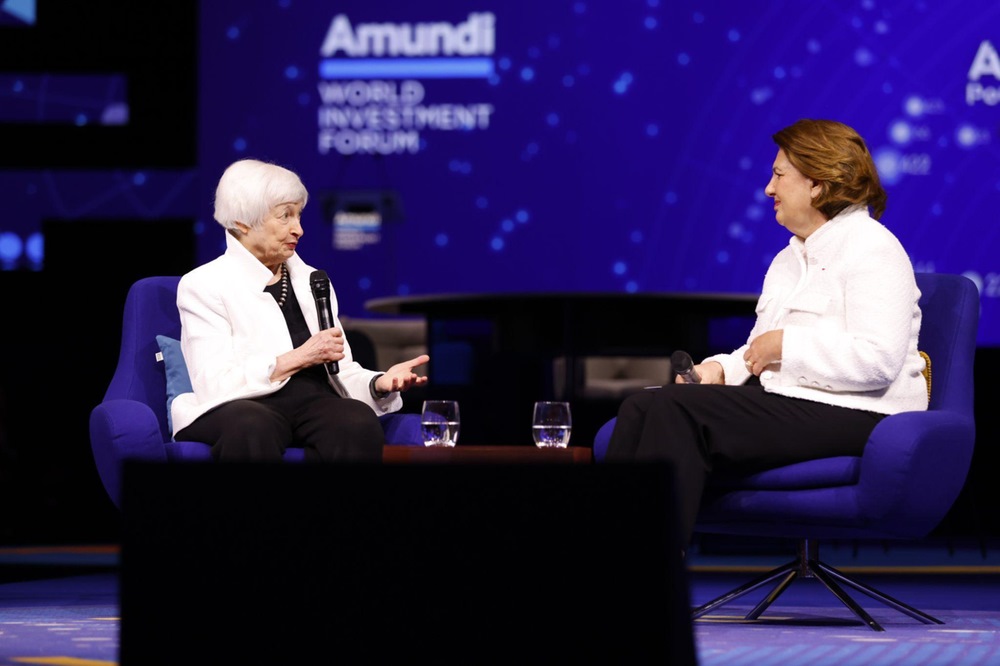
Former US Federal Reserve Chair Janet Yellen flagged sovereign debt as a key risk: "The US is running very large deficits, the largest outside of wartime and recession. The interest burden now exceeds defence spending. And there is no serious discussion of deficit reduction."
She also cautioned that inflation could remain elevated for longer than markets expect, driven by factors such as tariffs, energy constraints and the scale of investment required to build AI infrastructure.
Against this backdrop, several speakers emphasised that diversification needs to be viewed differently.
Monica Defend, Head of the Amundi Investment Institute, noted that many portfolios labelled as diversified struggled in 2022 because equities, government bonds and credit were all exposed to the same underlying risks.

"The question is not how many asset classes you hold in your portfolio," she said. "The question is whether your portfolio is resilient enough to navigate different regimes."
Amundi CEO Valérie Baudson also highlighted the growing importance of diversifying across regions, currencies and sources of growth as global markets become more fragmented.
Meanwhile, Amundi CIO Vincent Mortier encouraged investors to think about owning assets that are difficult to "print", including equities, commodities and gold, as a way to build resilience over the long term.
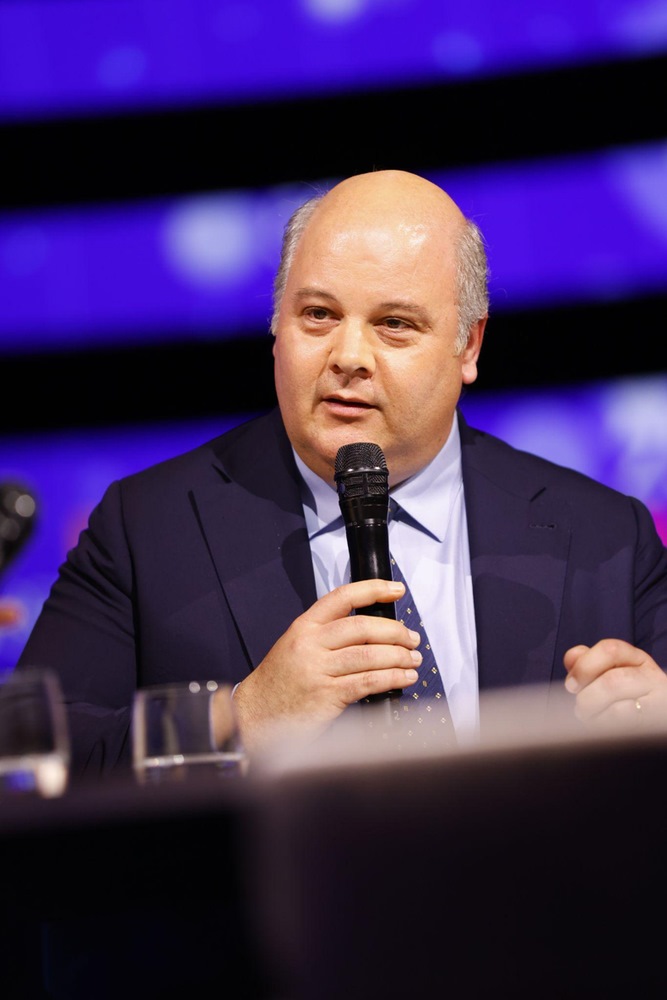
In our interview, Sorel stressed two distinct types of diversification: diversifying your exposure across many companies and markets, and diversifying your entry points over time.
If you have a large sum to invest, he recommended spreading it over one, two, or even three years rather than committing it all at once.
#4 – Why long-term investing principles still matter
After two days of discussions about inflation, geopolitics, artificial intelligence and sovereign debt, one message remained consistent: successful investing still comes back to a few timeless principles.

Former US Federal Reserve Chair Janet Yellen put it simply:
"Time in the market beats timing the market. Attempting to exit and re-enter at more favourable levels often proves elusive."
Her comment was a reminder that while the headlines change, investor behaviour often matters more than investor forecasts.
Markets have repeatedly recovered from periods of uncertainty, often when sentiment appears most pessimistic.
Benoît Sorel shared a similar perspective.
"Establish your core long-term portfolio and take your brain off," he told us. "Systematic saving, investing consistently each month regardless of market conditions, is one of the most powerful tools available."
Sorel also suggested separating long-term investing from short-term market views.
“Many investors enjoy following developments in AI, crypto, China or the latest IPO. There is nothing wrong with having opinions on these opportunities. The key is to be clear about what role they play in your portfolio.”
As Sorel explained, investors should distinguish between the money allocated towards long-term financial goals and the capital set aside for shorter-term opportunities.
Doing so can help prevent emotional decisions from derailing a long-term plan.

Franceries highlighted another important consideration: your portfolio should evolve as your life changes.
“In your 20s and early 30s, your future earning power is often your greatest asset. That gives younger investors more capacity to take risk and ride through market volatility.”
As retirement approaches, the equation changes.
A major market downturn has a greater impact when there is less time available to recover, making it increasingly important to review portfolio risk and ensure it remains aligned with your goals.
What would Beansprout do?
As the landscape around retirement planning continues to evolve, the principles of building a resilient portfolio for long-term wealth building have remained the same.
If we were building a retirement portfolio today, we'd focus on the things we can control: starting early, investing consistently, staying diversified across different sources of growth, and ensuring our portfolio evolves alongside our stage of life.
We'd also resist the temptation to constantly react to headlines.
One message we heard repeatedly throughout AWIF was that successful long-term investing is often driven more by discipline than prediction.
To explore more of the ideas discussed at AWIF 2026, you can watch the event recaps and recordings here.
Follow Beansprout on YouTube, Facebook and Instagram, and add Beansprout as your preferred source on Google so you never miss an update.
Important Information
This publication is a paid collaboration between Global Wealth Technology Pte. Ltd. (Company Registration No. 202110012E) and Amundi Asset Management, Société par Actions Simplifiée - SAS with capital of €1,143,615,555 - Approved portfolio management company by the AMF no. GP04000036 – Registered office: 91-93 boulevard Pasteur, 75015 Paris, France - 437 574 452RCS Paris. This publication is published in Singapore by Global Wealth Technology Pte. Ltd. and Amundi Singapore Limited (Company Registration No. 198900774E). Amundi Singapore Limited is licensed and regulated by the Monetary Authority of Singapore.
This publication is for information purposes only, is not a recommendation, financial analysis or an investment advice and does not constitute a solicitation, invitation or offer to purchase or sell any product. The information contained in this publication is intended for general circulation without taking into account the specific investment objectives, financial situation or particular needs of any particular person.
The information contained in this publication is as at 12 June 2026 except where otherwise stated. The information contained in this publication has been obtained from sources believed to be reliable but has not been independently verified, although Amundi and its affiliated companies (collectively “Amundi”) believe it to be fair and not misleading. Opinions expressed in this publication are subject to change without notice. Amundi does not accept liability whatsoever whether direct or indirect that may arise from the use of information contained in this publication.
Past performance and any forecasts made are not necessarily indicative of the future results. Any forecast, projection or target is indicative only and is not guaranteed in any way. All investments involve risks and the amount received from such investments may be less than the original invested amount.
This publication is solely for issue in permitted jurisdictions and to persons who may receive it without breaching applicable legal or regulatory requirements. The information contained in this publication shall not, without prior written approval of Amundi Singapore Limited, be copied, reproduced, modified, or distributed, to any third person or entity in any country.
This publication is not for distribution and does not constitute an offer to sell or the solicitation of any offer to buy any securities or services in the United States or in any of its territories or possessions subject to its jurisdiction to or for the benefit of any U.S. Person (as this term is defined in SEC Regulation S under the U.S. Securities Act of 1933).
This advertisement or publication has not been reviewed by the Monetary Authority of Singapore.
Read also
Gain financial insights in minutes
Subscribe to our free weekly newsletter for more insights to grow your wealth
Most Popular

Comments
0 comments