
Singtel special discounted shares to unlock cash. What should investors do?
Stocks
By Gerald Wong, CFA • 07 Apr 2026
Why trust Beansprout? We’ve been awarded Best Investment Website at the SIAS Investors’ Choice Awards 2025
'%3e%3cpath%20fill-rule='evenodd'%20clip-rule='evenodd'%20d='M17.64%209.20455C17.64%208.56637%2017.5827%207.95273%2017.4764%207.36364H9V10.845H13.8436C13.635%2011.97%2013.0009%2012.9232%2012.0477%2013.5614V15.8195H14.9564C16.6582%2014.2527%2017.64%2011.9455%2017.64%209.20455V9.20455Z'%20fill='%234285F4'/%3e%3cpath%20fill-rule='evenodd'%20clip-rule='evenodd'%20d='M9%2018C11.43%2018%2013.4673%2017.1941%2014.9564%2015.8195L12.0477%2013.5614C11.2418%2014.1014%2010.2109%2014.4205%209%2014.4205C6.65591%2014.4205%204.67182%2012.8373%203.96409%2010.71H0.957275V13.0418C2.43818%2015.9832%205.48182%2018%209%2018V18Z'%20fill='%2334A853'/%3e%3cpath%20fill-rule='evenodd'%20clip-rule='evenodd'%20d='M3.96409%2010.71C3.78409%2010.17%203.68182%209.59318%203.68182%209C3.68182%208.40682%203.78409%207.83%203.96409%207.29V4.95818H0.957273C0.347727%206.17318%200%207.54773%200%209C0%2010.4523%200.347727%2011.8268%200.957273%2013.0418L3.96409%2010.71V10.71Z'%20fill='%23FBBC05'/%3e%3cpath%20fill-rule='evenodd'%20clip-rule='evenodd'%20d='M9%203.57955C10.3214%203.57955%2011.5077%204.03364%2012.4405%204.92545L15.0218%202.34409C13.4632%200.891818%2011.4259%200%209%200C5.48182%200%202.43818%202.01682%200.957275%204.95818L3.96409%207.29C4.67182%205.16273%206.65591%203.57955%209%203.57955V3.57955Z'%20fill='%23EA4335'/%3e%3c/g%3e%3cdefs%3e%3cclipPath%20id='clip0_0_2849'%3e%3crect%20width='18'%20height='18'%20fill='white'/%3e%3c/clipPath%3e%3c/defs%3e%3c/svg%3e)
Make Beansprout your preferred source on Google
Add us on Google to see more of our insights in your search results
Singtel and CPF have started an exercise to transfer Singtel Special Discounted Shares (SDS) from the CPF Board to the individual CDP accounts of eligible shareholders.

What happened?
If you hold Singtel Special Discounted Shares, this is something worth taking note of.
Singtel has started an exercise to transfer these shares from the CPF Board to the individual CDP accounts of eligible shareholders.
This comes as Singtel’s share price trades near all-time highs, after raising its dividend payout in recent quarters.
Once the transfer is completed, you will have direct control over the Singtel Special Discounted Shares (SDS) through your own CDP account.
In practical terms, this means it will be easier to manage or trade them alongside your other shareholdings.
The Singtel Special Discounted Shares scheme was first introduced in 1993 as part of a government effort to encourage wider share ownership among Singaporeans.
These shares were bought using CPF savings at a discounted price, held by the CPF Board as trustee, and came with additional loyalty shares.
As there are about 615,000 Singtel Special Discounted Shares holders, I spent some time to speak to both Singtel and CPF to understand more about the exercise, and will share their responses to some of my queries below.
If you are one of the affected shareholders, here’s what this transfer means for you and the options you may want to consider.
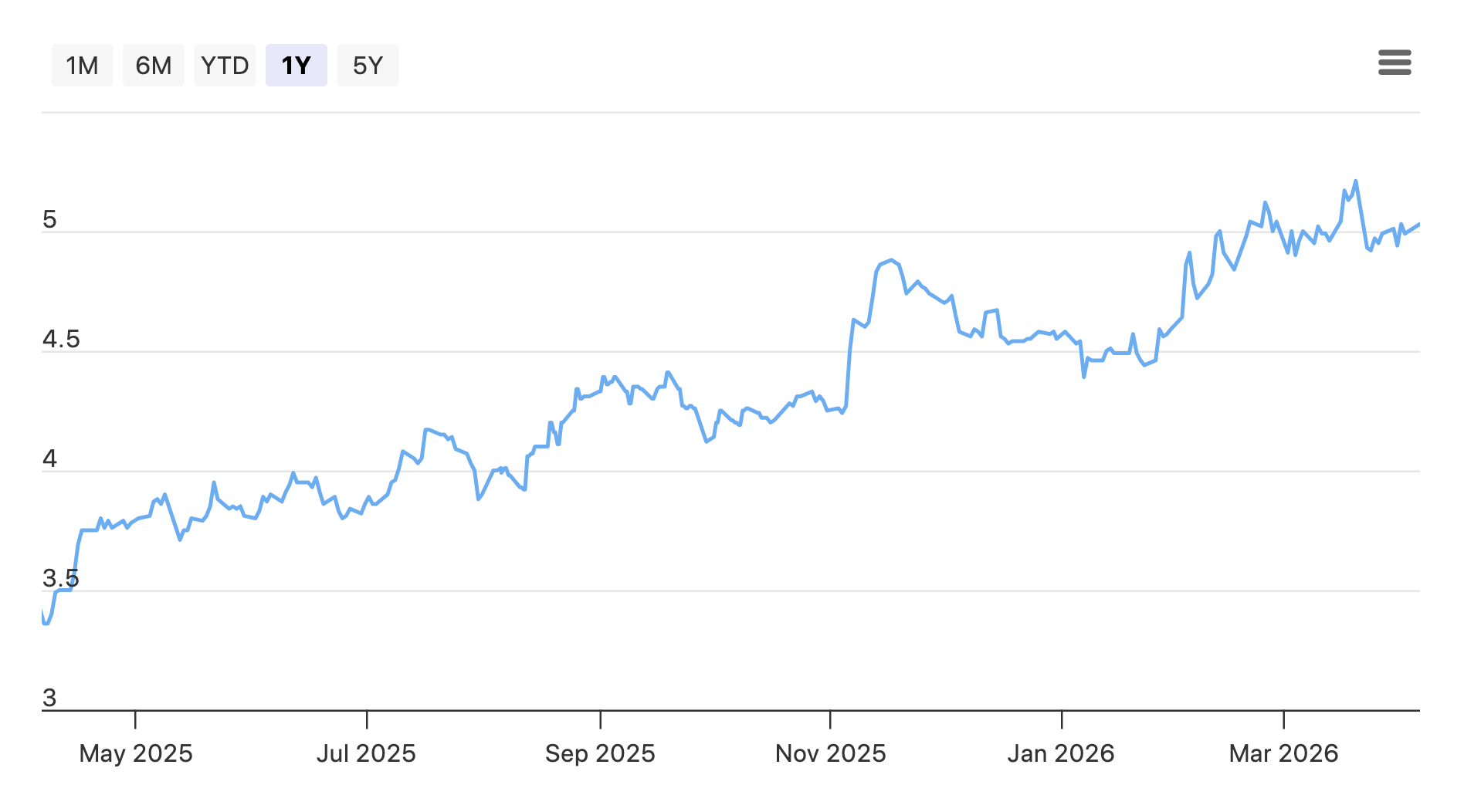
How does the transfer of Singtel Special Discounted Shares (SDS) from CPF Board to Central Depository (CDP) accounts affect investors?
Previously, your Singtel SDS were held by the CPF Board as trustee, which meant they did not appear directly in your CDP account.
After the transfer, the shares will be moved into your own CDP account, giving you direct ownership and control.
In effect, the SDS will become regular Singtel shares held under your name.
#1 - You now have direct control over your shares.
There is no longer a CPF trustee structure, as the shares will be held directly in your CDP account, just like any other stock.
#2 - Easier to manage and consolidate
If you already own Singtel shares, the transferred SDS will sit in the same CDP account under your name.
This makes it easier to manage your holdings in one place, track your overall Singtel exposure, and execute trades when needed.
#3 - You can now receive cash directly when you sell
This is one of the biggest changes.
Previously, if you sold your SDS, the proceeds were generally held under the CPF structure unless you had met the relevant withdrawal conditions.
From 8 April 2026, any sale proceeds can be received in cash directly, without needing to meet CPF withdrawal rules.
What are your options as a Singtel Discounted Share holder?
For Singtel Discounted Share holders, you may choose to either keep your Singtel SDS, or sell your Singtel SDS.
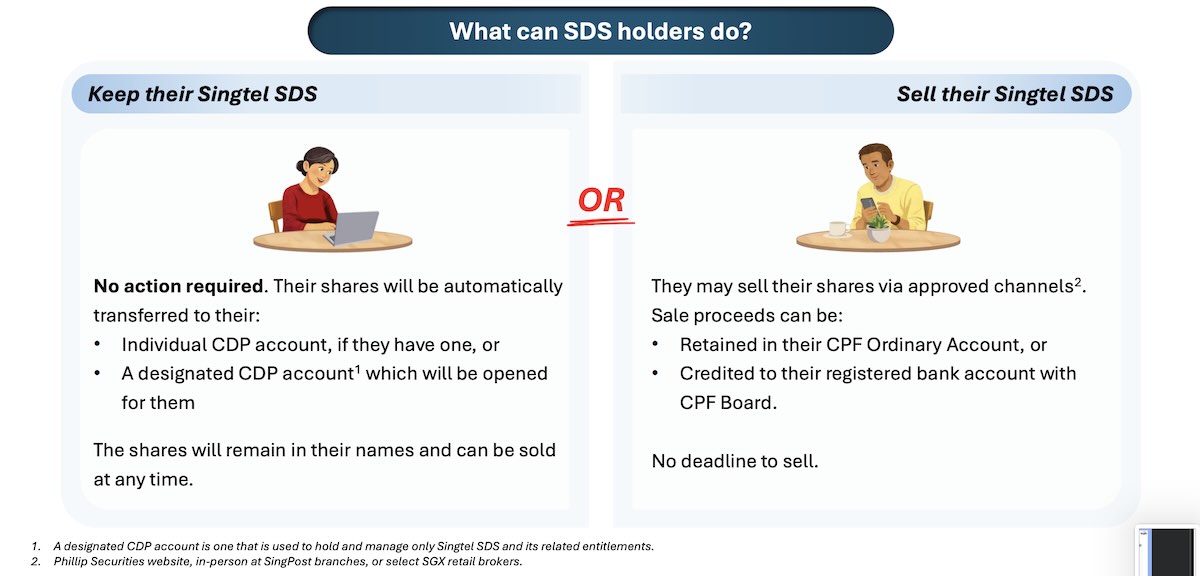
#1 - Keep your shares
If you decide to keep your Singtel Special Discounted Shares, you do not need to sell them before the transfer exercise ends.
The shares will be automatically transferred on 21 November 2026, but what happens after that depends on whether you already have a CDP account.
If you have an individual CDP account, your SDS will be transferred to your CDP account on 21 November 2026.
If you do not already have a CDP account, your SDS will be transferred to a designated CDP account created in your name.
In both options, the SDS will remain in your name and can be sold at any time. You will also be able to receive proceeds in cash even after the transfer.
However, this is where I learnt there are differences in terms of what happens next depending on whether you have an individual CDP account.
#1 - If you already have an individual CDP account
If you already have a CDP account, your shares will be transferred directly into that account. Once the transfer is completed, they will be treated like normal Singtel shares.
This means you can hold them together with any other Singtel shares you already own, and manage or trade them the same way you would with any other shares in your CDP account.
To me, this is the simpler outcome. Your Singtel Special Discounted Shares are no longer sitting under the CPF Board arrangement, and instead become part of your regular shareholdings.
That makes it easier to track them, consolidate them with your other investments, and deal with them through the usual market channels. When you sell your Singtel SDS, the sale proceeds will be paid to the bank account linked to your trading account.
#1 - If you do not have an individual CDP account
If you do not have a CDP account, your shares will still be transferred, but they will go into a designated account opened in your name instead.
You will still remain the shareholder, and you can still choose to keep or sell the shares later. But the experience is a little less straightforward than for someone with a CDP account.
For shareholders using a designated account and selling their shares from 21 November 2026, any sale proceeds will first be credited back into their CPF OA first.
Sale proceeds can still be withdrawn in cash if the shareholder chooses that option. However, you will need to request to CPF to withdraw your proceeds in cash by submitting your request via cpf.gov.sg/sdsproceeds after the sale proceeds have been credited to your CPF OA.
| If you already have a CDP account | If you do not have a CDP account |
|---|---|
| Your shares will be transferred directly into your own CDP account. | Your shares will be transferred into a designated account opened in your name. |
| You can hold these shares together with any other Singtel shares you already own. The shares will be treated like normal Singtel shares. | The shares are kept in the designated account rather than in your own CDP account. |
| You can manage or trade the shares like any other listed shares through the usual market and broker channels. | You can still keep or sell the shares later. |
| If you sell the shares, they are treated like normal shares held in CDP. | If you sell the shares, the sale proceeds will first go back to your CPF OA. |
| This gives you more flexibility and makes it easier to manage your holdings alongside your other investments. | Sale proceeds can still be withdrawn in cash, but this has to be done through the CPF route. |
| Dividends will be paid in the same way as for ordinary Singtel shares held in CDP. | Dividends will go into your CPF OA, and once credited there, CPF withdrawal conditions will not be waived |
Click here to learn more about what is a CDP account and how it differs from a custodian account, and click here to find out how to open a CDP account.
#2 - Sell your shares
SDS holders can sell their Singtel SDS through Philip Securities’ website, in person at SingPost branches, or through selected SGX retail brokers.
After selling, you have two options for the proceeds:
- Withdraw the sale proceeds in cash
- Retain the sale proceeds in your CPF Ordinary Account OA), where they will continue to earn CPF interest. To learn more about the latest CPF interest rates, click here.
How is selling through Phillip Securities or SingPost different from selling through a retail broker?
If you sell through Phillip Securities’ website or SingPost branches, the sale proceeds will be paid within 14 business days from the date of your sale instruction.
Alternatively, you may also choose to sell your Singtel SDS through designated brokers, include CGS International, DBS Vickers, KGI Securities, Lim & Tan, Maybank Securities, OCBC Securities, Philip Securities and UOB Kay Hian.
Here, there are again important differences in terms of what happens when you choose to sell your Singtel SDS through Phillip Securities’ website or SingPost branches, versus retail brokers.
In general, the Phillip Securities and SingPost route is simpler for shareholders who want a more guided process. This is because it is the traditional channel for Singtel SDS, and it is designed specifically for this exercise. By contrast, selling through a retail broker gives you more flexibility, but it may involve more steps and different fees.
If you sell through Phillip Securities’ website or SingPost branches, you will need to sell all your Singtel SDS at one go. You cannot choose to sell only part of your holdings. Also, you cannot choose your exact selling price in the same way as a live market trade.
You do not need to have an account with Phillip Securities (PSPL) to do this, as PSPL will open a temporary account solely for the sale of Singtel SDS and the temporary account will be closed at any time within four (4) weeks from the sale of your Singtel SDS.
According to Phillip Securities, sale of Singtel SDS will be at the prevailing market price at the point of trade by PSPL, which will be within ten Business Days after your temporary account with PSPL is opened, rather than the prevailing market price when this Application Form is accepted by PSPL.
Also do note that Phillip Securities will charge a commission of 0.24% of the gross sales proceeds + GST, in addition to prevailing SGX fees. However, there is no minimum feee charged.
The benefit is that the process is more straightforward, and you can indicate upfront whether you want your sale proceeds to be withdrawn in cash or kept in your CPF OA.
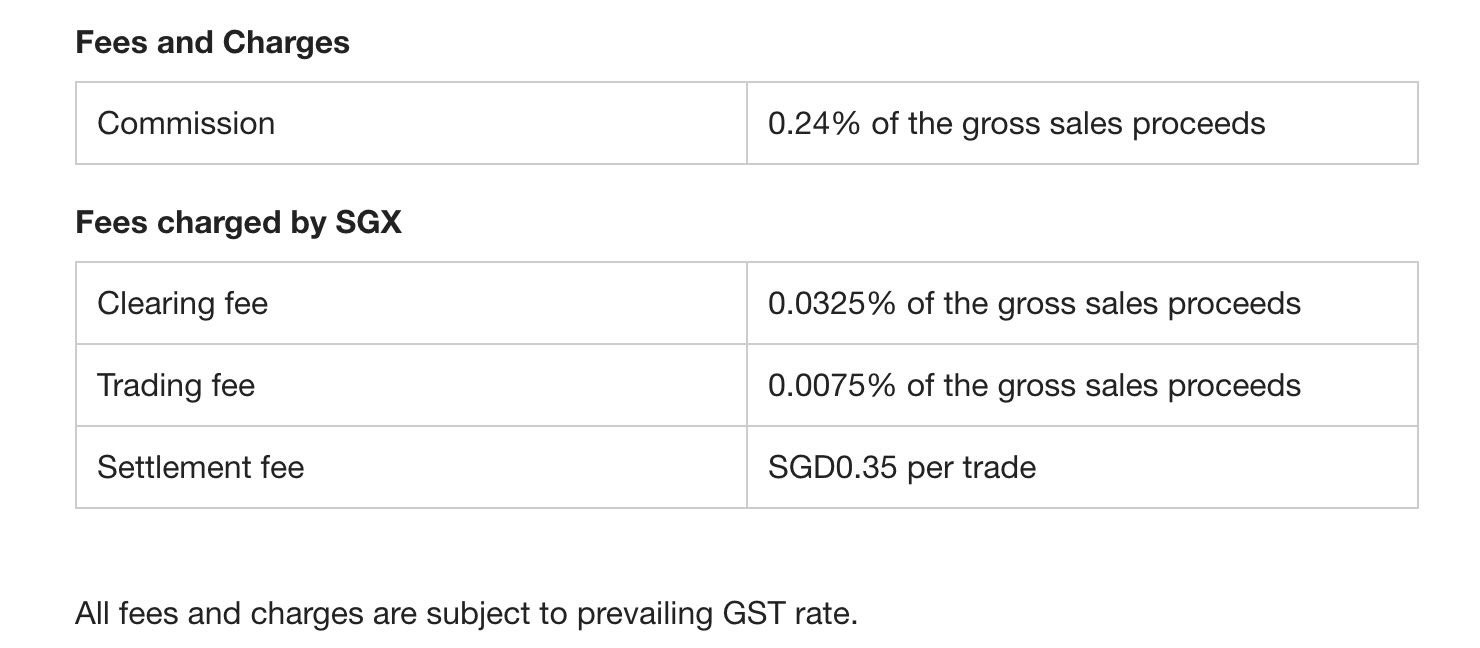
If you sell through a retail broker, you may have more control over the sale. For example, you may be able to sell only part of your holdings, and you can place the trade like a normal market transaction at a price you are willing to accept.
However, this route may come with different brokerage fees, and if you want to withdraw the sale proceeds in cash, you will need to separately inform CPF after the sale. In other words, it becomes a two step process.
To learn more about the brokerage fees across different trading platforms, check out our guide to the best stock trading platforms and brokerage accounts in Singapore here.
| Sell through Philip Securities’ website or SingPost branches | Sell through a retail broker |
|---|---|
| Designed as the traditional route for Singtel SDS holders | Uses the usual stockbroking route |
| Simpler and more guided process | More flexible, but may involve more steps |
| Must sell all your Singtel SDS at one go | May be able to sell only part of your holdings |
| Cannot choose your exact selling price in the same way as a live market trade | Can generally sell like a normal market transaction |
| Philip Securities charges 0.24% commission + GST, with no minimum charge, in addition to SGX fees | Fees depend on the broker |
| Can choose at the point of sale whether to withdraw proceeds in cash or keep them in CPF OA | If you want cash withdrawal, you need to separately inform CPF after the sale |
What are the key timelines to look out for as a Singtel Discounted Share holder?
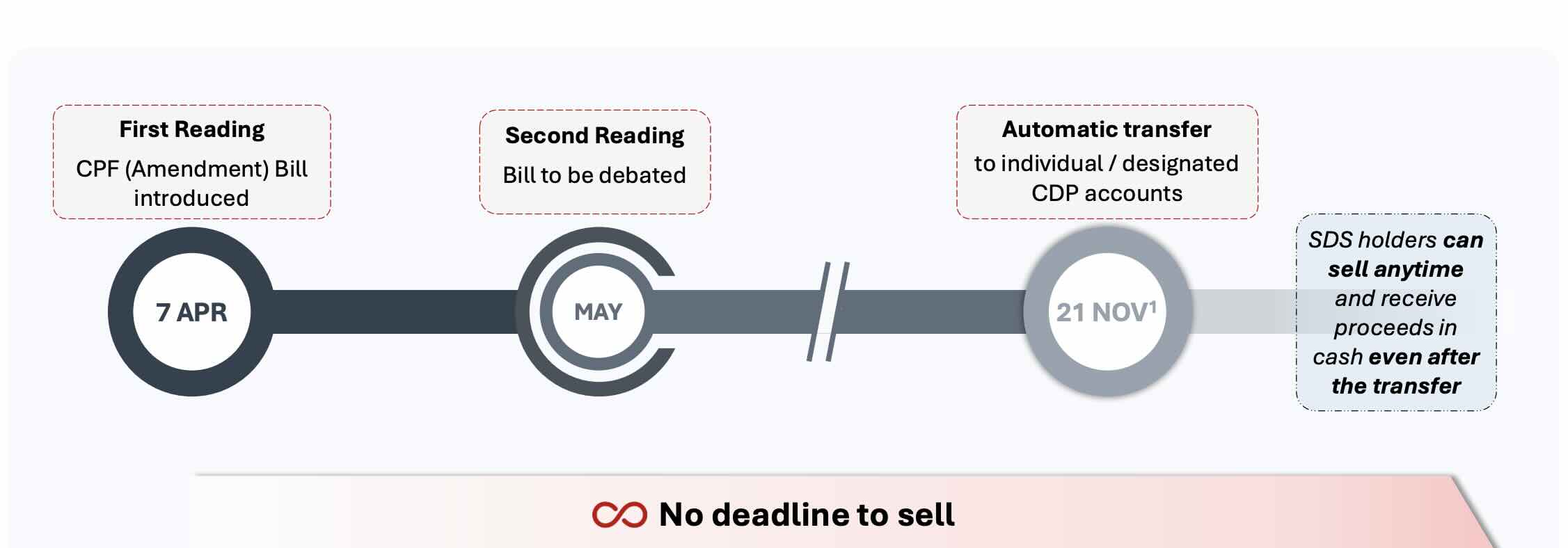
| Date | Key event |
|---|---|
| 8 April 2026 onwards | Shareholders who sell their Singtel SDS from this date can choose to withdraw the sale proceeds in cash. |
| Shareholders who sold their Singtel SDS between 1 January 2025 and 7 April 2026, and had the proceeds credited into CPF, can apply to withdraw those proceeds in cash. | |
| 19 to 20 November 2026 | Sale of Singtel SDS will be temporarily paused ahead of the transfer process. |
| 21 November 2026 | Any remaining Singtel SDS will be automatically transferred into the holder’s CDP account or designated account. |
Why is Singtel and CPF starting this exercise for Singtel Special Discounted Shares?
According to Singtel, the exercise will enable SDS holders to have direct control of their shares and realise proceeds from their shareholdings in cash with waiver of CPF withdrawal conditions.
Singtel will have greater flexibility to carry out corporate actions in a timely and cost-efficient manner. Such action may include paying out dividend in specie, announcing scrip dividends, amongst others.
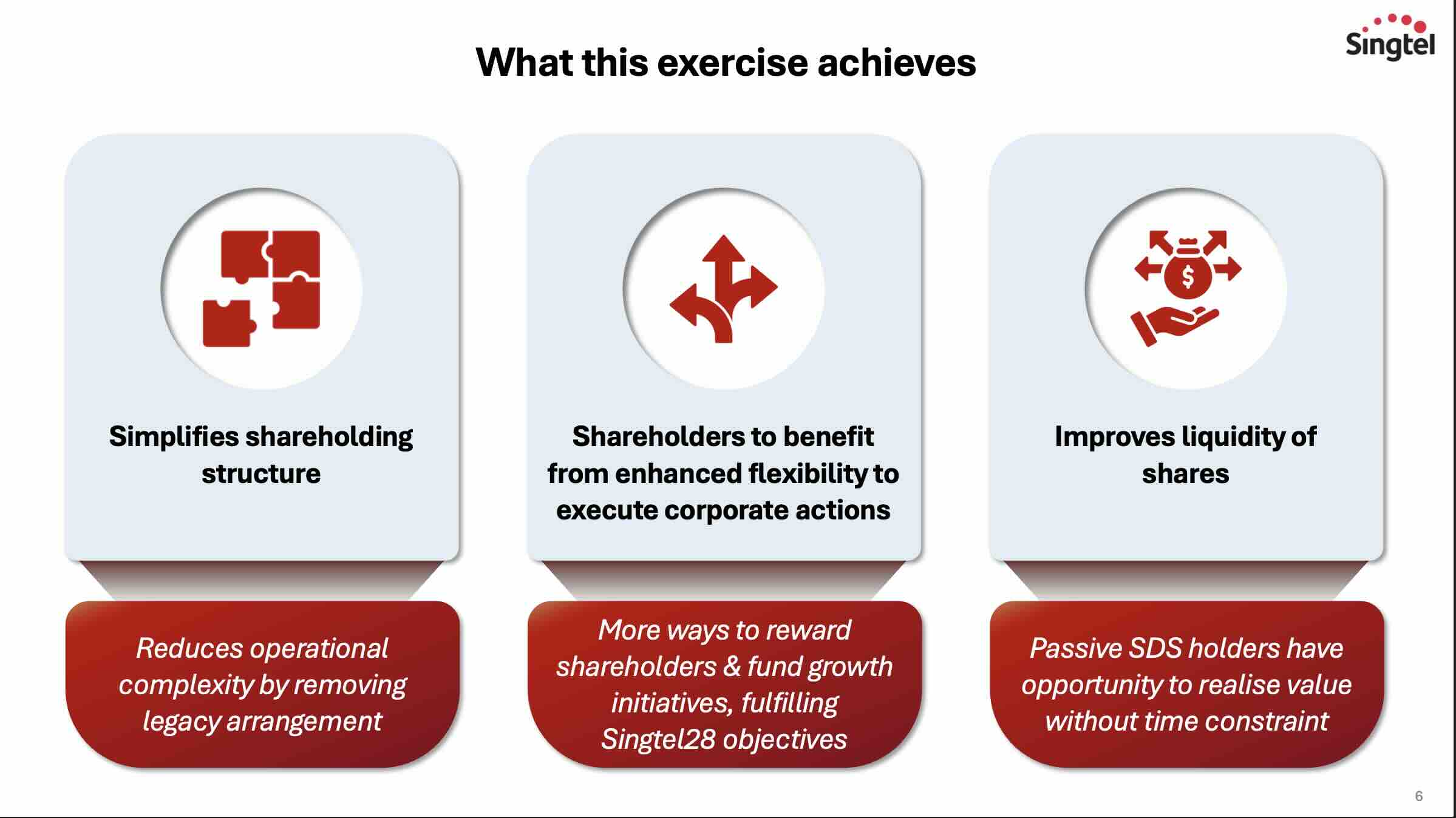
From CPF’s perspective, the Singtel Special Discounted Shares scheme has already achieved its original purpose, which was to encourage wider share ownership among Singaporeans. As a result, the CPF Board’s trustee arrangement is no longer seen as necessary.
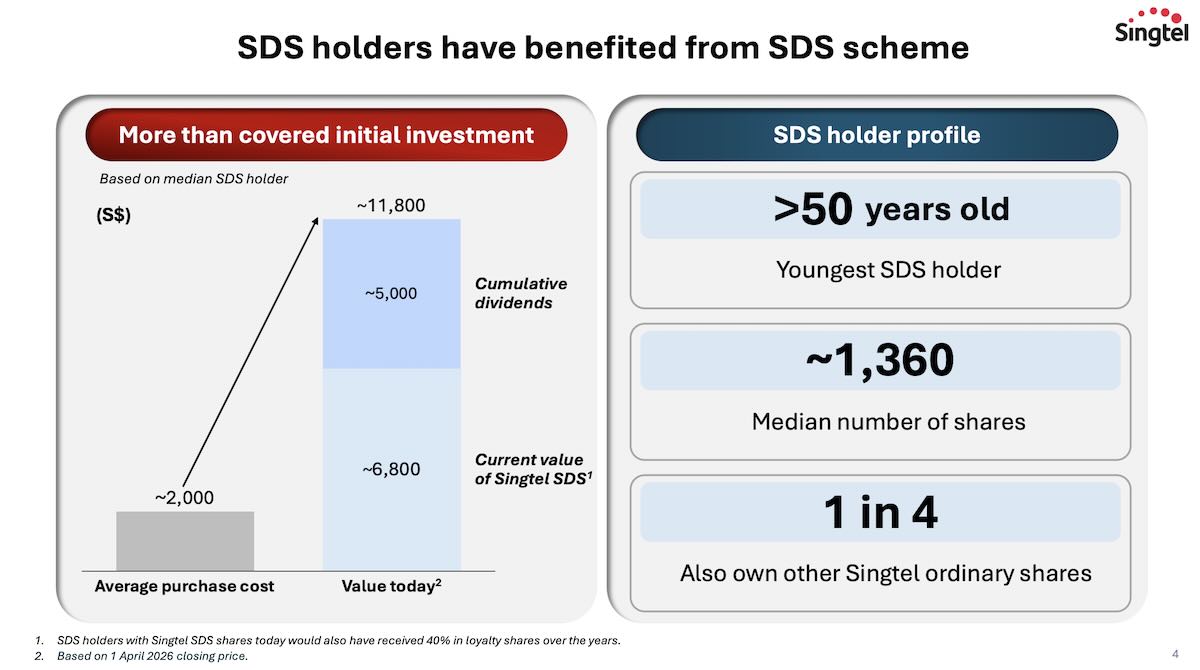
According to Singtel and CPF, the median SDS holder today owns about 1,360 Singtel Special Discounted Shares. This includes shares bought in 1993 and 1996 at a total cost of around $2,000, along with additional loyalty shares amounting to 40% of the original holdings.
As at 1 April 2026, these shares were worth about $6,800. On top of that, the median SDS holder would have received about $5,000 in cumulative dividends over the years.
According to CPF, those dividends alone would have been enough to cover both the CPF savings originally used to buy the shares and the CPF interest that holders would otherwise have earned in their CPF Ordinary Account.
Will the selling in Singtel Special Discounted Shares (SDS) create an overhang on Singtel's share price?
One worry that I had is that the option to sell the Singtel Special Discounted Shares (SDS) and withdraw the proceeds as cash may create an overhang in Singtel's share price.
However, I learnt from Singtel that the almost 615,000 SDS holders own around 710 million Singtel SDS or 4.4% of Singtel's total shares outstanding, as at end March 2026.
This amounts to approximately $3.6 billion in shareholdings, based on a market cap of around $83 billion.
The other thing that I learnt is that 1 in 4 of SDS holders also own other Singtel ordinary shares. This means that these holders could have reduced their holdings in Singtel if they had chosen to do so currently.
Lastly, SDS sales make up less than 0.5% of Singtel's average daily trading volumes.
What is the outlook of Singtel?
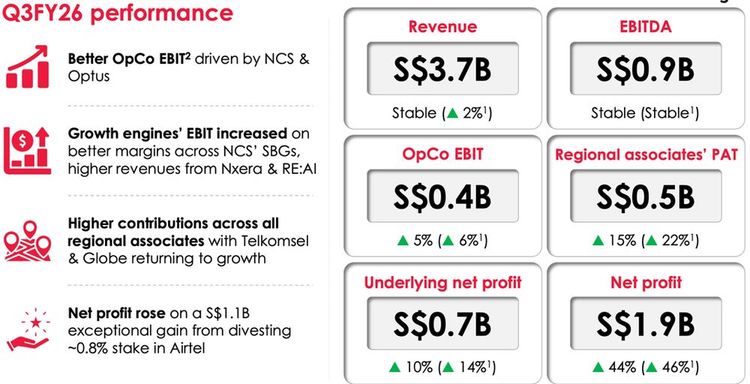
For the third quarter ended 31 December 2025, Singtel reported stable operating revenue of S$3.66 billion and stable EBITDA of S$939 million.
Singtel’s underlying net profit increased 9.5% year on year to S$744 million, mainly due to stronger results from its regional associates led by Airtel and AIS.
There was also stronger contributions from NCS and Optus, which helped offset weaker performance in Singtel Singapore.
The underlying net profit growth comes in the midst of ST28, or Singtel28, which is Singtel’s growth plan launched in May 2024.
It is built around two main ideas, improving business performance, and using capital more actively.
On the business side, Singtel says it wants to optimise its core businesses and scale growth engines such as NCS and Nxera.
On the capital side, it aims to recycle capital, bring in capital partners where useful, fund growth more sustainably, and support higher shareholder returns.
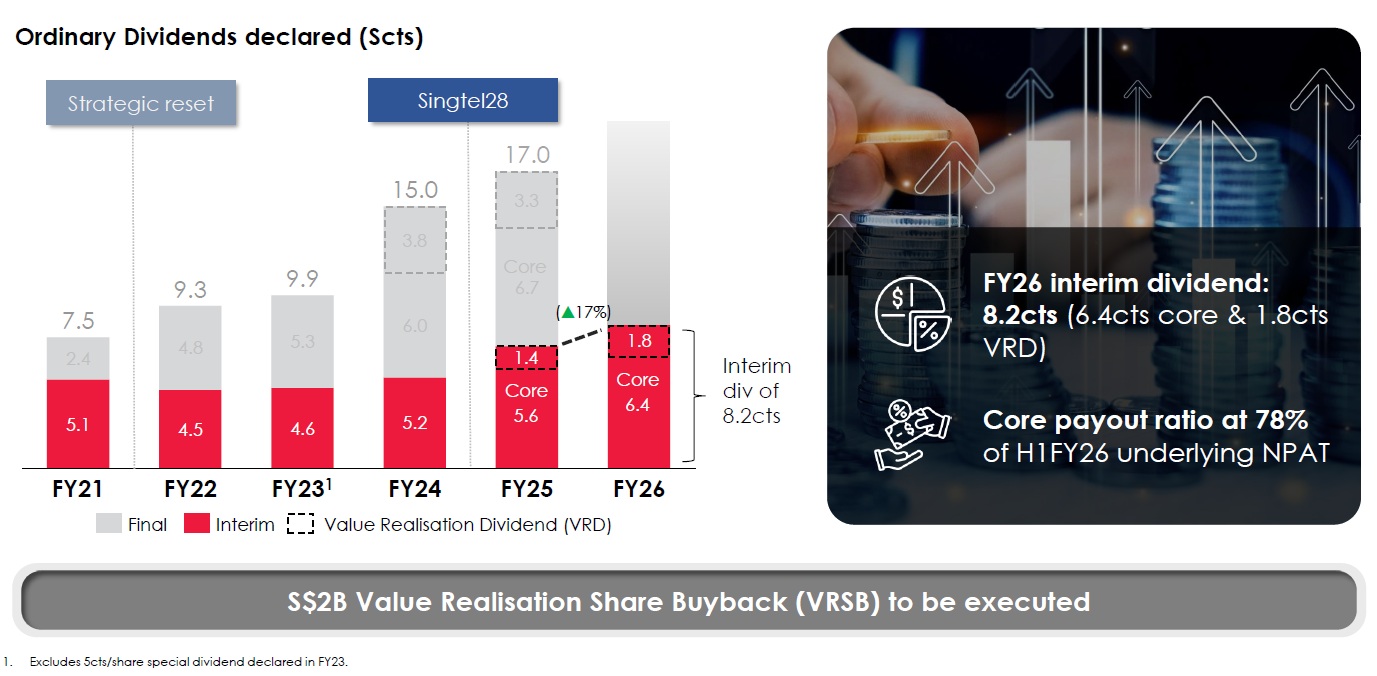
Already, we have seen an increase in Singtel's interim dividends in FY26 to 8.2 cents, comprising of a 6.4 cents core dividend and 1.8 cents value realisation dividend (VRD).
Singtel is expected to report its full year FY26 results in May, and its final dividends are typically paid out in August.
Singtel is also in the midst of its first share buyback programme of up to S$2 billion, to run over three years.
We had the opportunity to speak to Singtel Group CFO Arthur Lang to unpack what’s fueling Singtel’s recent momentum, and where the next phase of growth could come from in our recent Beansprout podcast episode.
Catch the full conversation in the video below.
What would Beansprout do?
If I hold Singtel Special Discounted Shares, the first thing I would do is log in to the official SDS portal using Singpass to check whether I still have any shares.
From there, I would ask myself a simple question, do I want to keep them or sell them?
If I want to keep them, I would first check whether I already have a CDP account. If I do, the shares will be transferred there and can then be managed alongside my other shareholdings more easily.
If I do not have a CDP account, the shares will still be transferred, but into a designated account opened in my name instead. I can still keep or sell them later, but it is a bit less flexible than having my own CDP account.
That is why, if I think I may want more control over how I hold and manage the shares, I would take some time to understand how a CDP account works and how to open one.
Click here to learn more about what is a CDP account, and find out how to open a CDP account here.
If I decide to sell, I would then think about two things.
First, which selling route makes the most sense for me. If I want a simpler process, I may use Philip Securities’ website or SingPost branches. If I want more flexibility over pricing or only want to sell part of my holdings, I may consider selling through a retail broker instead. However, this may come at more inconvenience, and will be subject to the brokerage fees and other charges from the retail broker. Compare the fees with our guide to the best stock trading platforms and brokerage accounts in Singapore here.
Second, I would think about what I want to do with the proceeds. Do I need the cash now, or would I prefer to keep the money in my CPF OA? That would depend on my own financial situation and what I plan to use the money for.
I would also be extra careful about scams. Whenever there is a large scale exercise like this, there is always a risk of fake messages or suspicious links. I would only rely on official sources and take the time to double check before taking any action.
For me, the key is to make an informed decision. I would first check what I have, understand my options, and then decide what makes the most sense for my own portfolio and cash needs.
I hope the above helps to address the key question on the Singtel Special Discounted Shares.
If you have a question about the Singtel Special Discounted Shares, leave us a comment below or ask away in the Beansprout telegram group.
Planning to invest in Singtel? Compare the best Singapore brokers to find the right trading platform, and see the latest promotions and sign-up rewards available.
Related links:
Follow Beansprout on Youtube, Facebook and Instagram, and add Beansprout as your preferred source on Google so you never miss an update.
Read also
Gain financial insights in minutes
Subscribe to our free weekly newsletter for more insights to grow your wealth
Most Popular

Comments
2 comments
- Choi • 20 Apr 2026 05:12 AM
%20--%3e%3csvg%20version='1.1'%20id='Layer_1'%20xmlns='http://www.w3.org/2000/svg'%20xmlns:xlink='http://www.w3.org/1999/xlink'%20x='0px'%20y='0px'%20viewBox='0%200%20160.45%20160.45'%20style='enable-background:new%200%200%20160.45%20160.45;'%20xml:space='preserve'%3e%3cstyle%20type='text/css'%3e%20.st0{fill:%2300DBA4;}%20%3c/style%3e%3cg%3e%3cg%3e%3cpath%20class='st0'%20d='M80.23,0C35.99,0,0,35.99,0,80.23s35.99,80.23,80.23,80.23c44.24,0,80.23-35.99,80.23-80.23S124.46,0,80.23,0%20z%20M80.23,149.37c-1.73,0-3.45-0.09-5.15-0.21l0-38.76c-1.44-31.08,14.86-34.75,32.13-38.65c5.66-1.28,11.08-2.5,15.76-4.7%20c1.78,15.32-1.66,28.48-9.68,37.18c-0.11,0.11-10.83,10.24-23.27,10.24c-1.12,0-2.26-0.08-3.4-0.26l-1.72,10.94%20c1.73,0.27,3.44,0.4,5.11,0.4c16.97,0,30.39-12.77,31.2-13.57c11.35-12.3,15.63-30.42,12.07-51.01l-2.17-12.46l-10.42,7.15%20c-3.7,2.54-9.63,3.87-15.93,5.29c-16.97,3.82-42.62,9.6-40.75,49.71v36.77c-30.32-7.32-52.92-34.67-52.92-67.21%20c0-38.13,31.02-69.15,69.15-69.15c38.13,0,69.15,31.02,69.15,69.15S118.36,149.37,80.23,149.37z'/%3e%3cpath%20class='st0'%20d='M56.13,44.13c-3.86-0.87-7.5-1.69-9.57-3.11l-9.25-6.35l-1.92,11.06c-2.41,13.89,0.52,26.16,8.48,34.77%20c0.37,0.36,7.58,7.23,17.36,8.83c0.43-1.57,0.92-3.09,1.48-4.54c0.85-2.19,1.85-4.26,3-6.21c-7.3,0.3-13.91-5.81-13.92-5.81%20c0,0,0,0,0,0c-4.44-4.81-6.53-11.78-6.09-19.96c2.57,0.91,5.31,1.52,8.01,2.13c8.98,2.02,16.94,3.83,18.8,15.11%20c0.56-0.52,1.13-1.04,1.72-1.53c2.54-2.12,5.24-3.84,8-5.27C77.55,48.96,64.62,46.04,56.13,44.13z'/%3e%3c/g%3e%3c/g%3e%3c/svg%3e) Beansprout • 29 Apr 2026 01:15 AM
Beansprout • 29 Apr 2026 01:15 AM
- Patrick • 12 Apr 2026 03:40 PM
- Beansprout • 13 Apr 2026 02:33 AM