3 growth themes to watch in Singapore stocks beyond dividends
Stocks
By Gerald Wong, CFA • 10 May 2026
Why trust Beansprout? We’ve been awarded Best Investment Website at the SIAS Investors’ Choice Awards 2025
Beyond dividends, Singapore stocks may offer growth opportunities from three long-term themes in 2026: energy security, AI and data centres, and government spending.
What happened?
Singapore’s blue chip stocks are often known for their dividends.
Earlier, we shared that the attractive dividend yield of Singapore stocks makes the market still worth looking out for.
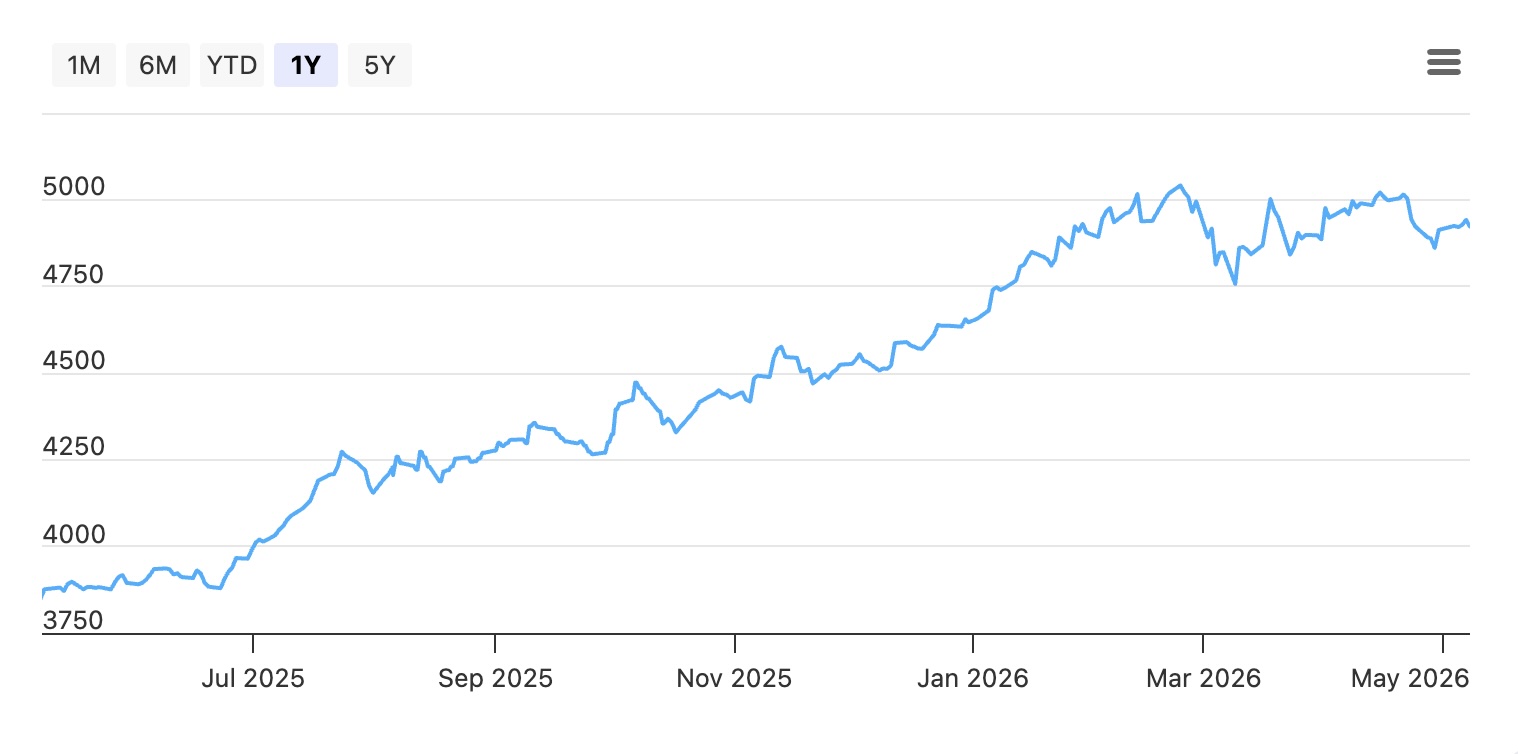
As the Singapore stock market remains close to all-time highs, we have seen several blue chip stocks and small and mid cap stocks performing well over the past few months.
In our recent Beansprout community webinar, I received questions about which sectors or parts of the market could continue to do well from here.
In this article, we highlight three themes we are watching closely and what they could mean for investors looking at the Singapore stock market.
3 Key structural themes for the Singapore Market
We see three structural themes shaping the Singapore market over the next few years: energy and food security, AI and data centre growth, and continued government spending.
These are not short-term cyclical drivers. They are longer-term shifts backed by government support and real economic needs.
Together, they reflect how Singapore is positioning itself for resilience and growth through securing essential resources, building digital infrastructure for the AI era, and continuing to invest heavily in the economy through public spending.
We think that these themes may point to the areas of the market that could see more sustained support over time, with capital more likely to flow steadily towards sectors backed by policy support and long-term demand, rather than quick short-term moves.
#1 - Singapore stocks linked to energy and food security
Singapore’s energy security is becoming an important long-term structural theme for the market.
Today, according to the Energy Market Authority of Singapore (EMA), about 94% of Singapore’s electricity still comes from imported natural gas, making energy supply a key vulnerability. To address this, the country is expanding LNG import capacity, centralising gas procurement through GasCo, and scaling up solar deployment to 3GWp by 2030.
At the same time, Singapore is also diversifying through regional renewable energy imports from Indonesia and Australia. These steps are aimed at strengthening energy resilience and supporting long-term economic stability.

This theme also creates potential opportunities for Singapore-listed companies.
Sembcorp Industries is the most direct beneficiary, given its strong position in gas imports, utilities, and renewable energy projects, including solar and energy storage.
Keppel Ltd. also stands to benefit through its infrastructure and energy solutions business, especially in areas like subsea cables and regional power connectivity.
ST Engineering could gain from rising demand for smart grid systems, digital infrastructure, and urban energy solutions.
Food security is another long-term theme worth looking at.
Singapore’s food security strategy has moved beyond the original “30 by 30” target launched in 2019. Under the Singapore Food Story 2 framework introduced in November 2025, the focus has shifted towards more practical and outcome-based goals.
By 2035, Singapore aims for local farms to supply about 20% of fresh produce needs, including leafy and fruited vegetables, beansprouts and mushrooms, and about 30% of protein needs such as eggs and seafood.
Rather than focusing on self-sufficiency, the new approach is built around resilience and flexibility.
It rests on four key pillars: diversifying import sources across more than 180 countries, scaling up local production, strengthening stockpiles, and deepening global partnerships. Together, these give Singapore more levers to respond to different types of supply shocks.
The emphasis has shifted from producing everything locally to ensuring the country has multiple reliable pathways to secure food supply over time.

For investors, the impact is not evenly spread across companies.
Sheng Siong is the most direct beneficiary through its role in domestic food retail, where stable demand and supply resilience matter most.
Wilmar International and First Resources are more indirect beneficiaries, as they are exposed to regional agricultural supply chains and global food inputs.
Food Empire also has some exposure through its packaged food and beverage business, although its link to Singapore’s food security theme is less direct.
Overall, this is a long-term structural theme rather than a short-term driver, with benefits flowing through different parts of the food value chain as Singapore continues to strengthen the resilience of its food supply.

#2 - AI and data centres are a growing theme for Singapore stocks
Singapore’s position as a leading data centre hub in Asia-Pacific is becoming one of the market’s most important structural growth themes.
According to Infocomm Media Development Authority of Singapore (IMDA), the country already hosts more than 1.4GW of data centre capacity, with vacancy rates near full occupancy, highlighting how tight demand has become.
With a planned 700MW low-carbon data centre park on Jurong Island, Singapore is reinforcing its role as a critical hub for AI, cloud computing, and digital infrastructure growth.

What stands out is the strong policy support behind this trend.
The Singapore Green Data Centre Roadmap, launched in 2024, provides a framework to expand capacity while keeping sustainability in focus.
This is supported by targeted schemes from Infocomm Media Development Authority (IMDA) and Economic Development Board (EDB), including new data centre capacity allocations, energy efficiency grants, tax incentives, and land access for best-in-class operators.
Together, these measures create a clear runway for long-term investment into greener and more efficient digital infrastructure.
Budget 2026 adds another layer of support through Singapore’s broader AI push. With a new National AI Council, expansion of the one-north AI hub, and enhanced tax deductions for AI spending, the government is actively encouraging enterprise adoption and ecosystem development.
This means demand is not just coming from hyperscalers like Microsoft, Google, and AWS, but also from local businesses integrating AI into operations.

For investors, the opportunity spans a broad ecosystem.
For example, data centre REITs remain the clearest listed plays with direct data centre exposure.
Beyond REITs, this build-out may also benefit engineering and construction firms, as well as utilities providers supplying power and cooling to data centres.
The benefits may also extend to local banks. As more capital and digital investment flows into Singapore, banks may benefit through financing activity, wealth management, and broader business growth.
Over time, rising AI adoption across financial and professional services could also lift productivity and earnings growth more broadly across the Singapore market.

#3 - Government spending may continue to support Singapore market
Singapore’s Budget 2026, with total spending of S$154.7 billion, reinforces a clear theme: infrastructure will continue to drive growth.

While social spending is the largest component, the more investable signal is the government’s steady commitment to long-term projects — from transport and urban development to digital and energy infrastructure.
These are multi-year investments that provide consistent demand for construction, engineering, and related sectors.


This matters because infrastructure spending is typically stable and countercyclical. It helps support the domestic economy even when global conditions are uncertain, creating a reliable base of activity and spillover benefits across industries like logistics, real estate, and services.
Singapore is also in a stronger position than many countries to sustain this spending. Its fiscal strength allows it to continue investing through the cycle without facing the same debt constraints seen elsewhere.
This may also support confidence in Singapore as a stable place for global capital.
Geopolitics adds to this theme. As supply chains shift amid US–China tensions, Singapore’s role as a neutral business hub is becoming more important. That is driving further demand for infrastructure, from transport links to data centres, as companies expand their presence here.
Taken together, this makes government spending more than just a policy backdrop. It is a long-term market theme that may support a range of Singapore stocks over time.
For investors who prefer broader market exposure rather than picking individual winners, this also helps explain why a broad-based approach to Singapore stocks may still be relevant.
If these themes continue to support different parts of the market, the wider Straits Times Index (STI) may also stand to benefit.
What would Beansprout do?
In our view, these three themes help explain why we believe Singapore remains core to our globally diversified portfolios.
Energy and food security, AI and data centres, and government spending are all backed by real policy priorities and long-term economic needs.
That said, the impact is unlikely to be spread evenly across the market. In an uncertain environment, quality matters more than before.
We would focus on the areas most closely linked to these themes, such as data centre REITs, infrastructure names, selected banks, and energy-related companies.
If you are looking for more Singapore stock ideas linked to long-term growth themes? Explore our high-conviction curated stock opportunities here.
If you prefer broad exposure to blue chips without picking individual names, you can learn more about the Straits Times Index (STI).
Which part of the Singapore market are you watching most closely now? Share with us in the comments below or in our Telegram group!
Planning to invest in Singapore stocks? Compare the best Singapore brokers to find the right trading platform, and see the latest promotions and sign-up rewards available.
Follow Beansprout on Youtube, Facebook and Instagram, and add Beansprout as your preferred source on Google so you never miss an update.
Read also
Most Popular
Gain financial insights in minutes
Subscribe to our free weekly newsletter for more insights to grow your wealth
Comments
0 comments