
Trump’s Iran war address - What it means for Singapore blue chips and the markets
Stocks
By Gerald Wong, CFA • 02 Apr 2026
Why trust Beansprout? We’ve been awarded Best Investment Website at the SIAS Investors’ Choice Awards 2025
'%3e%3cpath%20fill-rule='evenodd'%20clip-rule='evenodd'%20d='M17.64%209.20455C17.64%208.56637%2017.5827%207.95273%2017.4764%207.36364H9V10.845H13.8436C13.635%2011.97%2013.0009%2012.9232%2012.0477%2013.5614V15.8195H14.9564C16.6582%2014.2527%2017.64%2011.9455%2017.64%209.20455V9.20455Z'%20fill='%234285F4'/%3e%3cpath%20fill-rule='evenodd'%20clip-rule='evenodd'%20d='M9%2018C11.43%2018%2013.4673%2017.1941%2014.9564%2015.8195L12.0477%2013.5614C11.2418%2014.1014%2010.2109%2014.4205%209%2014.4205C6.65591%2014.4205%204.67182%2012.8373%203.96409%2010.71H0.957275V13.0418C2.43818%2015.9832%205.48182%2018%209%2018V18Z'%20fill='%2334A853'/%3e%3cpath%20fill-rule='evenodd'%20clip-rule='evenodd'%20d='M3.96409%2010.71C3.78409%2010.17%203.68182%209.59318%203.68182%209C3.68182%208.40682%203.78409%207.83%203.96409%207.29V4.95818H0.957273C0.347727%206.17318%200%207.54773%200%209C0%2010.4523%200.347727%2011.8268%200.957273%2013.0418L3.96409%2010.71V10.71Z'%20fill='%23FBBC05'/%3e%3cpath%20fill-rule='evenodd'%20clip-rule='evenodd'%20d='M9%203.57955C10.3214%203.57955%2011.5077%204.03364%2012.4405%204.92545L15.0218%202.34409C13.4632%200.891818%2011.4259%200%209%200C5.48182%200%202.43818%202.01682%200.957275%204.95818L3.96409%207.29C4.67182%205.16273%206.65591%203.57955%209%203.57955V3.57955Z'%20fill='%23EA4335'/%3e%3c/g%3e%3cdefs%3e%3cclipPath%20id='clip0_0_2849'%3e%3crect%20width='18'%20height='18'%20fill='white'/%3e%3c/clipPath%3e%3c/defs%3e%3c/svg%3e)
Make Beansprout your preferred source on Google
Add us on Google to see more of our insights in your search results
Trump’s latest Iran address has added to market uncertainty. We break down the key takeaways and what they could mean for Singapore blue chips and the markets.
What happened
Markets appear to be reacting to the latest headlines on the Iran conflict again.
On the evening of 1 April 2026, US President Donald Trump delivered his first prime-time address since the US-Israeli military campaign against Iran began on 28 February.
Markets reacted negatively after the speech with US futures down more than 1%, Nikkei falling more than 2%, Hang Seng Index and Straits Times Index (STI) down close to 1%.
Last month, we discussed what we would be doing with our portfolios with this Middle East conflict. We also looked at how Singapore blue chips may be impacted when oil jumped above $110.
In this article, we discuss what Trump’s speech means for the markets and what we are looking out for next.
What US President Donald Trump said in his latest address on the Iran conflict
In his address, Trump claimed Iran’s key military capabilities had been significantly weakened, including its missile systems, drone factories and naval assets.
He added that the objectives of Operation Epic Fury were “nearing completion”, but also said the US would continue striking Iran for another two to three weeks.
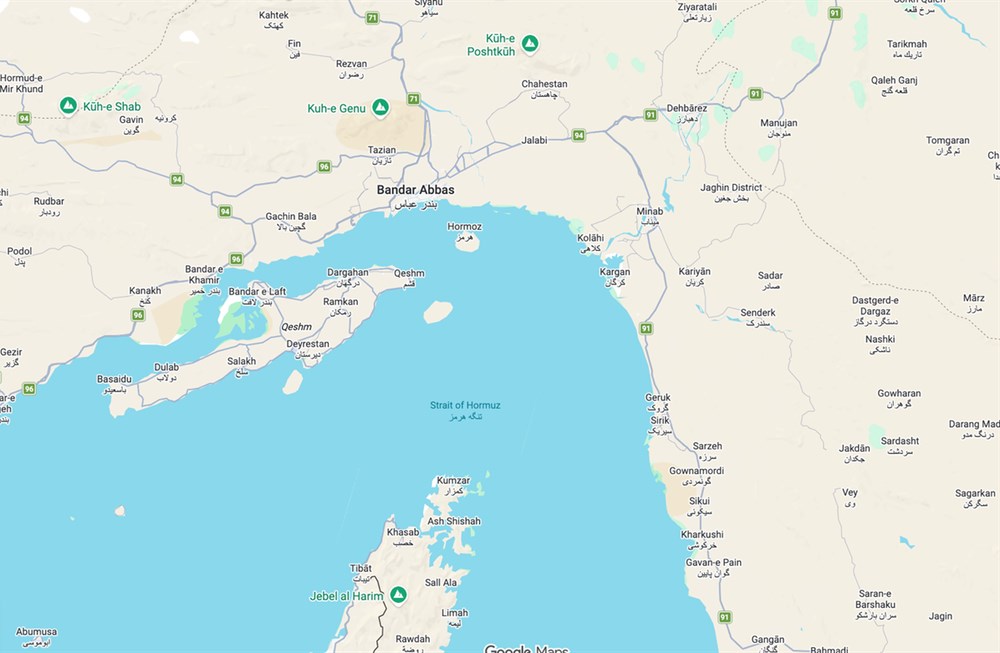
The part that mattered most for markets was his message on the Strait of Hormuz. This is closely watched as about 20 per cent of global oil supply passes through the Strait of Hormuz and it has been effectively shut since the conflict began.
Trump suggested that countries more dependent on Middle East oil should take the lead in reopening the shipping route, while the US would only play a supporting role.
This raised concerns that the conflict could end without a clear plan to restore safe passage through one of the world’s most important energy corridors.
Even if the fighting eases, damage to regional infrastructure could continue to cause supply disruptions, keeping oil prices elevated.
How will this affect Singapore blue chips and the financial markets
#1 - How this may impact oil prices
Oil remains the clearest channel through which this conflict is affecting global markets, and Trump’s latest remarks did little to calm those concerns.
Before the strikes began on 28 February, Brent crude was trading at around US$70 to US$72 per barrel. It then surged above US$100 in early March and briefly reached about US$126. While prices have come off their peak, they remain well above pre-war levels.
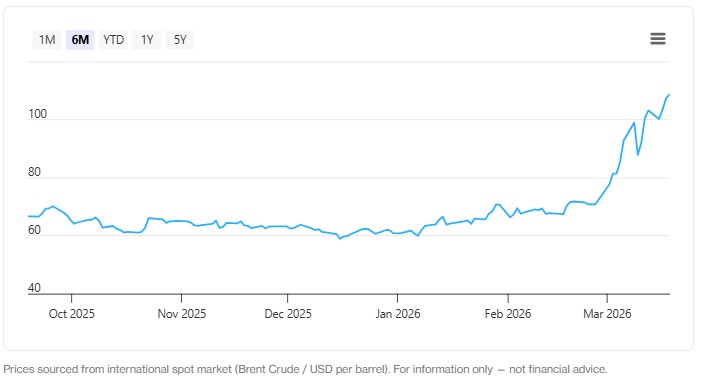
What unsettled markets is the possibility that the US could wind down its campaign without first securing the reopening of the Strait of Hormuz.
If that happens, one of the world’s most important oil routes could remain disrupted even after the conflict eases, keeping oil prices elevated.
The impact also goes beyond crude oil. Higher energy prices can feed into LNG, jet fuel and diesel costs, which then raise expenses across aviation, shipping, food and manufacturing.
Even if the conflict ends relatively soon, oil prices may not fall back quickly.
Damage to infrastructure, higher insurance costs and ongoing uncertainty over shipping security could keep energy prices elevated for longer.
#2 - How this may impact interest rates
The outlook for interest rates has become more complicated since the conflict began.
At the start of 2026, markets were expecting the US Federal Reserve to cut interest rates several times this year. But the rise in oil prices has made that less likely, at least for now.
The challenge for central banks is that higher oil prices can push inflation up, even as economic growth starts to slow.
If they cut rates too early, inflation could remain elevated. But if they keep rates high for longer, it could put more pressure on already fragile economies.
This is why investors are increasingly worried about a stagflationary scenario, where inflation stays high while growth weakens.
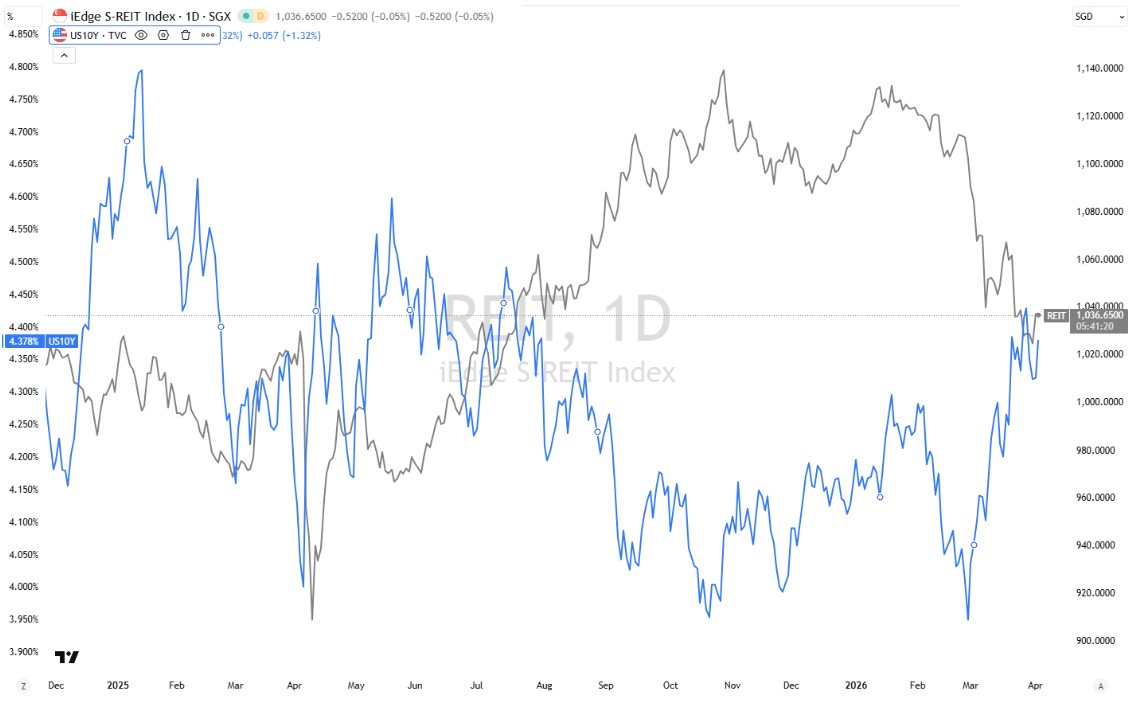
The US 10 year Treasury yield, which is a key benchmark for global borrowing costs, has risen since the conflict began.
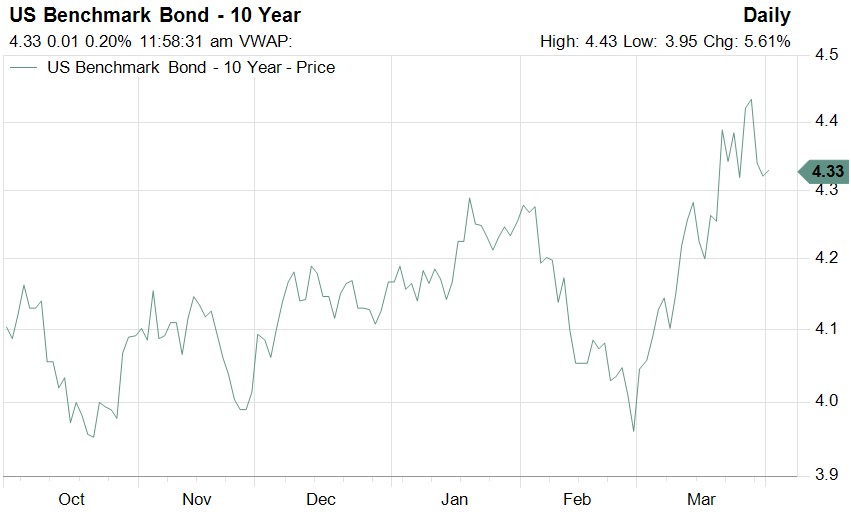
For Singapore investors, this matters because higher US bond yields can also put upward pressure on Singapore bond yields and weigh on interest rate sensitive sectors such as Singapore REITs.
#3 - How this may impact gold prices
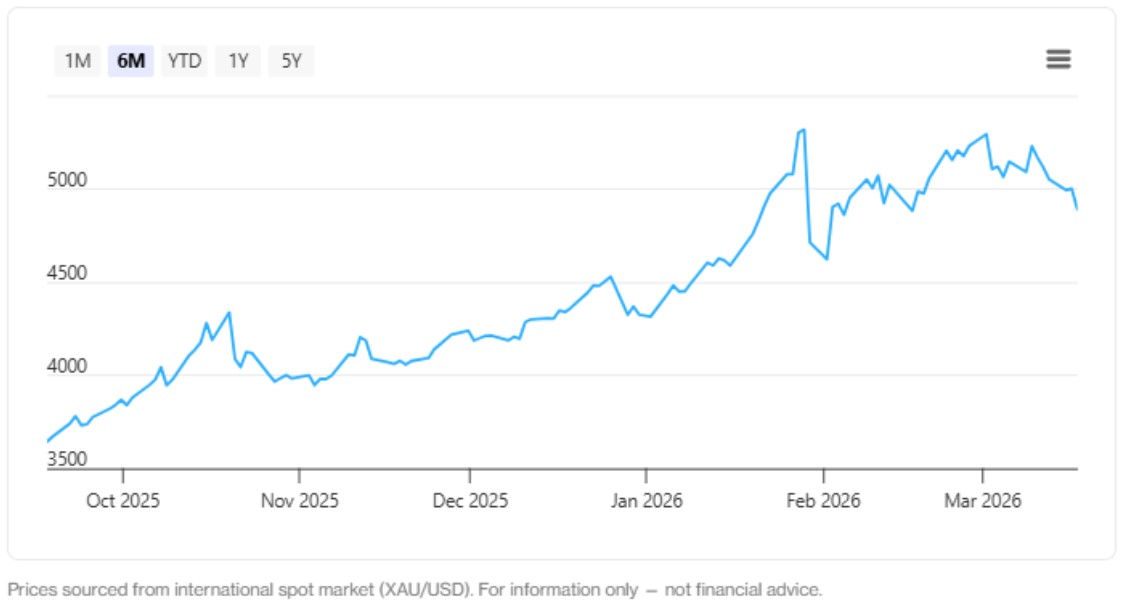
Gold, which many expected to rise as a safe haven, has instead fallen sharply.
The metal has fallen about 9% since the start of the Middle East conflict, as higher bond yields and a stronger US dollar made it less attractive to hold.
This is a reminder that safe haven assets do not always behave as expected, especially when the market shock is also pushing inflation and interest rate expectations higher.
Learn more about what may impact gold prices next here.
What this means for Singapore blue chips
#1 - Banks face limited direct exposure but meaningful second-order risks.
Banks appear to have limited direct exposure to the conflict, but the bigger concern is the indirect impact.
DBS CEO Tan Su Shan said the bank has very limited direct exposure to the Middle East, with stress tests suggesting little immediate first order impact given DBS’s focus on Asia.
However, she also warned that second order risks could be more significant, particularly if higher inflation slows consumer spending or if supply chain disruptions begin to create broader credit stress.
#2 - Rate-sensitive assets could come under pressure.
Rate-sensitive assets are also coming under pressure. As bond yields rise in the US and Singapore, S-REITs dividend yields look less attractive relative to safer assets.
In the current environment, performance is likely to diverge based on sub-sector exposure, geographic mix, debt structure and execution capability.
Returns may be less consistent in the current environment, and investors may need to be more selective.
Learn more about our outlook for Singapore REITs here.
#3- Inflation likely higher
As Foreign Affairs Minister Vivian Balakrishnan recently noted, while the military conflict may be centred on the West and Iran, the economic fallout is likely to be felt most acutely in Asia.
Singapore, as a trade dependent and energy importing economy, is not insulated from these risks.
In a monthly inflation report issued on March 23, MAS has already flagged that higher global energy prices are likely to raise Singapore’s import costs in the near term.
It also signalled that it is reviewing recent developments and may update its inflation outlook in the April monetary policy statement.
This matters because higher oil and energy prices could add to price pressures in Singapore, even if the conflict is happening far from home.
#4 - Transport and logistics face direct cost pressure.
Transport and logistics companies are facing more direct cost pressure from higher fuel prices.
Airlines, shipping firms and logistics operators could see margins come under strain as jet fuel and diesel costs rise, although the impact will vary depending on how much fuel exposure they have hedged.
Learn more about how higher oil prices may impact Singapore blue chips stocks here.
What we're looking out for next
#1 — The UK Hormuz summit outcome
The next key near term catalyst for markets is the UK-led virtual summit this week, where 35 countries will discuss how to restore maritime security in the Strait of Hormuz.
The main question is whether the talks produce a credible plan to protect commercial shipping, or just broad statements.
#2 — Oil price trajectory
Brent crude remains the single most important market variable to watch. A prolonged closure of the Strait of Hormuz could lead to a more severe physical supply squeeze.
#3 — The MAS April policy review
MAS would provide an updated outlook on 14 April, signalling that inflation forecasts could be revised higher.
Because MAS manages policy through the Singapore dollar rather than interest rates, a rise in imported inflation could lead to a firmer Singapore dollar policy stance.
We expect MAS to take a measured approach, aiming to keep inflation in check without slowing the economy too sharply.
#4 — US Fed signals on rates
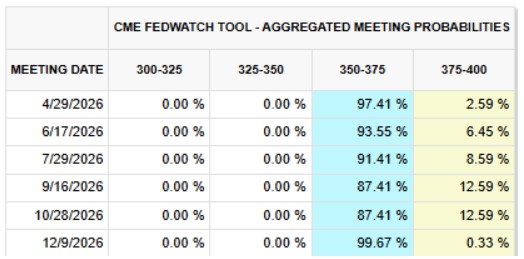
The Federal Reserve has signalled a more cautious path for rate cuts in 2026. Higher oil prices could keep inflation elevated, even as growth starts to slow.
Before the conflict, markets were expecting one to two Fed rate cuts in 2026. Those expectations have since been pared back as investors reassess the inflation outlook.
#5 — Iran ceasefire talks
Another key thing to watch is whether there is any real progress towards a ceasefire.
Any credible sign of back channel progress would likely be positive, especially for oil prices and global equities.
On the other hand, further escalation, including any strike on Iranian oil infrastructure, would likely push oil prices sharply higher and increase market volatility across the region.
What would Beansprout do?
This latest development comes at an already fragile time for global markets.
Even before Trump’s speech, investors were dealing with higher oil prices, slowing growth, sticky inflation and uncertainty over the path of interest rates.
Trump's latest speech added a new layer of risk — the possibility that the US could wind down its military campaign without first ensuring safe passage through the Strait of Hormuz.
Looking ahead, we will be watching out closely for the oil price trajectory, the Fed interest rate direction, and the MAS policy decision.
You can track the latest crude oil prices here, and find out how to gain exposure to oil here.
To track expectations on the Fed's interest rate direction, you can look at the latest US interest rate projections here.
As we shared when the conflict first broke out, our overall approach remains largely unchanged.
We would stay focused on the long term and avoid reacting emotionally to headlines.
First, we would stay disciplined and stick to our core investment thesis. Periods like this are uncomfortable, but selling simply because the news flow is alarming often locks in losses and takes a portfolio off course.
Second, we would be more selective with cyclical exposure. If there are stocks that have already done well and are more sensitive to the economic outlook, it may make sense to trim some gains and reduce overall portfolio risk.
Third, we would use volatility to build positions in quality names gradually. Market selloffs often pull down both strong and weak companies, so lower prices can create opportunities, but we would add in stages rather than rush in all at once.
At the same time, we would avoid trying to call the exact bottom. With uncertainty around the conflict and the Strait of Hormuz still high, short term market timing becomes especially difficult.
For investors who want to stay invested but feel uneasy, dollar cost averaging may be a sensible approach. Spreading purchases over time can reduce the pressure of trying to get the timing exactly right. We recently shared ETFs that offer diversified exposure to long term growth here.
Most importantly, we would continue watching how the situation evolves. A credible path to de-escalation could help markets stabilise, while a prolonged conflict could lead to more meaningful economic and earnings downgrades.
Overall, this is a period where discipline, patience and selectivity matter more than trying to react to every headline.
Check out the best stock trading platforms in Singapore with the latest promotions to start investing.
Enjoyed this insight? Follow Beansprout on Telegram, Youtube, Facebook and Instagram, and add Beansprout as your preferred source on Google so you never miss an update.
Read also
Gain financial insights in minutes
Subscribe to our free weekly newsletter for more insights to grow your wealth
Most Popular

Comments
0 comments