
5 space ETFs with exposure to the space economy as SpaceX IPO looms
ETFs
By Gerald Wong, CFA • 07 Jun 2026
Why trust Beansprout? We’ve been awarded Best Investment Website at the SIAS Investors’ Choice Awards 2025
'%3e%3cpath%20fill-rule='evenodd'%20clip-rule='evenodd'%20d='M17.64%209.20455C17.64%208.56637%2017.5827%207.95273%2017.4764%207.36364H9V10.845H13.8436C13.635%2011.97%2013.0009%2012.9232%2012.0477%2013.5614V15.8195H14.9564C16.6582%2014.2527%2017.64%2011.9455%2017.64%209.20455V9.20455Z'%20fill='%234285F4'/%3e%3cpath%20fill-rule='evenodd'%20clip-rule='evenodd'%20d='M9%2018C11.43%2018%2013.4673%2017.1941%2014.9564%2015.8195L12.0477%2013.5614C11.2418%2014.1014%2010.2109%2014.4205%209%2014.4205C6.65591%2014.4205%204.67182%2012.8373%203.96409%2010.71H0.957275V13.0418C2.43818%2015.9832%205.48182%2018%209%2018V18Z'%20fill='%2334A853'/%3e%3cpath%20fill-rule='evenodd'%20clip-rule='evenodd'%20d='M3.96409%2010.71C3.78409%2010.17%203.68182%209.59318%203.68182%209C3.68182%208.40682%203.78409%207.83%203.96409%207.29V4.95818H0.957273C0.347727%206.17318%200%207.54773%200%209C0%2010.4523%200.347727%2011.8268%200.957273%2013.0418L3.96409%2010.71V10.71Z'%20fill='%23FBBC05'/%3e%3cpath%20fill-rule='evenodd'%20clip-rule='evenodd'%20d='M9%203.57955C10.3214%203.57955%2011.5077%204.03364%2012.4405%204.92545L15.0218%202.34409C13.4632%200.891818%2011.4259%200%209%200C5.48182%200%202.43818%202.01682%200.957275%204.95818L3.96409%207.29C4.67182%205.16273%206.65591%203.57955%209%203.57955V3.57955Z'%20fill='%23EA4335'/%3e%3c/g%3e%3cdefs%3e%3cclipPath%20id='clip0_0_2849'%3e%3crect%20width='18'%20height='18'%20fill='white'/%3e%3c/clipPath%3e%3c/defs%3e%3c/svg%3e)
Make Beansprout your preferred source on Google
Add us on Google to see more of our insights in your search results
Space ETFs are drawing attention as the SpaceX IPO approaches. We compare 5 space-related ETFs and what to look out for before investing.

What happened?
The space economy is gaining more investor attention.
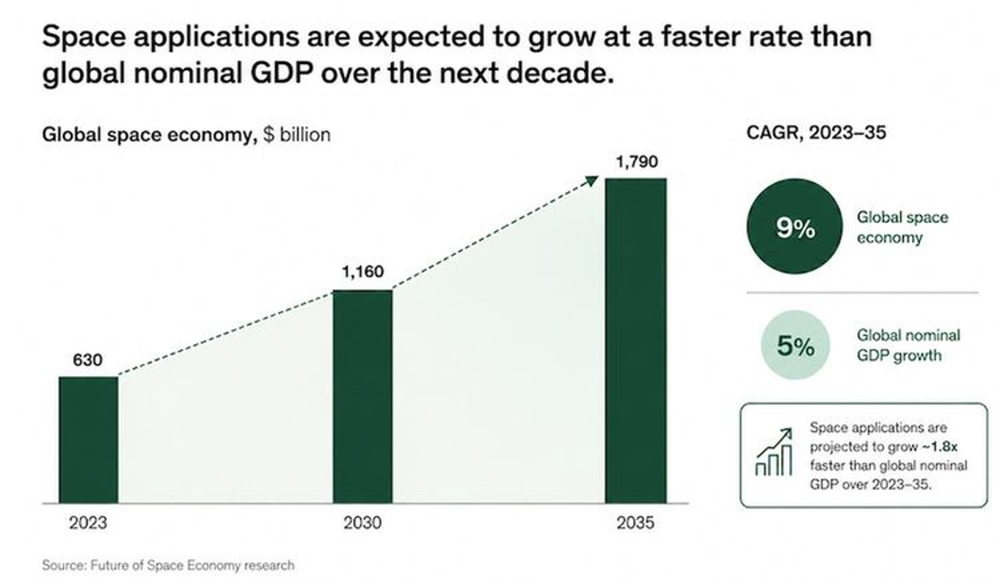
The World Economic Forum and McKinsey & Co projected that the global space economy could nearly triple from US$630 billion in 2023 to US$1.8 trillion by 2035.
This has also led to more discussion in the Beansprout community around SpaceX, including how investors can gain exposure to the broader space economy theme.
In this article, I look at five space-related ETFs that provide exposure to this theme, and what investors may consider before investing.
Why space ETFs are gaining investor interest
For many investors, the space economy still sounds like science fiction. It is still associated with rockets, moon missions, and space tourism.
But the investment case has started to broaden.
Today, our lives rely heavily on the infrastructure surrounding the space economy.
Satellites now support internet connectivity, GPS navigation, weather forecasting, aviation systems, maritime tracking, defence communications and Earth observation.
Analysing individual companies in this sector can be challenging as it involves technical knowledge in a rapidly evolving sector.
Instead of trying to pick one stock, investors may prefer ETFs because they provide diversified exposure to a basket of companies across the whole space economy including launch services, satellite communications, Earth observation, defence systems and other enabling technologies.
However, not all space ETFs are built the same way.
Some are more directly exposed to pure-play space exploration companies while others include broader aerospace, defence, semiconductor or technology companies that may benefit from the space economy indirectly.
5 space ETFs that provide exposure to the space economy as SpaceX IPO looms
#1 - Tema Space Innovators ETF (NYSE: NASA)
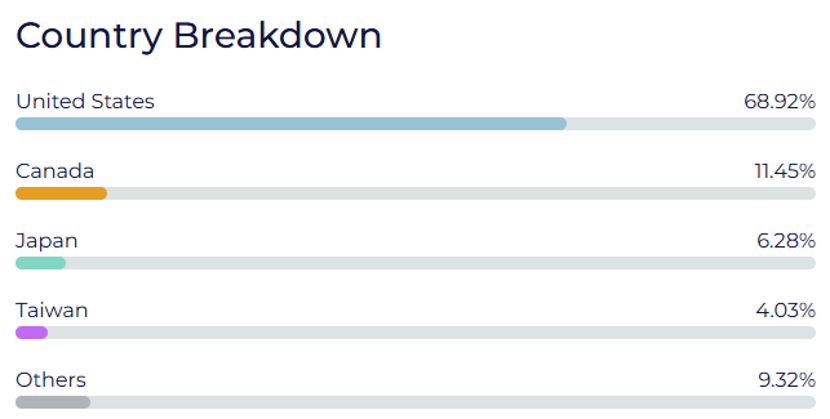
The Tema Space Innovators ETF (NASA) is an actively managed ETF currently investing in a portfolio of 38 companies, which may be publicly listed or pre-IPO, exposed to the global space economy.
Its current net expense ratio is 0.87%, while assets under management is about US$2.4 billion.
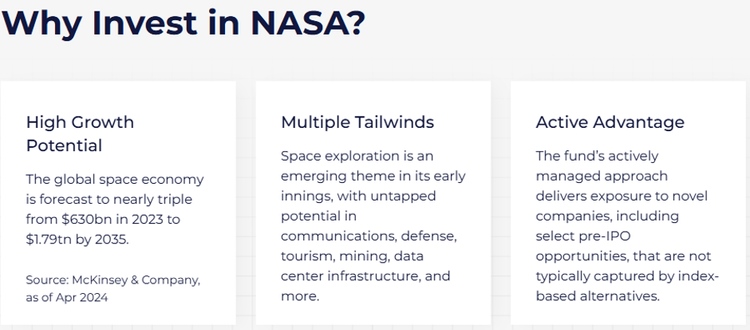
As of 3 June 2026, NASA’s top holdings include Rocket Lab Corp, MDA Space Ltd, EchoStar Corp, SpaceX SPV Exposure, and AST SpaceMobile Inc.
One highlight is their exposure to SpaceX through a special purpose vehicle (SPV).
This may be worth highlighting for investors looking for space exposure beyond listed companies, especially as SpaceX has become a major name in satellite broadband and launch services.
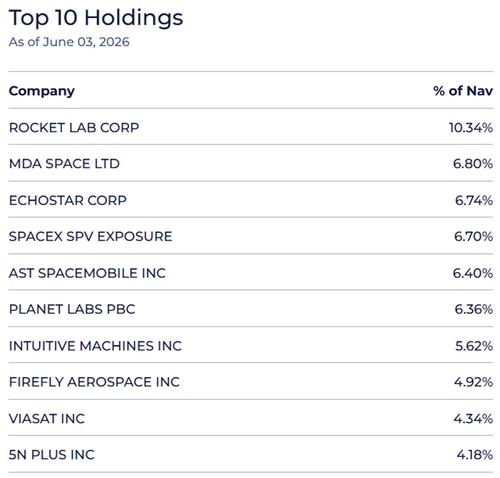
As of 31 March 2026, the fund is heavily weighted towards investments in the United States with 68.92% exposure, followed by Canada at 11.45%, and Japan at 6.28%.
The fund has a short track record having only been incepted on 30 March 2026. From inception to 31 May 2026, the fund’s NAV had risen 69.33%.
#2 - Procure Space ETF (NASDAQ: UFO)
The Procure Space ETF (UFO) is one of the longest-running space ETFs in the market having its launch in April 2019.
The fund passively tracks the VettaFi Space Index which is designed to measure the performance of companies engaged in space-related industries and rebalances their holdings every quarter.
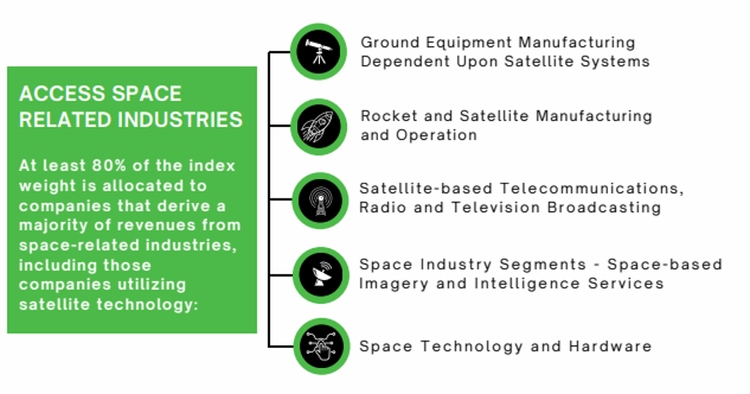
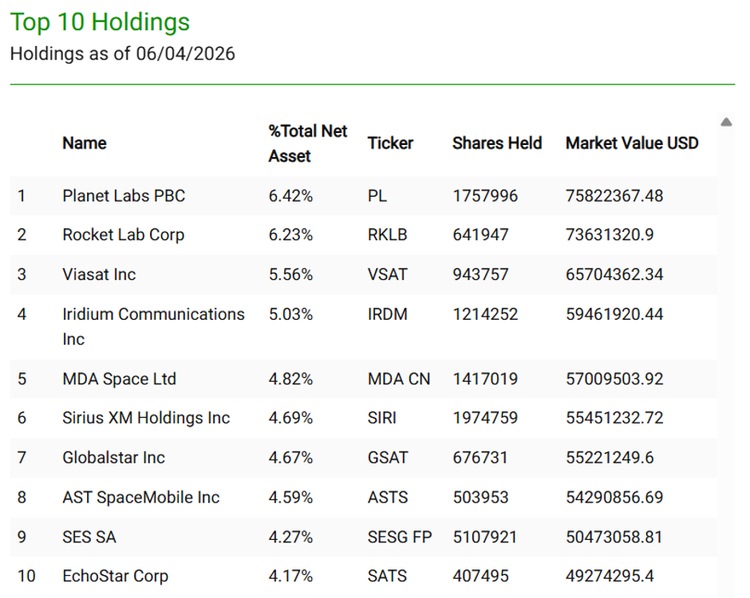
As of 3 June 2026, UFO has 52 holdings, an expense ratio of 0.75%, and net assets of about US$1.2 billion. Its top holdings include Planet Labs PBC, Rocket Lab Corp, Viasat Inc, Iridium Communications Inc, and MDA Space Ltd.
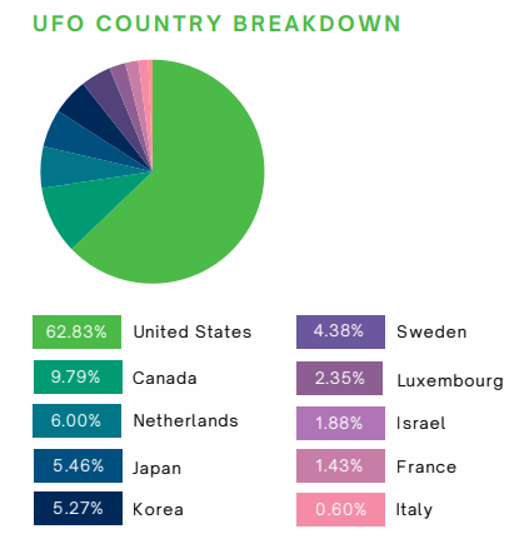
As of 31 March 2026, the fund’s largest investments are 62.83% from the United States, 9.79% from Canada, and 6.00% from the Netherlands.
Compared with newer ETFs, UFO has a long track record. This gives investors more information to assess how the fund has behaved across market cycles.
As of 31 May 2026, the fund has increased its NAV by 69.31% year to-date and 189.12% from inception.
#3 - Roundhill Space & Technology ETF (CBOE: MARS)
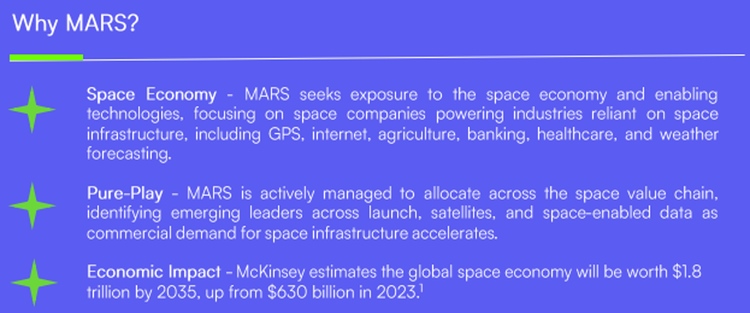
The Roundhill Space & Technology ETF (MARS) is one of the new actively managed space ETF which began trading on 5 March 2026.
The fund has a portfolio of 28 stocks across the space value chain focusing on the space economy and enabling technologies.
The fund’s current expense ratio is 0.75% and its assets under management is US$105 million.
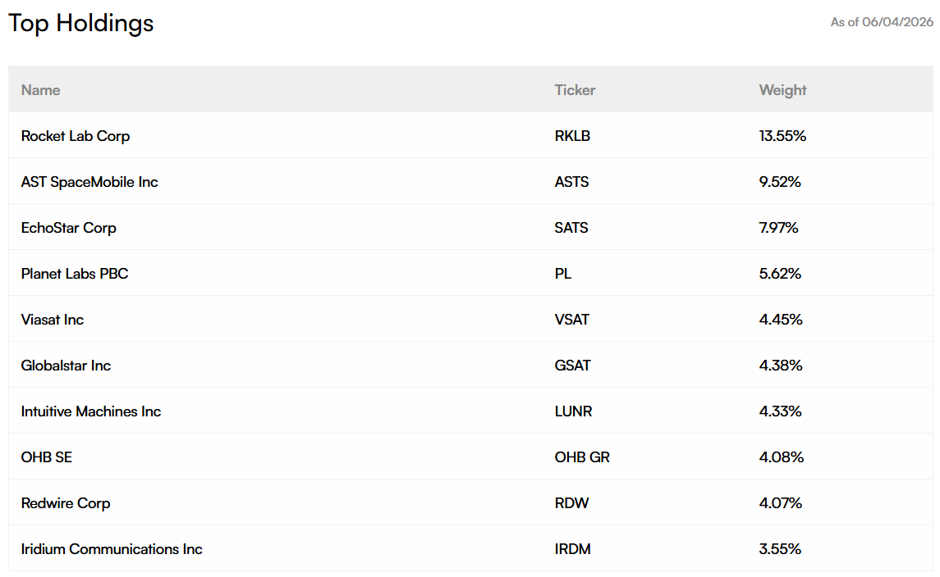
As at 4 June 2026, the fund’s top holdings include Rocket Lab Corp, AST SpaceMobile Inc, EchoStar Corp, Planet Labs PBC, and Viasat Inc.
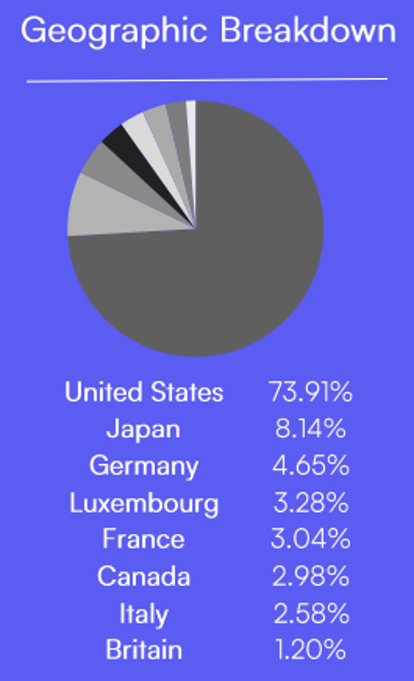
As of 31 March 2026, the fund’s major geographical exposure is 73.91% in the United States, 8.14% in Japan, and 4.65% in Germany.
This is also a new fund with limited track record. From its inception till 31 May 2026, the fund has increased its NAV by 61.63%.
#4 - ARK Space & Defense Innovation ETF (BATS: ARKX)
The ARK Space & Defense Innovation ETF (ARKX) is an active ETF and has been around since March 2021.
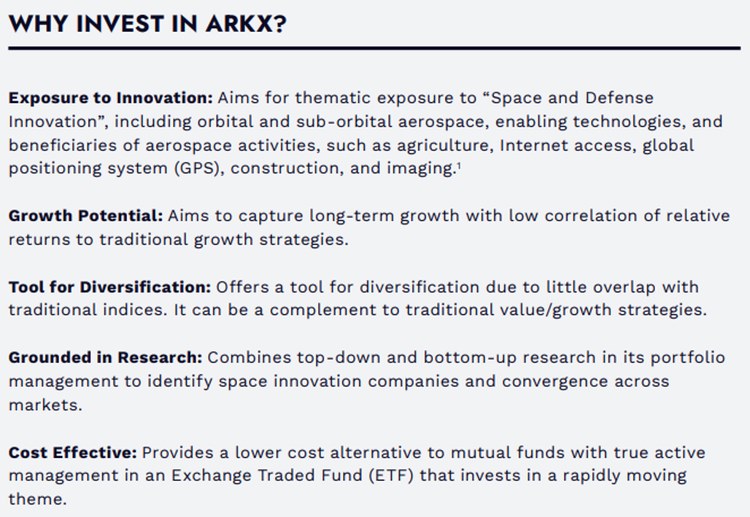
The fund currently owns a portfolio of 35 stocks focusing on Space and Defense innovation including orbital and sub-orbital aerospace, enabling technologies, and beneficiaries of aerospace activities.
The fund’s current expense ratio is 0.75% and it has net assets of US$893 million.
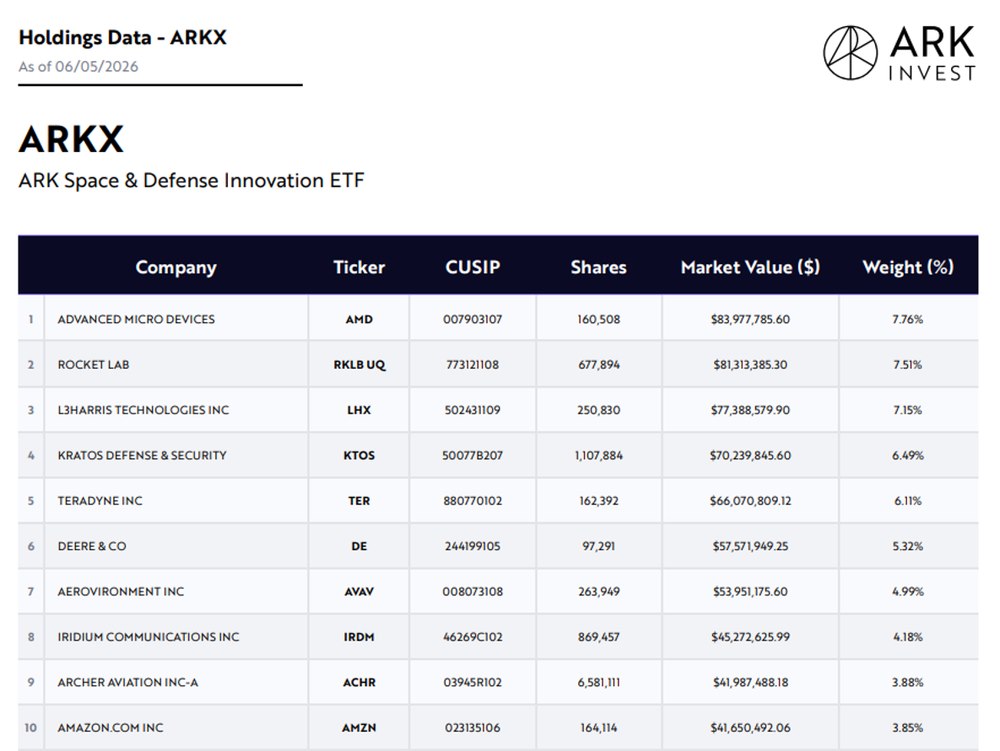
As of 5 June 2026, the fund’s top holdings include Advanced Micro Devices, Rocket Lab, L3Harris Technologies Inc, Kratos Defense & Security, and Teradyne Inc.
ARKX is not a pure play space ETF but also invests in companies involved in the defense industry which includes semiconductor, automation, drones, and other technologies.
This may interest investors who may want a broader exposure to space and related technologies instead of space exploration.
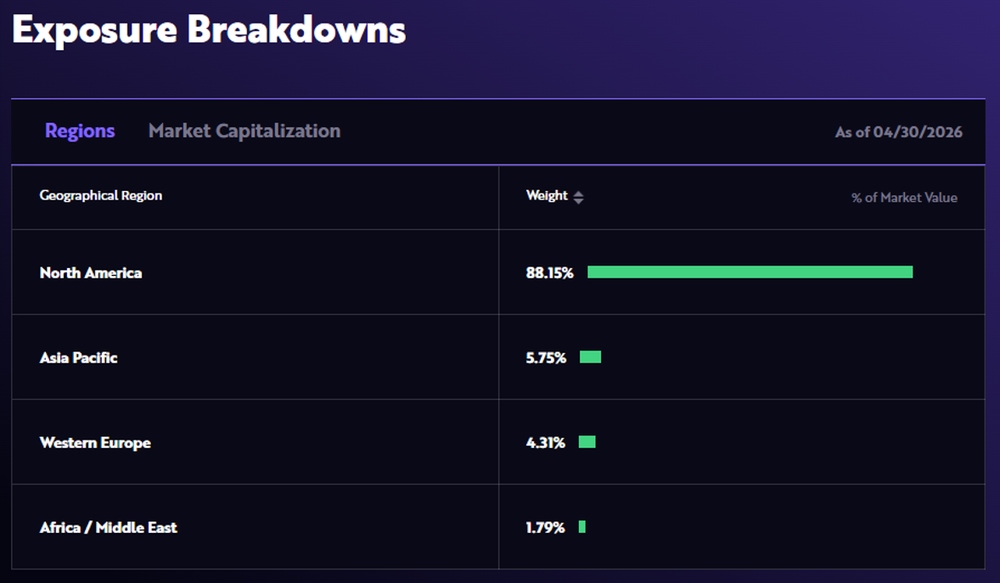
As of 30 April 2026, the fund is 88.15% invested in North America, 5.75% in Asia Pacific, 4.31% in Western Europe, and 1.79% in Africa / Middle East.
As of 30 April 2026, the fund has increased its NAV by 13.85% year to-date, and 64.77% since its inception.
#5 - VanEck Space ETF (NASDAQ: WARP)
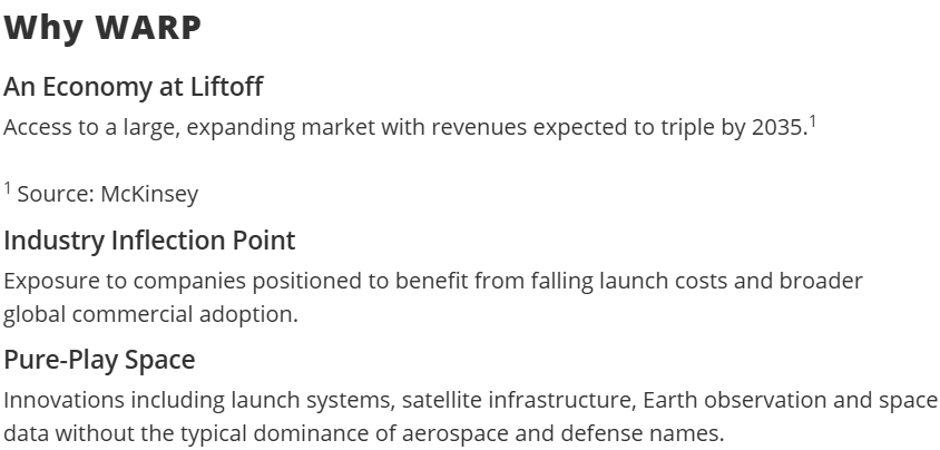
The VanEck Space ETF (WARP) is a passive pure play space ETF launched on 6 May 2026.
The fund tracks the MarketVector™ Space Index which is a thematic index tracking the performance of companies involved in space exploration, equipment, and communications, driving progress in the space industry.
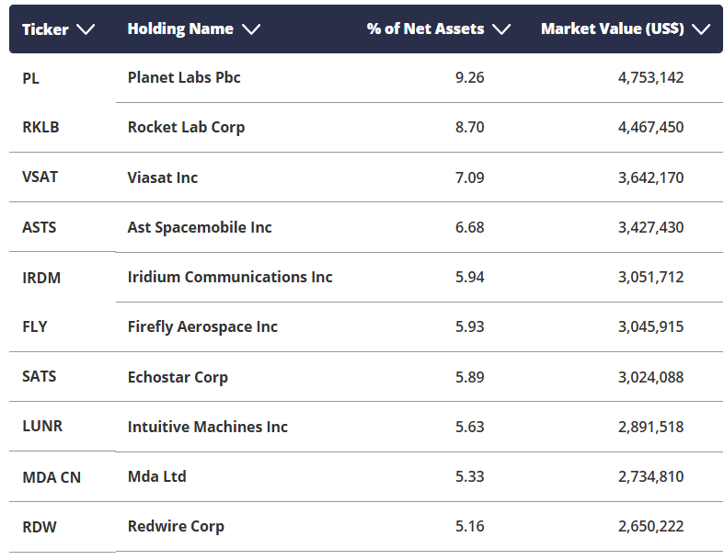
As of 3 June 2026, the fund has 21 holdings, an expense ratio of 0.50% and total net assets of US$52.7 million. Its top holdings are Planet Labs PBC, Rocket Lab Corp, Viasat Inc, AST SpaceMobile Inc, and Iridium Communications Inc.
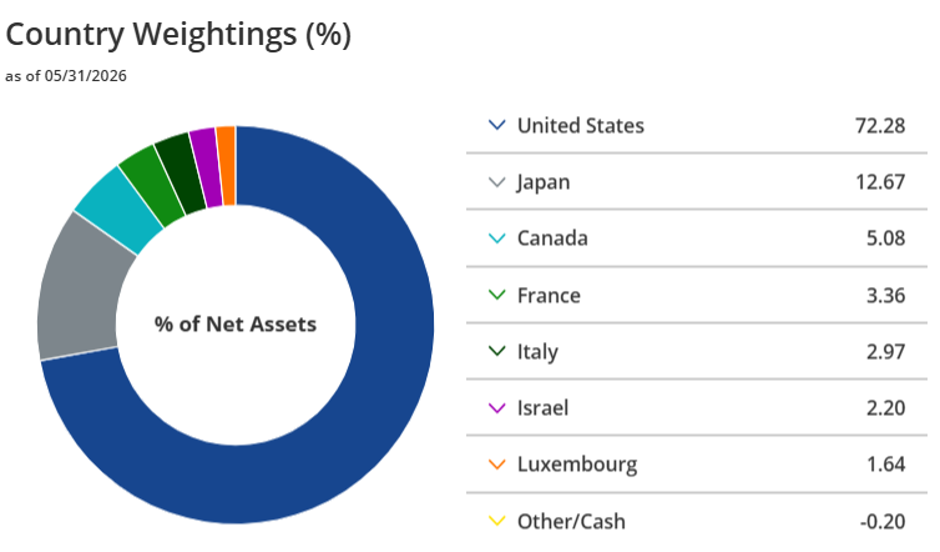
As of 31 May 2026, the fund’s major country weightings are 72.28% in the United States, 12.67% in Japan, and 5.08% in Canada.
As of 31 May 2026, the fund’s NAV had risen by 38.50% since its inception.
How do these five space ETFs compare?
All of these space ETFs are growth-focused and have many overlapping holdings, so it may be worthwhile to consider investing in just one of them instead of multiple space ETFs.
In spite of their similarities, there are still some key differences between the ETFs.
#1 - Pure-play space economy vs. space and defense
NASA, UFO, MARS, and WARP appear to have more direct pure-play exposure to the space economy, while ARKX has more diverse sector exposures.
#2 - SpaceX IPO exposure
NASA is the only space ETF with exposure to SpaceX in its Pre-IPO stage.
Other ETFs may only be able to invest in SpaceX after the company becomes publicly listed.
#3 - Diversification
All the listed space ETFs are fairly concentrated in their holdings.
Based on the last available data, UFO has the most number of holdings at 52. Meanwhile, WARP has 21 holdings so each stock may have a larger impact on the overall fund performance.
That being said, these ETFs frequently review and rebalance their holdings so we will check the latest data before making any decisions.
#4 - Track record, operating history, and assets under management
Since the space economy has only recently been drawing attention because of the SpaceX IPO, most of these ETFs are newly launched and have very little operating track record.
UFO has the longest operating history since they were launched in April 2019. This is followed by ARKX which was incepted in March 2021.
Both of these ETFs have a sizeable net asset base of US$1.2 billion and US$893 million respectively.
NASA, MARS, and WARP are all newly launched ETFs. NASA has raised substantial assets due to the market interest in SpaceX, reaching assets under management of US$2.4 billion, the largest of the space ETFs.
MARS and WARP on the other hand have low net assets of US$105 million and US$52.7 million only. When investing in smaller ETFs, we will watch out for trading liquidity, spreads, and how the fund’s net asset value changes over time.
#5 - Expense ratios
WARP has the lowest current expense ratio among the ETFs in this list at 0.50%.
NASA has the highest expense ratio at 0.87% due to their active management style as well as exposure to Pre-IPO companies.
#6 - Active or passive management style
NASA, MARS, and ARKX are actively managed ETFs, while UFO and WARP are passively managed ETFs.
In a highly dynamic sector like the space economy, Active ETFs may offer more flexibility of being more agile to rebalance their holdings and catch emerging trends before it enters into an index.
| ETF | Ticker | Expense Ratio | Management Style | Primary Exchange | Inception Date |
| Tema Space Innovators ETF | NASA | 0.87% | Active | NYSE | 30/3/2026 |
| Procure Space ETF | UFO | 0.75% | Passive | Nasdaq | 11/4/2019 |
| Roundhill Space & Technology ETF | MARS | 0.75% | Active | Cboe BZX | 5/3/2026 |
| ARK Space & Defense Innovation ETF | ARKX | 0.75% | Active | Cboe BZX | 30/3/2021 |
| VanEck Space ETF | WARP | 0.50% | Passive | Nasdaq | 6/5/2026 |
| Source: latest available fund data from Tema, Procure, Roundhill, ARK Invest, and VanEck ETF websites accessed on 5 June 2026. Expense ratios may change over time. Investors can refer to the latest fund documents for updated fees, holdings and risk disclosures. | |||||
What to look out for before investing in space ETFs
Investing in space ETFs is not like investing in broad based indices like the S&P 500.
These are sector specific ETFs and are exposed to the sector specific risk rather than being well diversified across multiple sectors.
The space economy is still an emerging industry. Many of the companies in the frontiers of this sector are still speculative and yet to generate profits and cash flow.
While some companies may have secured contracts and have revenue, others still require fund raising to continue operations.
The sector is also highly affected by government regulation and spending policies because many companies still rely on government demand for their products and services.
Finally, the space theme is a long term structural theme rather than a short term trading play. The industry will likely develop over many years and, in the interim, could see huge volatility.
What would Beansprout do?
The growing interest in SpaceX has brought more attention to the broader space economy.
As we shared in our guide to investing in the space economy, the longer-term case is about space becoming part of modern infrastructure, rather than just rockets or IPO excitement.
This includes areas such as satellite communications, launch services, Earth observation, navigation systems and defence-related technologies.
Space ETFs offer investors exposure to the space economy without having to pick single stocks.
If I were comparing these ETFs, I would first decide whether I want direct space exposure, broader defence and technology exposure, or potential SpaceX-linked exposure.
I would also check the underlying holdings carefully, as the overlap across space ETFs can be meaningful and the real test will be whether these companies can translate excitement into revenues, contracts, margins and cash flow.
Overall, I would see space ETFs as a potential smaller thematic allocation if I believe in the long term growth story rather than the core of a portfolio in my Growth Pot within Beansprout's four pots of wealth.
That said, I would also be careful not to chase the theme just because several space-related stocks have risen sharply.
Many companies in the sector are still at an early stage, and some may take time to turn revenue growth into sustainable profits and cash flow.
Apart from the space thematic, you can also find out more about the artificial intelligence (AI) theme here., and 4 growth themes to watch for the Singapore market here.
Do you think space ETFs could become a meaningful part of a long-term portfolio? Share your thoughts in the comments below or join the discussion in our Beansprout Telegram community.
Enjoyed this insight? Follow Beansprout on Telegram, Youtube, Facebook and Instagram, and add Beansprout as your preferred source on Google so you never miss an update.

Read also
Gain financial insights in minutes
Subscribe to our free weekly newsletter for more insights to grow your wealth
Most Popular

Comments
0 comments