
XWR vs VWRA: How the new UCITS ETF coming to SGX compares
ETFs
By Gerald Wong, CFA • 27 Sep 2026
Why trust Beansprout? We’ve been awarded Best Investment Website at the SIAS Investors’ Choice Awards 2025
'%3e%3cpath%20fill-rule='evenodd'%20clip-rule='evenodd'%20d='M17.64%209.20455C17.64%208.56637%2017.5827%207.95273%2017.4764%207.36364H9V10.845H13.8436C13.635%2011.97%2013.0009%2012.9232%2012.0477%2013.5614V15.8195H14.9564C16.6582%2014.2527%2017.64%2011.9455%2017.64%209.20455V9.20455Z'%20fill='%234285F4'/%3e%3cpath%20fill-rule='evenodd'%20clip-rule='evenodd'%20d='M9%2018C11.43%2018%2013.4673%2017.1941%2014.9564%2015.8195L12.0477%2013.5614C11.2418%2014.1014%2010.2109%2014.4205%209%2014.4205C6.65591%2014.4205%204.67182%2012.8373%203.96409%2010.71H0.957275V13.0418C2.43818%2015.9832%205.48182%2018%209%2018V18Z'%20fill='%2334A853'/%3e%3cpath%20fill-rule='evenodd'%20clip-rule='evenodd'%20d='M3.96409%2010.71C3.78409%2010.17%203.68182%209.59318%203.68182%209C3.68182%208.40682%203.78409%207.83%203.96409%207.29V4.95818H0.957273C0.347727%206.17318%200%207.54773%200%209C0%2010.4523%200.347727%2011.8268%200.957273%2013.0418L3.96409%2010.71V10.71Z'%20fill='%23FBBC05'/%3e%3cpath%20fill-rule='evenodd'%20clip-rule='evenodd'%20d='M9%203.57955C10.3214%203.57955%2011.5077%204.03364%2012.4405%204.92545L15.0218%202.34409C13.4632%200.891818%2011.4259%200%209%200C5.48182%200%202.43818%202.01682%200.957275%204.95818L3.96409%207.29C4.67182%205.16273%206.65591%203.57955%209%203.57955V3.57955Z'%20fill='%23EA4335'/%3e%3c/g%3e%3cdefs%3e%3cclipPath%20id='clip0_0_2849'%3e%3crect%20width='18'%20height='18'%20fill='white'/%3e%3c/clipPath%3e%3c/defs%3e%3c/svg%3e)
Make Beansprout your preferred source on Google
Add us on Google to see more of our insights in your search results
The Xtrackers MSCI World UCITS ETF (XWR) is expected to list on SGX on 13 October. We compare XWR with VWRA on fees, diversification, market exposure and key differences.
What happened?
A new global equity ETF is coming to SGX.
We recently looked at the four Irish-domiciled UCITS ETFs tentatively scheduled to list on SGX on 13 October 2026, including the Xtrackers MSCI World UCITS ETF, which will trade in Singapore dollars under the ticker XWR.
The upcoming listings have sparked discussion in the Beansprout community about what these options could mean for the way we build our portfolios.
For investors already holding Vanguard FTSE All-World UCITS ETF (VWRA), one question is how does the Xtrackers MSCI World UCITS ETF (XWR) compare to VWRA.
In this article, we look at how XWR compares with VWRA, what the differences in fees and market exposure mean, and what we would consider before switching or investing fresh funds.
Xtrackers MSCI World UCITS ETF (XWR) provides global exposure across developed markets
XWR is the SGX-listed ticker for the Xtrackers MSCI World UCITS ETF, trading in SGD. It will have the SGX-ST counter name of XT MS World SGD.
This is a cross-listing of an existing fund, so the fund itself is not a new one and has been in operation since 2014 with more than US$30 billion of assets under management as at 31 August 2026.
XWR tracks the MSCI Total Return Net World Index which provides exposure to large and mid cap companies across global developed markets. It covers approximately 85% of free-float market capitalisation, is weighted by free-float adjusted market capitalisation, and is reviewed on a quarterly basis.
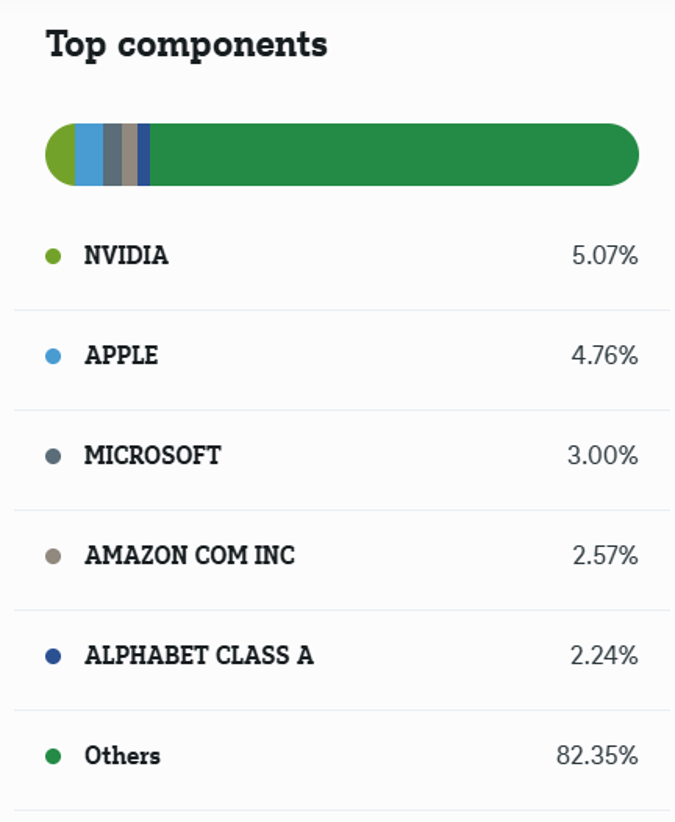
This means that companies with larger market capitalisations will have a bigger weightage in the fund. So, its top holdings include large companies like Nvidia, Apple, and Microsoft, as of 25 September 2026.
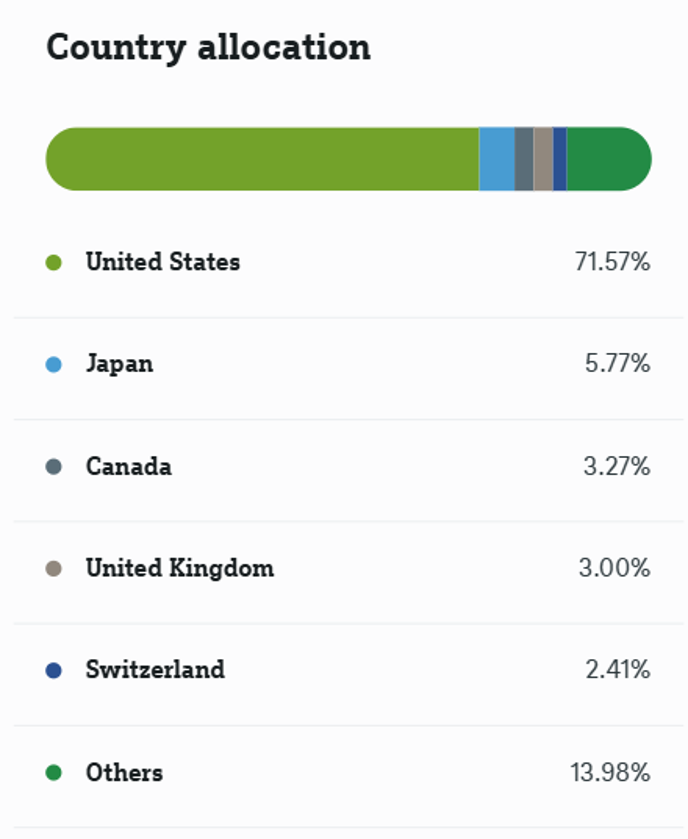
While it is a global ETF, the majority of its funds are still invested in companies listed in the United States, followed by Japan, Canada, and the United Kingdom, as of 25 September 2026.
A unique feature of XWR is that it will trade in SGD on the SGX, making it the first global UCITS ETF to trade in SGD, instead of the usual USD or GBP by many other global UCITS ETF.
The current all-in fee is 0.12% per annum based on the factsheet, but with a maximum all-in fee of up to 0.19% per annum.
It uses physical replication meaning that it will directly own shares in the underlying index and has an accumulating share class which will automatically reinvest all the dividends received net of withholding taxes.
It is also expected to be eligible for investment using Supplementary Retirement Scheme (SRS) funds, so investors can opt to invest it in using either cash or their SRS balances.
Finally, it will be traded in a minimum lot size of 1 share per trade, making it more accessible for investors who want to regularly invest smaller amounts over time using a Dollar Cost Averaging (DCA) strategy and a Regular Savings Plans (RSPs)
Comparing XWR against VWRA: VWRA includes emerging markets
While XWR and VWRA are considered global ETFs, they do not provide the same market exposure.
XWR tracks the MSCI World Index, which covers large and mid-cap companies across developed markets only. This means that it excludes investing in emerging markets like China, India, and Brazil.
Meanwhile, VWRA tracks the FTSE All World Index, which includes large and mid-sized companies across both developed and emerging markets. Vanguard reported 3,784 stocks in the fund as of 31 August 2026.
| Ticker code | XWR | VWRA |
| Benchmark Index | MSCI World | FTSE All World |
| Developed markets | Yes | Yes |
| Emerging markets | No | Yes |
| Small Cap Companies | No | No |
| Domicile | Ireland | Ireland |
| Dividend treatment | Accumulating | Accumulating |
| Investment method | Physical | Physical |
| Expense Ratio | 0.12% | 0.14% |
| Availability in SGX | Yes (from 13 October 2026) | No |
| Eligibility for SRS investing | Expected to be Yes | No |
| Trading currency | SGD | USD |
| Inception Year | 2014 | 2019 |
Source: Respective Fund Factsheets and prospectuses | ||
While XWR and VWRA have overlaps in their holdings, each has a separate market exposure.
This means that choosing between XWR and VWRA will change the type of market exposure that I have and changing the type of companies that I own.
For example, emerging markets such as China, India and Taiwan can form part of an all world portfolio in VWRA, while XWR focuses only on developed markets like US, Japan, and Canada.
Therefore, to choose between VWRA and XWR, I would consider whether I want a more broader exposure in the whole world, or a more focused exposure to just global developed markets only.
Both ETFs are similar in terms of fund structure, being domiciled in Ireland, using the physical replication method, and are accumulating share classes.
Notably, XWR will soon be available for trading directly on the SGX using SGD as the trading currency, while the other two are listed on LSE and using USD as the trading currency. XWR is also expected to be eligible for SRS investing after listing.
What could make XWR ETF on SGX worth considering compared to VWRA?
#1 - More brokers offer low cost access to SGX than the LSE
One of the biggest practical differences is accessibility.
VWRA is commonly bought through its USD listing on the London Stock Exchange. This means investors need a brokerage account that provides access to the LSE.
By comparison, SGX is supported by a wider range of brokers commonly used by Singapore investors, including several that offer relatively low cost access to Singapore listed stocks and ETFs.
For someone whose existing broker does not offer LSE access, XWR could therefore make it easier to invest in an Irish-domiciled global equity UCITS ETF without opening another brokerage account.
Even for investors who already have access to VWRA, the SGX listing gives them another option to compare based on brokerage fees, FX conversion costs, custody arrangements and ease of investing.
You can see our comparison of the best online brokerage accounts in Singapore for the different costs and features available across brokers.
#2 - It can be traded in Singapore dollars on SGX
For Singapore investors, one of the biggest practical differences is the trading currency.
VWRA is available as a USD-denominated London Stock Exchange listing while XWR will trade on SGX in SGD from 13 October 2026.
This can simplify the mechanics of investing, as an investor does not need to manually convert SGD into USD before placing an SGX order.
However, it is important to remember that trading the ETF in SGD does not remove currency risk.
The underlying companies in XWR continue to operate and trade in different currencies. Therefore, the value of those foreign assets are still affected by movements in foreign exchange between the SGD and the respective currencies and affect returns in SGD terms.
#3 - Eligibility to use SRS to invest
Another meaningful difference is the ability to use SRS funds. XWR is expected to be eligible for investment using SRS funds from listing, subject to eligibility requirements.
This could be particularly useful for investors who want to use their SRS savings to build their Growth Pot for long term compounding.
An investor who currently likes the Irish domiciled UCITS structure of VWRA may not be able to buy the LSE-listed ETF through their usual SRS brokerage arrangement.
#4 - We have the option of holding it through CDP
The SGX listing also gives investors the option of holding XWR through their CDP account, where supported by their broker.
For investors who prefer direct ownership of their SGX listed investments, this could be an advantage compared with buying VWRA through an overseas custodian.
However, a CDP account is not necessary.
Many brokers now provide custodian access to SGX listed stocks and ETFs. Under this arrangement, the broker or its nominee holds the securities on behalf of the investor.
This gives investors flexibility in how they hold XWR. Those who value direct CDP ownership can consider a CDP linked brokerage account, while investors who are comfortable with custodian holdings can continue using a custodian broker.
You can read our comparison of CDP and custodian accounts to understand the differences, and our comparison of brokerage accounts in Singapore to see which brokers offer the different custody arrangements.
What we would consider when choosing between VWRA to XWR
#1 - VWRA has an established liquidity track record
VWRA has an established trading history. The accumulating share class was launched in July 2019 and had about US$58 billion in assets as of September 2026.
XWR's underlying fund is also sizeable, at about US$30 billion as of end August 2026. However, its cross listing on the SGX will be new.
We therefore do not yet know what bid ask spreads investors will experience on SGX or how consistently liquidity will be available throughout the trading day.
VWRA already has an established trading and liquidity track record that investors can observe today.
#2 - Total cost of investing
XWR has a TER of 0.12%, compared with 0.14% for VWRA. On the surface, XWR has a slightly lower ongoing fund fee than VWRA.
If we use a SG$10,000 portfolio as an example, we would incur annual fees of S$12 for XWR, and S$14 for VWRA.
This means that you would save approximately SG$2 in expense fees for every SG$10,000 invested in VWRA if you switch it to XWR.
| ETF | Annual ongoing fund charge | Approximate annual cost on S$10,000 | Approximate annual cost on S$100,000 |
|---|---|---|---|
| VWRA | 0.14% | S$14 | S$140 |
| XWR | 0.12% | S$12 | S$120 |
However, TER is only one part of the total cost of investing.
Investors should also consider brokerage fees, bid ask spreads, custody or platform charges, FX conversion costs and tracking difference.
XWR will be bought and sold in SGD on SGX, so an investor funding the purchase in SGD would not need to make a separate SGD to USD conversion through their broker.
By comparison, an investor buying VWRA in USD using SGD would typically convert SGD into USD through their broker, with the cost depending on the broker's FX rate and conversion charges.
If I am thinking of switching my portfolio from VWRA to XWR, one thing I'll also bear in mind is that selling my existing ETFs and buying XWR could involve brokerage fees, bid ask spreads and potentially FX conversion costs.
#3 - Trading hours
Since XWR is listed on the SGX, it will trade following the Singapore market hours.
Some investors may find this more convenient than waiting for the London Stock Exchange which operates in a different time zone.
However, both the SGX and the LSE trade at different times from at least some of the underlying markets held by these global ETFs because their portfolios contain shares listed across multiple countries and time zones.
At different points in the trading day, some of those underlying markets may therefore be closed, with market makers relying on other available market information to price the ETF.
For a long term investor who buys occasionally and rarely sells, the difference in trading hours may not matter very much.
Therefore, this is mainly a matter of convenience and personal preference rather than a clear advantage of one ETF over the other.
Where to access the XWR ETF on SGX?
If you are interested in XWR WTF, moomoo offers subscription to XWR during its initial offer period, with a minimum subscription of S$1,000 and a subscription deadline of 30 September 2026 at 12pm Singapore time.
Read our guide to the Xtrackers UCITS ETF launch on moomoo for the subscription process, terms and key considerations.
If you prefer to buy after listing, XWR is tentatively scheduled to begin trading on SGX on 13 October 2026, in Singapore dollars and with a minimum lot size of one share.
Alternatively, if you prefer the exposure offered by VWRA, you can buy them through brokers supporting their USD trading lines on the London Stock Exchange.
To compare platforms offering SGX or London Stock Exchange access, including their fees and custody arrangements, see our guide to the best online brokerages in Singapore.
What would Beansprout do?
For us, choosing between XWR and VWRA starts with what we want to own in our Growth Pot, and whether we are investing fresh funds or reviewing an existing holding.
The starting point for XWR and VWRA is different because these two ETFs track different indices and provide different market exposures.
I would first decide whether I want exposure to developed markets only, or developed plus emerging markets.
VWRA covers large and mid-sized companies across developed and emerging markets, while XWR focuses on large and mid-sized companies in developed markets.
If I prefer developed market exposure only, the upcoming SGX listing of XWR can make the UCITS ETF more easily accessible through brokers offering SGX trading. In addition, I would would be able to invest with my SRS funds, and have the option of holding the ETF through CDP.
However, I would be mindful that currency risks still remain for XWR, and I would look out for the total cost of investing rather than just comparing the expense ratios.
Ultimately, I would focus less on finding the newest or cheapest global ETF and more on choosing a way that I can continue investing in consistently over the long term.
If you’re looking to buy Xtrackers MSCI World UCITS ETF (XWR) and the other 3 UCITS ETFs after they start trading on SGX, you can explore our guide to the best online brokerages in Singapore to compare platforms offering SGX access and their fees.
If you’re new to ETFs, read our beginner’s guide to ETF investing in Singapore to understand how they work and what to consider before investing.
Would you consider adding Xtrackers MSCI World UCITS ETF (XWR) into your portfolio? Leave a comment below or share your thoughts in the Beansprout Telegram group.
Follow Beansprout on Youtube, Facebook and Instagram, and add Beansprout as your preferred source on Google so you never miss an update.
Read also
Gain financial insights in minutes
Subscribe to our free weekly newsletter for more insights to grow your wealth
Most Popular

Comments
0 comments