
3 best-performing Singapore blue chips in September as the STI fell
Stocks
By Gerald Wong, CFA • 04 Oct 2026
Why trust Beansprout? We’ve been awarded Best Investment Website at the SIAS Investors’ Choice Awards 2025
'%3e%3cpath%20fill-rule='evenodd'%20clip-rule='evenodd'%20d='M17.64%209.20455C17.64%208.56637%2017.5827%207.95273%2017.4764%207.36364H9V10.845H13.8436C13.635%2011.97%2013.0009%2012.9232%2012.0477%2013.5614V15.8195H14.9564C16.6582%2014.2527%2017.64%2011.9455%2017.64%209.20455V9.20455Z'%20fill='%234285F4'/%3e%3cpath%20fill-rule='evenodd'%20clip-rule='evenodd'%20d='M9%2018C11.43%2018%2013.4673%2017.1941%2014.9564%2015.8195L12.0477%2013.5614C11.2418%2014.1014%2010.2109%2014.4205%209%2014.4205C6.65591%2014.4205%204.67182%2012.8373%203.96409%2010.71H0.957275V13.0418C2.43818%2015.9832%205.48182%2018%209%2018V18Z'%20fill='%2334A853'/%3e%3cpath%20fill-rule='evenodd'%20clip-rule='evenodd'%20d='M3.96409%2010.71C3.78409%2010.17%203.68182%209.59318%203.68182%209C3.68182%208.40682%203.78409%207.83%203.96409%207.29V4.95818H0.957273C0.347727%206.17318%200%207.54773%200%209C0%2010.4523%200.347727%2011.8268%200.957273%2013.0418L3.96409%2010.71V10.71Z'%20fill='%23FBBC05'/%3e%3cpath%20fill-rule='evenodd'%20clip-rule='evenodd'%20d='M9%203.57955C10.3214%203.57955%2011.5077%204.03364%2012.4405%204.92545L15.0218%202.34409C13.4632%200.891818%2011.4259%200%209%200C5.48182%200%202.43818%202.01682%200.957275%204.95818L3.96409%207.29C4.67182%205.16273%206.65591%203.57955%209%203.57955V3.57955Z'%20fill='%23EA4335'/%3e%3c/g%3e%3cdefs%3e%3cclipPath%20id='clip0_0_2849'%3e%3crect%20width='18'%20height='18'%20fill='white'/%3e%3c/clipPath%3e%3c/defs%3e%3c/svg%3e)
Make Beansprout your preferred source on Google
Add us on Google to see more of our insights in your search results
We look at the Singapore blue chips that performed the best in September in spite of market volatility, what supported their rally, and what investors should look out for.
What happened?
Singapore stocks pulled back in September after a strong rally so far this year.
The Straits Times Index (STI) ended the month 1.4% lower after reaching a record high earlier in the month. Only five stocks had positive returns in September.
The Fed’s first interest-rate hike since 2023 brought renewed attention to how higher borrowing costs could affect Singapore blue chip stocks like DBS, OCBC and UOB, as well as interest rate sectors like Singapore REITs.
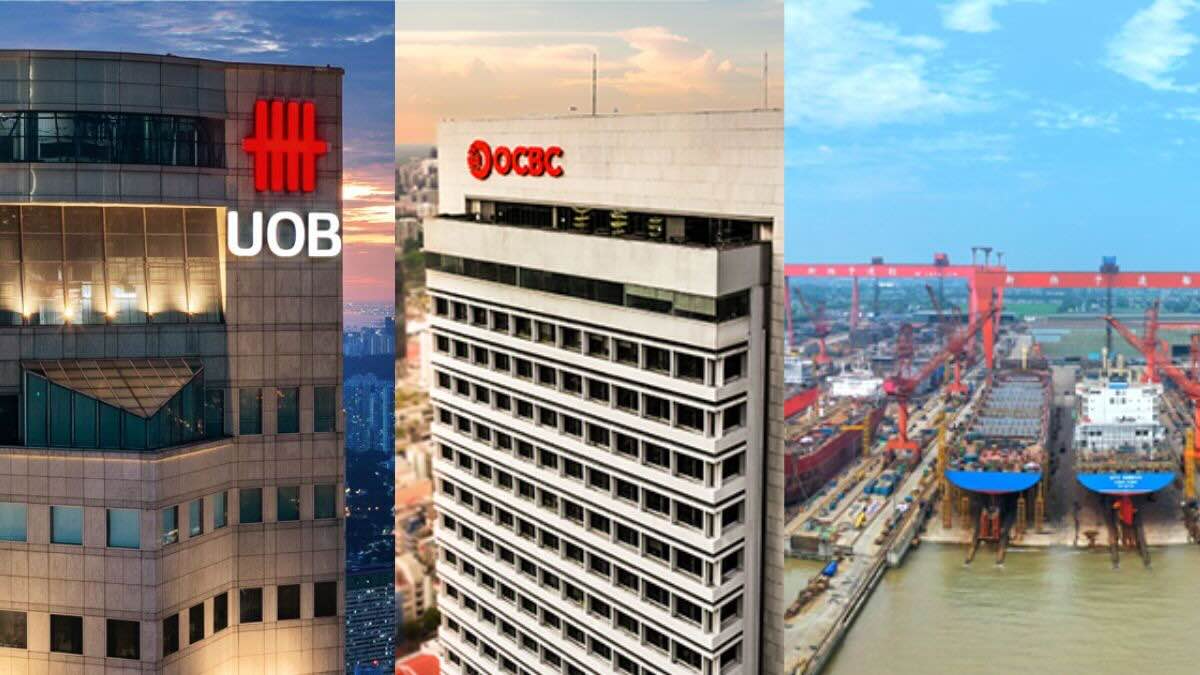
Against this volatile backdrop, Yangzijiang Shipbuilding, UOB and OCBC emerged as September’s best-performing blue chip stocks.
Notably, Yangzijiang Shipbuilding and OCBC were also among August’s three best-performing blue chips and July’s three best-performing blue chips, making them repeat appearances on the list.
In this article, we look at what drove the gains in September’s top gainers, how they fare under Beansprout’s Opportunity Pot screening framework and what investors may want to watch next.
3 best-performing Singapore blue-chip stocks in September 2026
| Rank | Stock | SGX code | September total return |
| 1 | Yangzijiang Shipbuilding | BS6 | 6.00% |
| 2 | UOB | U11 | 3.10% |
| 3 | OCBC | O39 | 1.50% |
| Source: SGX | |||
#1 – Yangzijiang Shipbuilding (SGX: BS6)
Yangzijiang Shipbuilding topped the list with a 6.0% total return in September.
This followed its strong August performance, when its share price rose 23.5%.
Yangzijiang Shipbuilding is one of China’s largest privately owned shipbuilders.
Its latest reported earnings provide useful context for the continued interest in the stock, although these results were released in August.
For the first half of 2026, revenue rose 36.2% year on year to RMB17.5 billion, while net profit increased 28.4% to RMB5.4 billion.
Higher-priced vessel contracts and a favourable mix of ships supported the results. Its shipbuilding gross profit margin reached 37.1%, compared with 35.2% a year earlier.
The company also had an order book of US$22.4 billion across 256 vessels at the end of June, with deliveries extending through 2030. Its net cash position stood at approximately RMB12.5 billion.
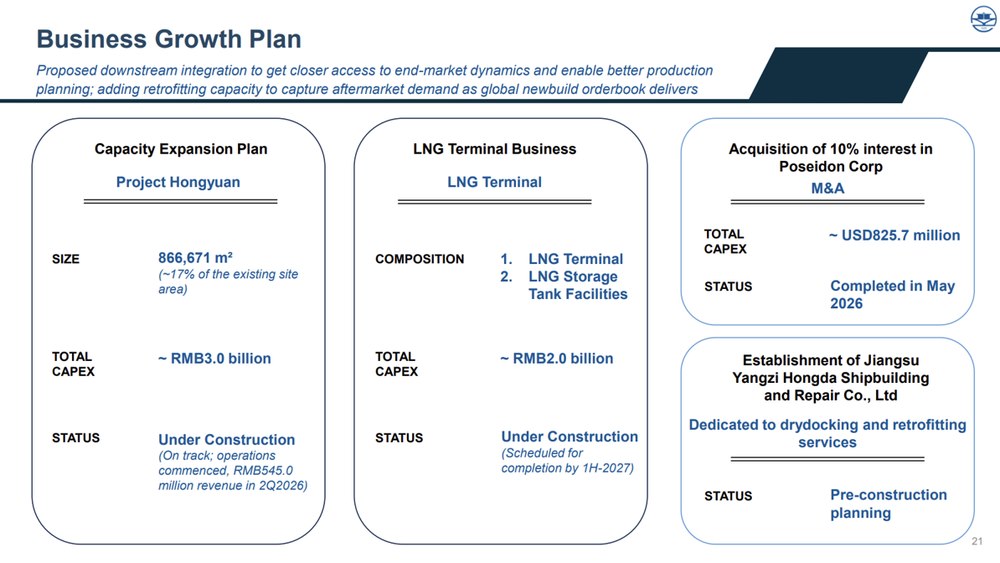
Yangzijiang is also investing to expand beyond its existing shipbuilding capacity.
Project Hongyuan has begun operations, while the group is also developing an LNG terminal and planning a repair and retrofitting business.
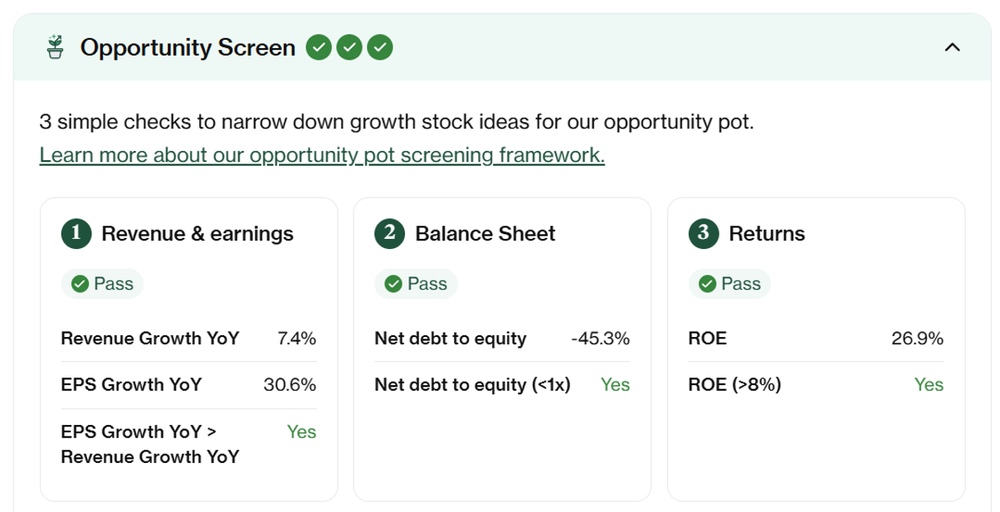
Yangzijiang Shipbuilding meets all three checks on Beansprout’s current Opportunity Screen.
Revenue increased 7.4%, while earnings per share grew 29.4%, satisfying the revenue and earnings check.
Its 26.9% return on equity meets the returns check, and net debt to equity of -45.3% meets the balance-sheet check.
The key question to answer is how much of this earnings strength can be sustained.
A large order book provides visibility, but I would still examine whether new contracts can replenish completed orders at attractive margins.
I would also watch delivery execution and cash generation as the company expands production.
After consecutive months of gains, I would compare the valuation with earnings across the shipbuilding cycle, including a scenario where margins become less favourable.
Related links:
- Explore Yangzijiang Shipbuilding’s latest share price, share price target, valuation and analysis
- Explore Yangzijiang Shipbuilding's dividend yield and dividend payout history
#2 – UOB (SGX: U11)
UOB delivered a 3.1% total return in September, placing it second among STI constituents.
One relevant development was the change in the interest-rate outlook.
As we discussed in our September comparison of Singapore banks, UOB has the highest proportion of Singapore-dollar customer loans among the three local banks.
Singapore-dollar loans accounted for 43.3% of its customer loan book, while net interest income represented about 66% of its first-half income.
These exposures make lending margins an important factor in its earnings outlook. If Singapore interest rates rise and loan yields increase faster than funding costs, UOB could benefit. However, that is a potential earnings driver rather than proof of what caused September’s share-price movement.
Its latest results showed profit growth despite pressure on interest income.
UOB reported second-quarter net profit of S$1.5 billion, up 10% year on year, while first-half net profit rose 3%.
Second-quarter net interest income fell 2%, but net fee income increased 5% to S$665 million, supported by record wealth-management fees. Its non-performing loan ratio was 1.6%.
The bank declared an interim dividend of 88 cents per share, representing a payout ratio of approximately 50%.
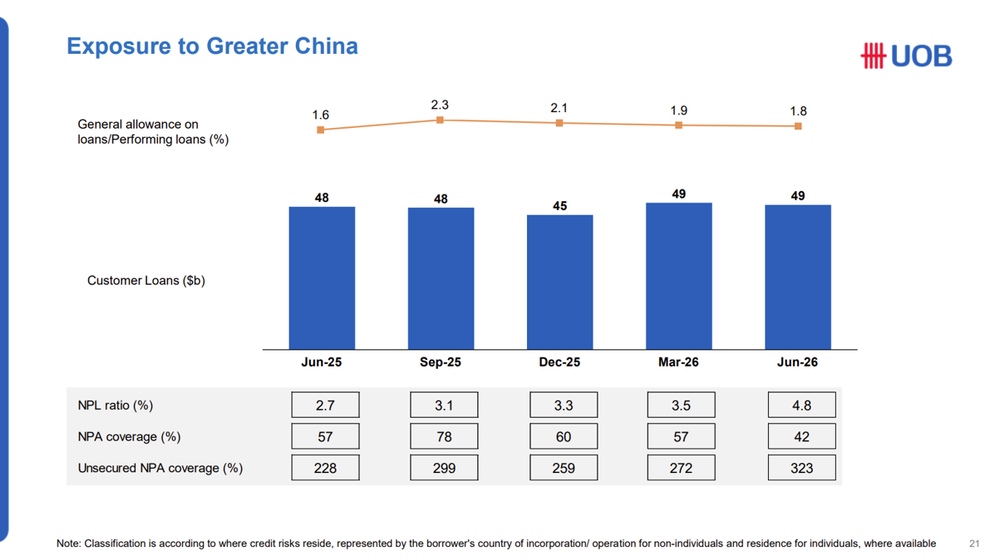
However, UOB’s Greater China figures show why credit quality deserves attention alongside any benefit from higher lending margins.
The region’s non-performing loan ratio rose to 4.8% at the end of June 2026, from 2.7% a year earlier, even as the size of the regional loan book changed little.
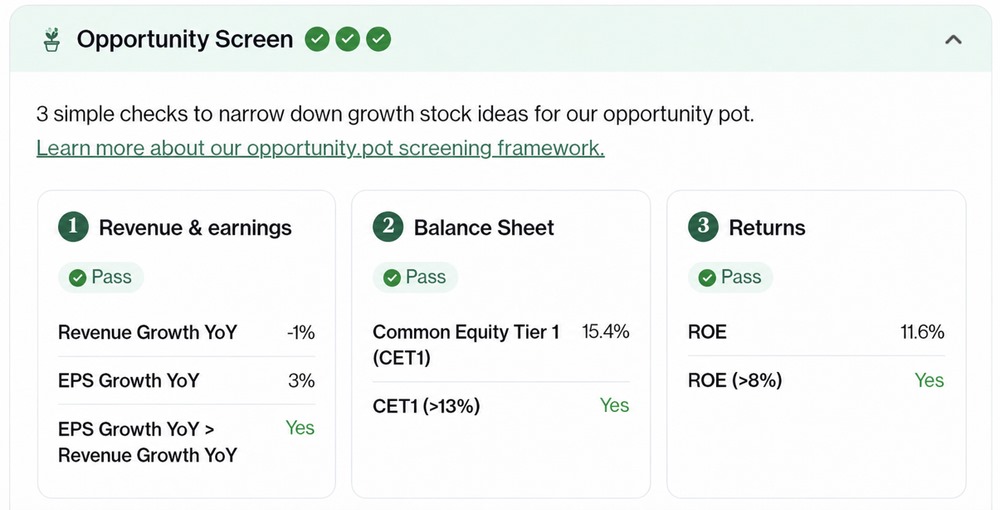
Based on Beansprout’s current Opportunity Screen, UOB passes all three checks.
While revenue fell 1%, EPS increased by 3%, passing the revenue and earnings check.
UOB passed the returns check with an ROE of 11.6%, as well as the balance-sheet check with Common Equity Tier 1 (CET1) ratio of 15.4%.
The key test is whether a more favourable rate environment eventually translates into higher net interest margins and stronger earnings.
I would also watch UOB's credit quality, especially in Greater China, as higher borrowing costs can support lending income but also place more pressure on borrowers.
Related links:
- Explore UOB’s latest share price, share price target, valuation and analysis.
- Explore UOB's dividend yield and dividend payout history
#3 – OCBC (SGX: O39)
OCBC recorded a 1.5% total return in September, earning another place among the month’s top three STI performers.
OCBC reported record first-half net profit of S$4.19 billion, up 13% year on year.
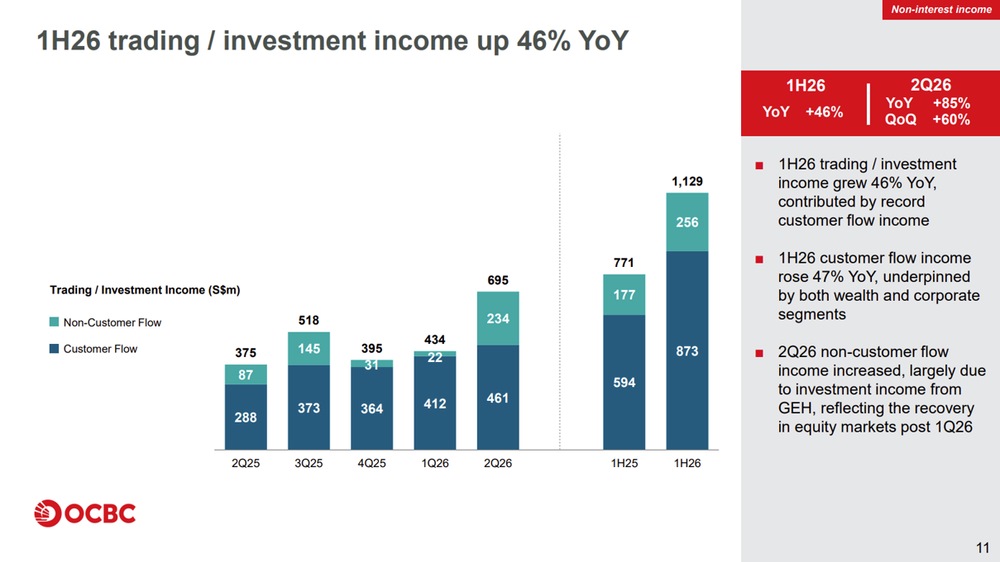
Non-interest income increased 36% to S$3.51 billion, helping to offset a 3% decline in net interest income.
In particular, OCBC's wealth-management income rose 27% to S$3.29 billion, and now contributes 41% of the OCBC's total income (up from 36% a year ago).
OCBC’s non-performing loan ratio remained at 0.9%, while its fully phased-in CET1 capital ratio was 14.0% at the end of June. CET1 measures a bank’s core equity capital relative to its risk-weighted assets.
Shareholders also received a higher interim ordinary dividend of 47 cents per share, up 15% from a year earlier.
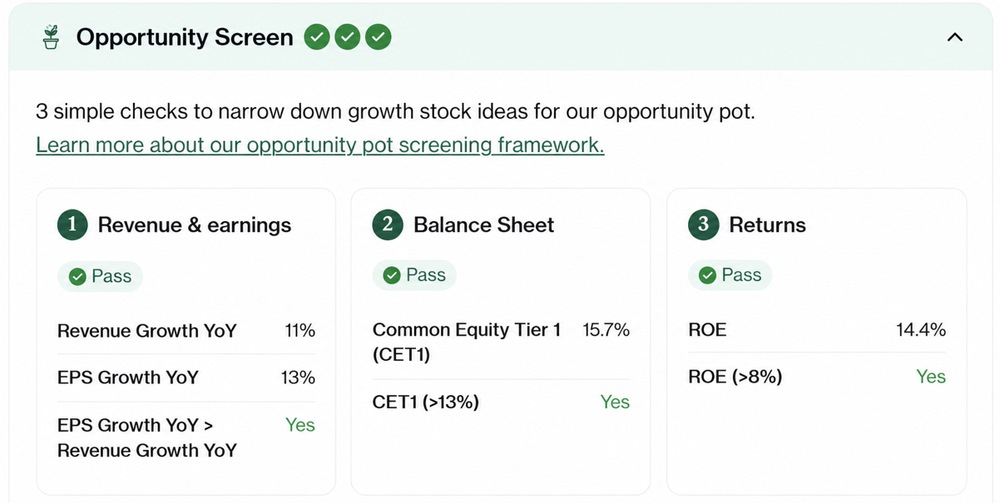
Based on Beansprout’s current Opportunity Screen, OCBC all three checks.
Revenue grew by 11%, but EPS grew faster at 13%, passing the revenue and earnings check.
OCBC also passed the returns check with an ROE of 14.4%, as well as the balance-sheet check with Common Equity Tier 1 (CET1) ratio of 15.7%.
For me, the focus would be whether the bank can sustain its broader income growth.
Wealth-management activity, trading and insurance earnings can fluctuate with market conditions. I would therefore look at how much of the latest performance comes from recurring customer activity.
I would also compare its price-to-book valuation with the return on equity it can sustain.
Strong earnings help explain the investment case, but the price paid still matters after a prolonged rally.
Related links:
- Explore OCBC’s latest share price, share price target, valuation and analysis.
- Explore OCBC’s latest dividend yield and dividend payout history
What would Beansprout do?
Yangzijiang Shipbuilding, UOB and OCBC delivered the strongest total returns among STI constituents in September, even as the index declined.
A strong month alone would not be enough for me to add a stock to my Opportunity Pot within my Four Pots of Wealth,
I would first assess their earnings momentum, financial strength and return on equity as part of our screening checks.
| Stock | Opportunity Pot result | What stands out | Key risks |
| Yangzijiang Shipbuilding | 3/3 checks | Strong earnings growth, high ROE, net cash and large order book | Shipbuilding cycle, pace of new orders, steel costs, currencies and execution |
| UOB | 3/3 checks | Resilient 1H26 profit, record wealth income and growing trade business across ASEAN | NIM pressure, weaker fee growth and higher provisions if credit quality deteriorates, particularly in Greater China real estate |
| OCBC | 3/3 checks | Record 1H26 profit, growing wealth income and strong capital position | NIM pressure, sustainability of non-interest income growth and valuation after the rally |
Yangzijiang, UOB and OCBC pass our 3 screening checks.
However, passing these checks do not automatically make them stocks I would buy. I would dive deeper into these names and consider whether their valuation leave room for further gains.
Yangzijiang Shipbuilding’s strong profitability, net cash position and large order book stand out. However, after the strong share price rally in the past few months, I would watch whether new orders remain healthy.
UOB's net interest margins will be key to watch with rising interest rates, alongside its ability to grow its wealth-management fees. I would also monitor credit costs and its Greater China real estate exposure to see whether profit growth remains resilient.
OCBC's wealth-management, insurance and fee businesses are helping to offset pressure on net interest margins. After the stock’s rally, I would watch whether that income growth remains strong enough to support earnings at its current valuation.
To find out which Singapore blue-chip stocks we would hold in a portfolio, you can also see how we would invest S$100,000 in Singapore stocks today.
If you are looking for greater clarity on the markets and the investment decisions that matter, explore Beansprout Pro for our latest views, portfolio thinking and the reasoning behind each opportunity.
Overall, the resilience of these Singapore blue chip stocks highlight why Singapore stocks are still worth looking at in 2026.
For investors who are looking to gain exposure to Singapore, we share 5 ways to invest in blue chips and growth opportunities here.
Which of these blue chips are you watching? Share your thoughts in the comments below or join the discussion in our Telegram community.
Planning to invest in Singapore blue chip stocks? Check out Beansprout's guide to the best stock trading platforms in Singapore with the latest promotions to invest in the Singapore market and see the latest promotions and sign-up rewards available.
Enjoyed this insight? Follow Beansprout on Telegram, Youtube, Facebook and Instagram, and add Beansprout as your preferred source on Google so you never miss an update.
Read also
Gain financial insights in minutes
Subscribe to our free weekly newsletter for more insights to grow your wealth
Most Popular

Comments
0 comments