
Why are global stocks and the Straits Times Index near record highs? 3 reasons behind the rally
Stocks
By Gerald Wong, CFA • 12 Sep 2026
Why trust Beansprout? We’ve been awarded Best Investment Website at the SIAS Investors’ Choice Awards 2025
'%3e%3cpath%20fill-rule='evenodd'%20clip-rule='evenodd'%20d='M17.64%209.20455C17.64%208.56637%2017.5827%207.95273%2017.4764%207.36364H9V10.845H13.8436C13.635%2011.97%2013.0009%2012.9232%2012.0477%2013.5614V15.8195H14.9564C16.6582%2014.2527%2017.64%2011.9455%2017.64%209.20455V9.20455Z'%20fill='%234285F4'/%3e%3cpath%20fill-rule='evenodd'%20clip-rule='evenodd'%20d='M9%2018C11.43%2018%2013.4673%2017.1941%2014.9564%2015.8195L12.0477%2013.5614C11.2418%2014.1014%2010.2109%2014.4205%209%2014.4205C6.65591%2014.4205%204.67182%2012.8373%203.96409%2010.71H0.957275V13.0418C2.43818%2015.9832%205.48182%2018%209%2018V18Z'%20fill='%2334A853'/%3e%3cpath%20fill-rule='evenodd'%20clip-rule='evenodd'%20d='M3.96409%2010.71C3.78409%2010.17%203.68182%209.59318%203.68182%209C3.68182%208.40682%203.78409%207.83%203.96409%207.29V4.95818H0.957273C0.347727%206.17318%200%207.54773%200%209C0%2010.4523%200.347727%2011.8268%200.957273%2013.0418L3.96409%2010.71V10.71Z'%20fill='%23FBBC05'/%3e%3cpath%20fill-rule='evenodd'%20clip-rule='evenodd'%20d='M9%203.57955C10.3214%203.57955%2011.5077%204.03364%2012.4405%204.92545L15.0218%202.34409C13.4632%200.891818%2011.4259%200%209%200C5.48182%200%202.43818%202.01682%200.957275%204.95818L3.96409%207.29C4.67182%205.16273%206.65591%203.57955%209%203.57955V3.57955Z'%20fill='%23EA4335'/%3e%3c/g%3e%3cdefs%3e%3cclipPath%20id='clip0_0_2849'%3e%3crect%20width='18'%20height='18'%20fill='white'/%3e%3c/clipPath%3e%3c/defs%3e%3c/svg%3e)
Make Beansprout your preferred source on Google
Add us on Google to see more of our insights in your search results
The S&P 500 and the Straits Times Index (STI) are still trading near record highs despite rising bond yields and geopolitical risks. Here are 3 reasons markets behind the rally.
What happened?
Global stock markets have continued to rise despite a challenging macro backdrop.
In Singapore, the Straits Times Index (STI) reached a new all time high of above 5,800 points in September, as several blue chip stocks such as OCBC and DBS reached new highs.
In the US, the S&P 500 also reached an intra-day high of above 7,800 points in August.
This has surprised many investors, and I have seen questions asked in the Beansprout community about why this is the case despite continued uncertainty on the Middle East conflict, renewed inflation concerns, as well as rising bond yields.
In this article, I look at what is keeping global stock markets resilient despite these concerns, and the key risks that could change the outlook from here.
3 reasons the Straits Times Index (STI) and global stocks are near record highs
#1 - Global economic growth has remained resilient
I would start with the broader economy.
Despite higher oil prices, tariffs and tighter financial conditions, economic activity has continued to expand in several major markets.
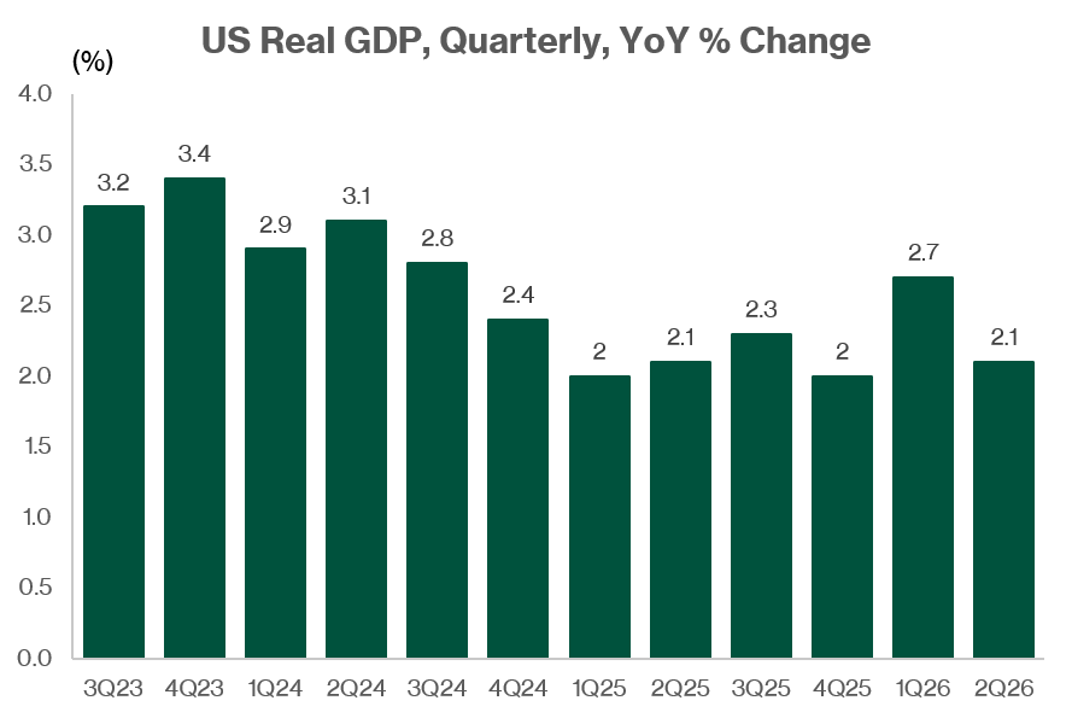
The US economy grew at an annualised rate of 1.5% in the second quarter of 2026. While that was slower than the 2.1% growth recorded in the first quarter, underlying private-sector demand remained stronger.
Real final sales to private domestic purchasers, which measures consumer spending and private fixed investment, grew at a 4.2% annualised rate in the second quarter.
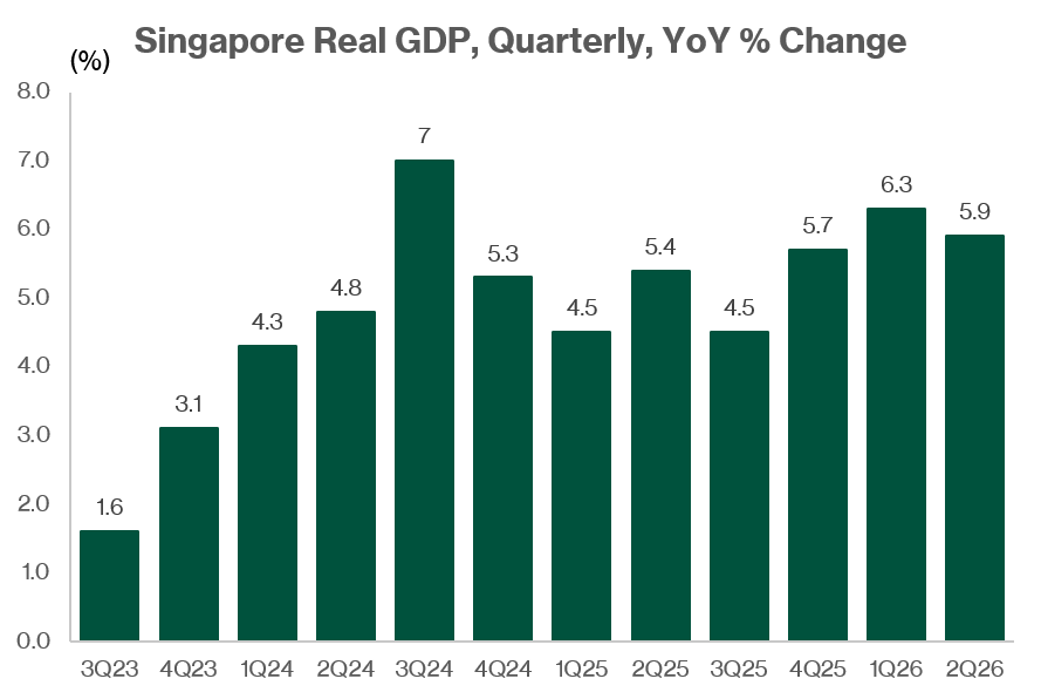
Singapore provides another example. Singapore's economy grew 5.9% year-on-year in the second quarter of 2026, after expanding 6.3% in the first quarter. That brought first-half growth to 6.1%.
The stronger-than-expected performance led the Ministry of Trade and Industry to raise its full-year 2026 GDP growth forecast to 4.5% to 5.5%, from 2.0% to 4.0% previously.
This is despite concerns earlier this year was that higher oil prices could turn into a broader economic slowdown.
Brent crude rose from around US$68 per barrel in August 2025 to as high as US$117 in April 2026 as the US-Iran conflict escalated, before falling back below US$100.
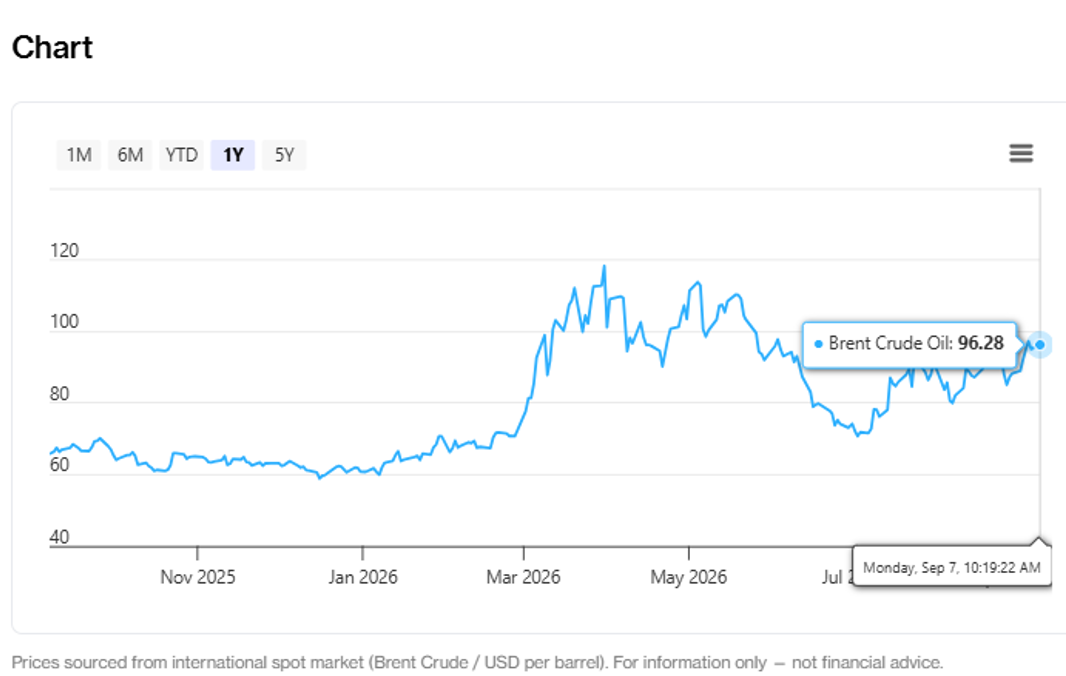
Higher energy costs are still a risk. They raise transport and production costs, put upward pressure on inflation and reduce household purchasing power.
But so far, they have not caused the kind of global growth shock that would normally lead investors to cut earnings expectations sharply.
Some crude continues to move through the Strait of Hormuz, alternative export routes are being used, and additional production outside the affected region has helped offset part of the disruption.
The distinction I would make is between an inflation shock and a growth shock.
Oil around current levels is painful, but economic growth has so far been able to absorb it.
A prolonged surge well above US$100 would be more concerning because it could push inflation higher while simultaneously weakening consumption and investment. However, this does not seem to be the case as yet.
#2 – The AI investment cycle is supporting more than technology stocks
The second factor is the scale of investment going into artificial intelligence.
AI is no longer just a technology-sector story. Amazon, Microsoft, Alphabet, Meta and Oracle are undertaking one of the largest corporate investment cycles in recent history.
Based on FactSet consensus estimates as of 4 September 2026, combined capital expenditure by these hyperscalers could rise from about US$412 billion in 2025 to US$799 billion in 2026, US$1.07 trillion in 2027 and US$1.30 trillion in 2028.
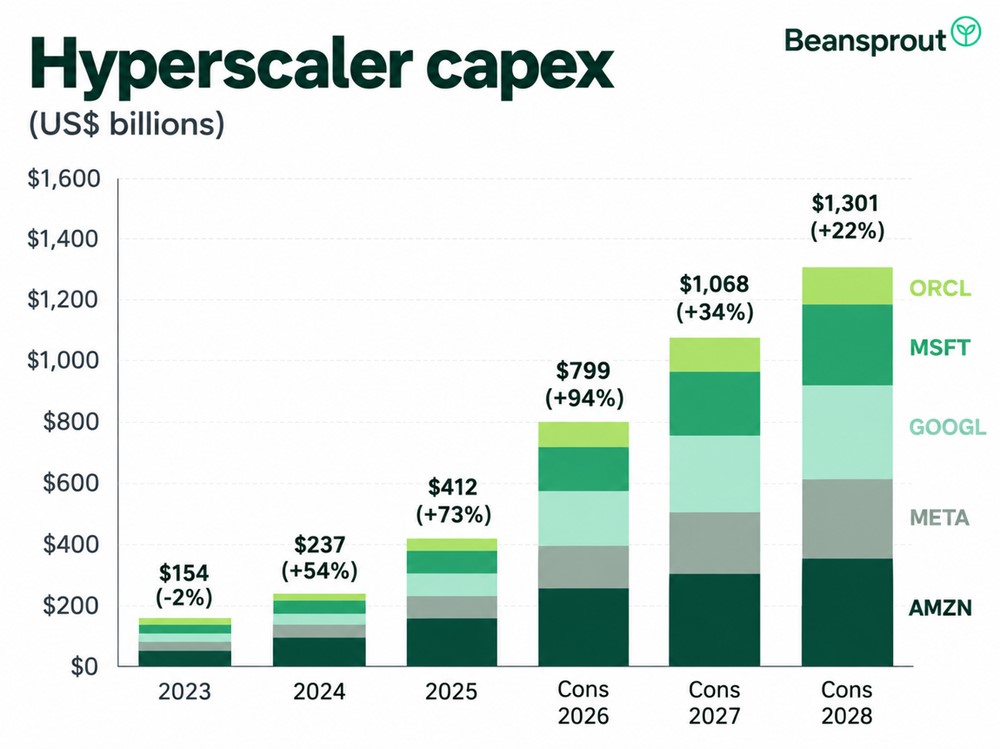
That would mean annual spending more than tripling in just three years, and hyperscaler capital expenditure could translate into revenue for somebody else.
Money spent building AI infrastructure flows through to semiconductor manufacturers, memory producers, networking equipment suppliers, data-centre operators, utilities, electrical equipment manufacturers and construction companies.
That helps explain why the AI theme has spread beyond Nvidia and the largest US technology companies.
Singapore is also seeing the effect through electronics and precision engineering. MTI cited stronger global AI-related capital expenditure as one reason for upgrading Singapore's economic growth outlook in August.
In that sense, AI capital expenditure is acting partly like an investment stimulus for the broader industrial economy.
But there is another side to this investment boom. The more aggressively hyperscalers spend, the greater the pressure on their own cash flows.
Free cash flow is expected to come under pressure as capital expenditure rises, before potentially recovering if these investments start generating sufficient revenue.
That changes the question investors need to ask. It is no longer simply whether companies will keep spending on AI.
The more important question is whether the revenue and cash flow generated by AI will justify what they are spending.
As long as the answer remains yes, the AI investment cycle can continue supporting both economic growth and company earnings.
If capital expenditure keeps rising while revenue, free cash flow and returns on invested capital fail to keep pace, investors may become less willing to reward spending for its own sake.
#3 - Company earnings have remained stronger than expected
Strong economic growth and AI investment ultimately matter for equities because of what they mean for company profits. And so far, earnings have held up.
The S&P 500 recorded year-on-year earnings growth of around 52% in the second quarter of 2026, compared with expectations of about 23% entering the reporting period.
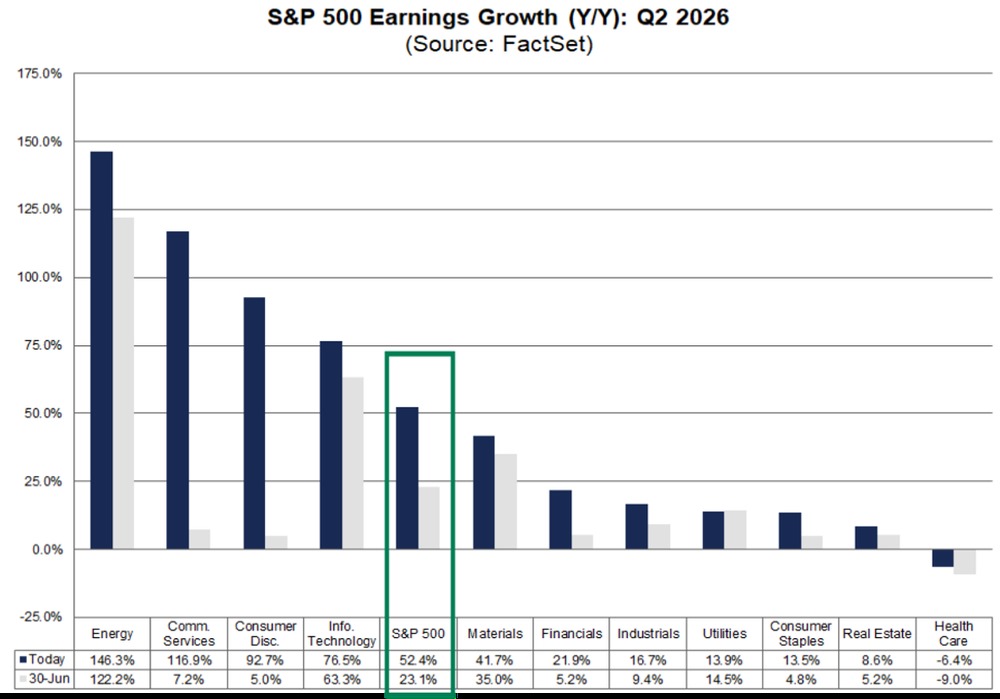
Several sectors recorded particularly strong earnings growth, including Energy, Communication Services, Consumer Discretionary and Information Technology.
However, I would be careful about taking the headline 52% figure at face value. Some of the index-level growth was boosted by unusually large contributions from individual companies, particularly Alphabet and Amazon.
This means that the average US company is not necessarily growing profits at anything close to 52%.
We can also look at what is happening to forward earnings expectations. Between the end of June and the end of August, analysts raised the S&P 500's bottom-up earnings estimate for the third quarter by 1.2%.
That tells us that despite higher oil prices, tariffs and borrowing costs, corporate profitability has so far proved more resilient than investors feared.
The same pattern is visible outside the US.
Both banks faced pressure on net interest margins as interest rates softened, but stronger fee income, wealth management and other non-interest income helped offset the impact.
These are different businesses from the US technology companies driving S&P 500 earnings growth.
But they illustrate the same broader point: company profits have generally proved more resilient than the macro headlines might suggest.
That is tell us that share prices can absorb a difficult macro backdrop for much longer when earnings expectations are still moving higher.
What could change the outlook for global stock markets?
The first stage of Beansprout's four-stage growth stock framework starts with the big picture.
We look at macro trends, industry developments and major investment themes before narrowing down individual companies.
On that basis, the current backdrop remains supportive.
Economic growth remains positive, AI investment is expanding and company earnings expectations are still rising.
But there are a few things that could change that view.
#1 – Whether higher bond yields start to weigh on equities
Government bond yields have risen substantially. The US 10-year Treasury yield is approaching 5%, giving investors a relatively high return from government bonds without taking equity risk.
That raises the hurdle for stocks.
The S&P 500 is trading at around 19.6 times forward earnings, close to its recent historical averages. At that valuation, the index has an earnings yield of about 5.1%.
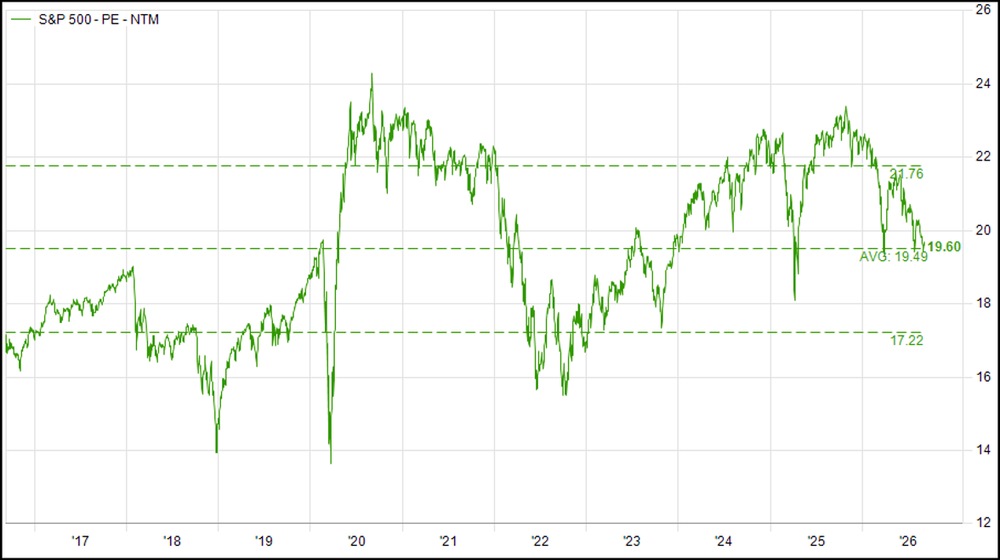
The comparison is not exact. Unlike bonds, companies can grow their earnings over time, while bond payments are largely fixed.
But that also means earnings growth becomes more important when bond yields rise.
So far, higher Treasury yields have not derailed equities. Part of the increase in yields reflects a resilient economy, while earnings expectations have continued to move higher.
What would concern me is a different combination: Treasury yields rising while forward earnings expectations start to fall.
That would put pressure on equities from both sides. Higher yields would increase the return investors demand from stocks, while weaker earnings expectations would reduce the profits investors are willing to pay for.
This is why the Federal Reserve's next move matters less because of any single 25 basis point decision, and more because of what it tells us about the longer term path of interest rates.
#2 – Whether AI spending turns into AI cash flow
The scale of hyperscaler spending means AI investment can continue to support economic growth for some time. However, the hurdle is rising.
As annual capital expenditure approaches US$1 trillion and potentially moves beyond it, investors will increasingly ask what return companies are earning on that money.
I would watch three variables together: whether higher AI capital expenditure translates into stronger AI revenue, and whether that revenue ultimately generates higher free cash flow.
If revenue and free cash flow rise alongside capital expenditure, the investment cycle looks more sustainable.
But if capital expenditure keeps accelerating while revenue and free cash flow continue to lag, investors may start questioning the economics of the AI build-out.
#3 – Whether global growth begins to weaken
The third thing I would watch is whether the economic resilience we are seeing today starts to fade.
Higher oil prices have not yet caused a major growth shock.
But a sustained increase in energy prices could keep inflation elevated for longer, forcing interest rates to remain higher. Over time, that could weigh on consumption and investment, and eventually lead to weaker corporate earnings.
Likewise, tighter financial conditions across the US, Europe and Japan could eventually start weighing more meaningfully on economic activity.
If GDP growth and earnings expectations weaken together, the current market backdrop would look much less supportive.
What would Beansprout do?
Record highs alone are not a reason for us to turn negative on the market.
For long term investors, our starting point would still be the Growth Pot within Beansprout's Four Pots of Wealth. Regular DCA investing into diversified equities can help investors stay invested over the long term, rather than trying to predict exactly when a market at record highs will correct.
Where we would be more selective is with individual stocks, especially after valuations have risen.
This is where the Opportunity Pot comes in. We would keep individual stock ideas within this pot to manage the risks that come with taking more concentrated positions.
Our starting point is Stage 1 of our four stage growth stock investment process, where we look at macro trends, industry developments and company specific catalysts to identify where the strongest opportunities may be emerging.
For now, resilient economic growth, continued AI investment and rising earnings expectations suggest that there are still supportive themes worth exploring.
We would become more cautious at Stage 1 if those conditions start to weaken. This could happen if economic growth slows, AI spending fails to translate into stronger revenue and cash flow, or higher bond yields coincide with falling earnings expectations.
Even then, a supportive macro or industry theme is only the starting point. It does not mean we would buy every stock that has benefited from it.
The next step is Stage 2, where we use a quantitative screen to narrow down companies and assess whether their fundamentals support the story.
This becomes even more important after markets have already risen. A company can benefit from AI spending or a strong economy and still be a poor investment if earnings are weak, debt is too high, or the share price already reflects too much optimism.
For readers who want to see how we are applying this in practice, our latest Beansprout Pro Opportunity Model Portfolio update shows how would invest S$100,000 in Singapore stocks after the market's strong run.
Enjoyed this insight? Follow Beansprout on Telegram, Youtube, Facebook and Instagram, and add Beansprout as your preferred source on Google so you never miss an update.
Read also
Gain financial insights in minutes
Subscribe to our free weekly newsletter for more insights to grow your wealth
Most Popular

Comments
0 comments